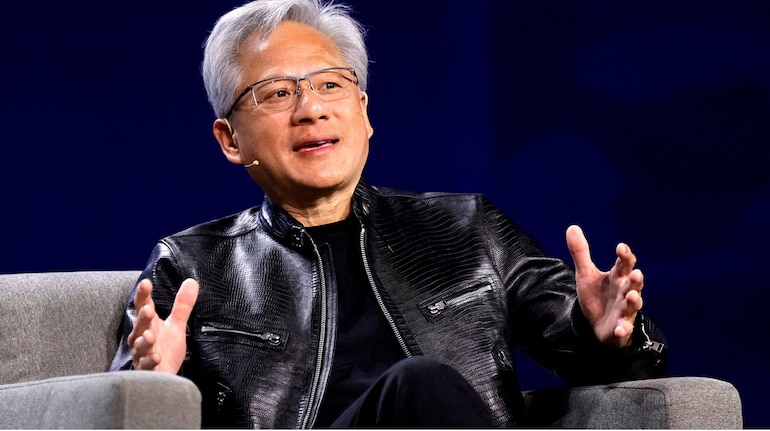

Jensen Huang has said the world underestimates how closely the United States and China are linked in technology and innovation, particularly in artificial intelligence. Speaking in an interview with TIME, Huang argued that efforts to separate the two economies ignore the depth of existing dependencies across industries.
“The world is unaware of how deeply dependent United States and China are to each other,” Huang said, adding that the idea of decoupling is “flawed” because each attempt to pull apart supply chains and technology ecosystems reveals even more interconnections.
A relationship that will define the next century
Huang described US-China ties as “the most consequential relationship in the next century,” suggesting that how both countries manage cooperation and competition will shape the future of global technology.
According to him, avoiding conflict should be a top priority for policymakers and industry leaders. “Managing the relationship and not causing conflict is the most important thing we could do,” Huang said. He stressed that constant engagement — through negotiations, communication, and compromise — is essential to keeping technological progress on track.
Rather than isolation, Huang believes sustained dialogue offers a more stable path for innovation, trade, and research collaboration.
Why isolation could backfire
The Nvidia chief warned that emotional or aggressive attempts to separate the two nations technologically could create consequences that are harder to manage over time. He suggested that avoidance only increases friction in industries that rely on global supply chains and shared expertise.
Huang pointed out that engagement across economic and security channels helps reduce misunderstandings and supports long-term stability, especially as AI becomes central to national competitiveness.
One of Huang’s strongest points focused on the global nature of AI research. He said that “50% of the world’s AI researchers are from China,” highlighting how progress in artificial intelligence is built on international contributions.
While acknowledging that every country wants to lead in technology, Huang said competition does not have to block collaboration. He noted that Chinese companies naturally want China to succeed, just as American firms want the US to lead — but both goals can exist within a shared innovation ecosystem.
What it means for the AI industry
As CEO of Nvidia, a major supplier of AI computing hardware, Huang’s comments reflect growing industry concern over export controls, talent movement, and fragmented research environments.
His message was clear: the future of AI depends on balanced competition supported by cooperation, and pushing US-China relations toward technological isolation could slow global progress rather than strengthen it.


Discover the latest Business News, Sensex, and Nifty updates. Obtain Personal Finance insights, tax queries, and expert opinions on Moneycontrol or download the Moneycontrol App to stay updated!
Find the best of Al News in one place, specially curated for you every weekend.
Stay on top of the latest tech trends and biggest startup news.