A regulatory storm is brewing over a feature many commuters now consider routine when booking cabs: ‘tipping before the ride’.
The Central Consumer Protection Authority (CCPA) has issued a notice to Uber India over its “advance tip” feature, which allows users to offer a tip before confirming a ride to increase the likelihood of getting one.
The move came after Union Minister for Consumer Affairs, Pralhad Joshi, slammed the feature as "unethical" and “exploitative,” calling for stricter oversight of such practices by tech platforms.
This scrutiny has stirred the waters across India’s ride-hailing ecosystem. Moneycontrol's research found that almost every major aggregator—Uber, Ola, Namma Yatri, and Rapido—has introduced similar “tipping” or “add-on” features to incentivize drivers, especially during peak hours or bad weather.
And while these companies argue that it improves service reliability, critics say it creates a shadow economy of digital bargaining, skirting the edges of fair pricing.

The concept of pre-trip tipping in India’s ride-hailing industry can be traced back to Namma Yatri, a driver-first platform launched in Bengaluru with support from the city’s auto unions and built on the government-backed interoperable network, Open Network for Digital Commerce (ONDC).
In 2023, the platform was the first to introduce an optional “add more to find a ride” feature, designed to bridge the gap between rider demand and driver availability—particularly during rush hours, heavy rain, or in low-demand zones.
“The idea was to create a voluntary incentive for drivers to accept trips that might otherwise be seen as inconvenient or unprofitable. As this model gained traction among riders and drivers, larger aggregators like Uber, Ola, and Rapido quickly followed suit, embedding similar features into their platforms under the banner of choice and flexibility,” said an industry source.
What started as a tool to improve ride reliability has now evolved into a contentious issue, raising concerns about fairness, transparency, and the true meaning of a voluntary tip.

“Offering drivers tips upfront has become an industry norm, though it goes by different names across platforms. ONDC-backed Namma Yatri was the first to introduce this feature in 2023. Some platforms, especially those operating on a SaaS model and not paying the 5% GST, encouraged drivers to earn more through tips. To maintain a level playing field and avoid any unfair advantage, eventually all players shifted to this tipping model,” said a source from a ride-hailing firm requesting anonymity.
Ola, Uber and Namma Yatri did not respond to Moneycontrol’s queries.
Rider PoVFor many commuters, the in-app tipping trend feels like digital déjà vu of the street-side haggling they hoped to escape.
While some riders acknowledge that offering a tip can improve their chances of getting a ride—especially during peak hours or in bad weather—they’re not exactly thrilled.
“It’s not just about Uber,” said Priya K in Bengaluru.
“Even on other apps, if you don’t tip, your chances of getting a ride drop. It's no longer about affordability, but about who can pay more, even before the ride starts,” Priya added.
While tipping was once a post-trip gesture of appreciation, many now view it as a precondition—undermining the promise of transparent, fixed pricing that drew them to these platforms in the first place.
This sentiment is echoed by commuters who see these features as a digital equivalent of street-side haggling.
“Now bargaining has gone from offline to online,” said Sunita Krishnan, a Bengaluru-based techie. “There’s no difference between a driver asking for extra fare in person and apps nudging you to ‘add more’ to find a ride. It defeats the whole point of government-regulated fares.”
But not everyone is critical.
Abhishek S, a regular user from Koramangala, offered a more nuanced view: “I don’t mind paying a tip—provided the driver shows up. During rain, if the roads are flooded or the area is far-flung, I understand the need to incentivise the driver. But there should be a cap or a guarantee. What’s frustrating is that tipping doesn’t always guarantee a cab, either.”
From street bargains to app pop-upsA prompt on Uber’s app reads: “A driver may be more likely to accept this trip if you add a tip. Your driver receives 100% of the tip. If you add a tip now, you can't change it later.” Options include Rs 30, Rs 50, and Rs 65.
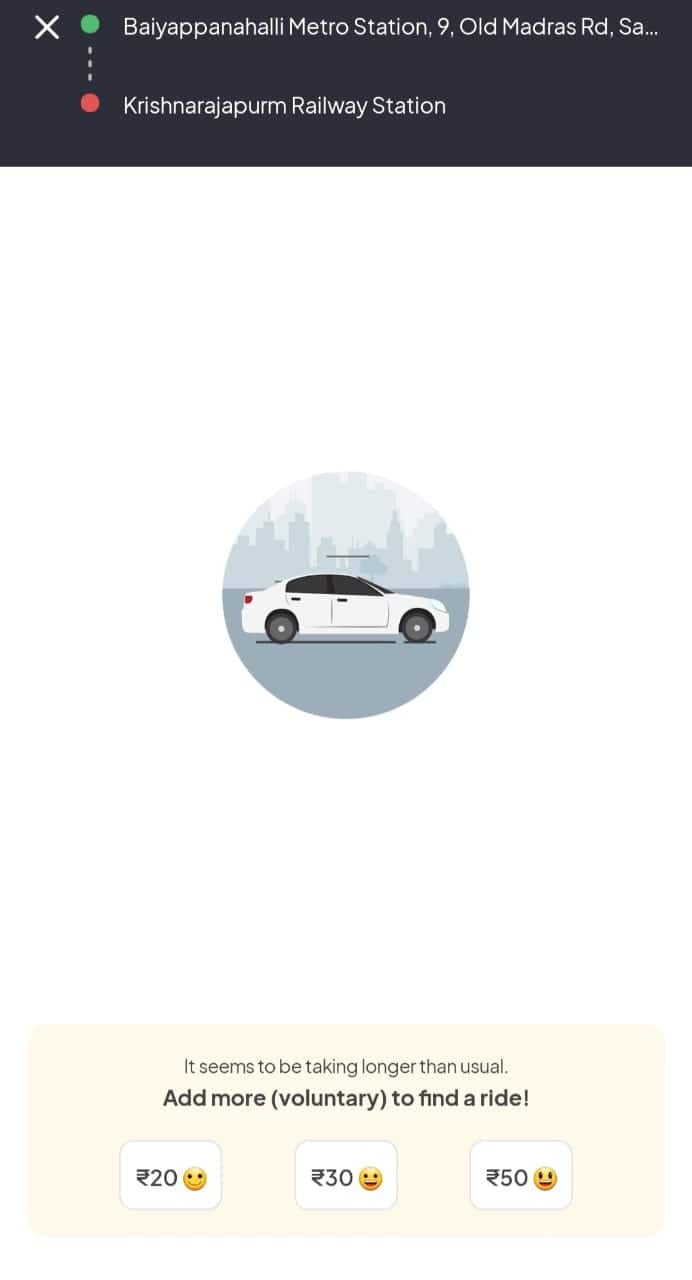
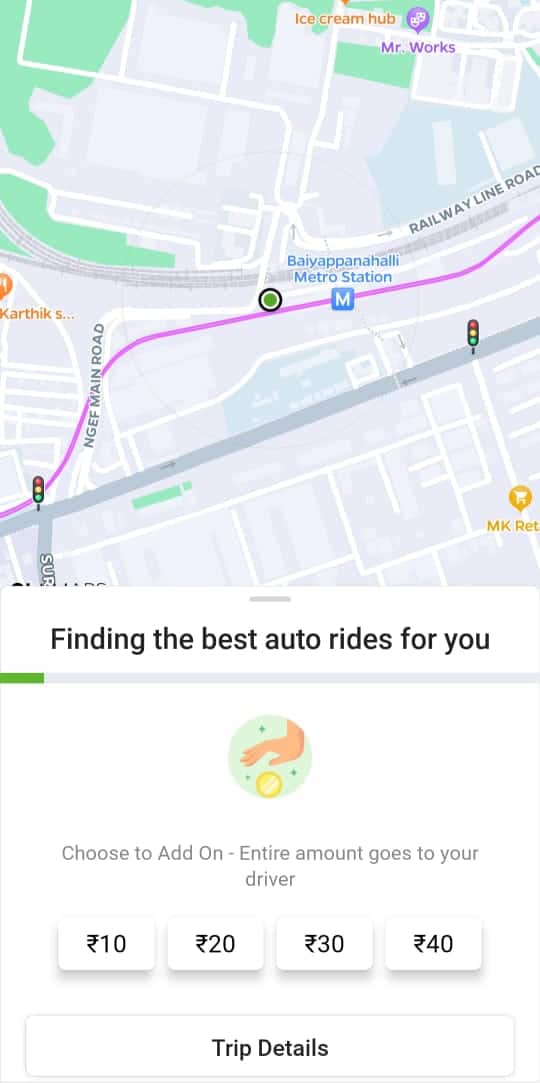
Ola offers preset tip values with the message: “Choose to add on — entire amount goes to your driver.” Namma Yatri’s prompt is more direct: “It seems to be taking longer than usual. Add more (voluntary) to find a ride!” with options from Rs 20 to Rs 50.
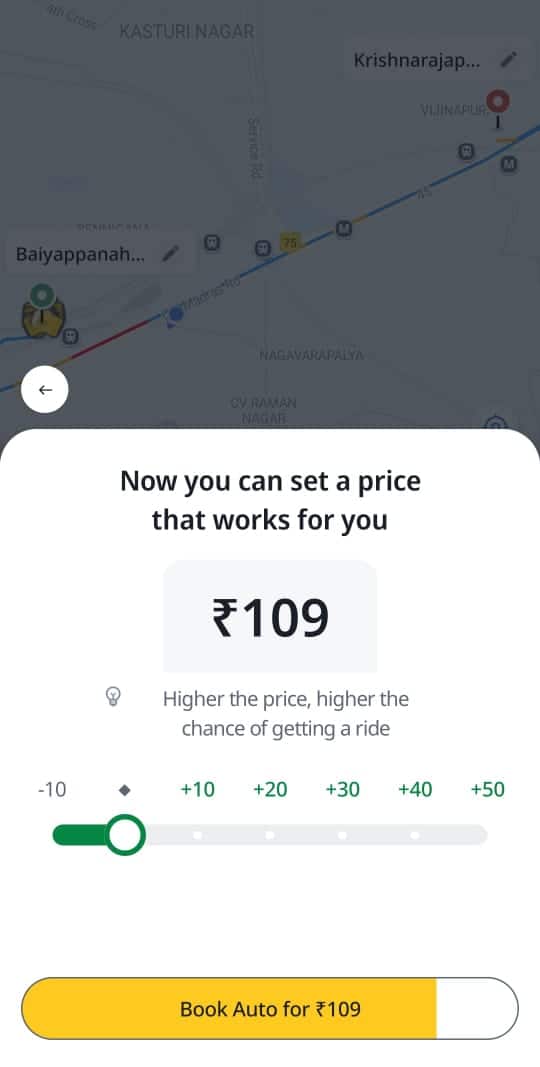
Rapido, on the other hand, uses a dynamic pricing model. In the app, it reads: “Now you can set a price that works for you: Higher the price, higher the chance of getting a ride,” while maintaining that its auto and cab segments operate on a direct driver-passenger pricing model.
“We have not received any notice from the CCPA. For autos and cabs, fares are directly agreed upon between the driver and passenger via a SaaS model. Advance tips are not applicable. For bikes, passengers can voluntarily add extra fare as a transparent option when demand is high,” Rapido spokesperson said.
Experts chip-in
Experts argue that the normalisation of tipping before the trip is not just blurring ethical lines—it’s distorting the foundational principle of regulated transport fares.
“If a driver bargains and asks for extra fare, it is punishable by law,” noted Satya Arikutharam, an independent urban mobility expert. “But if an app demands it in the form of ‘surge pricing’ or pre-trip tips, it’s applauded as innovation. These double standards must be called out. Tips are supposed to be discretionary—not mandatory to even get a ride.”
The driver’s dilemmaDrivers, meanwhile, are navigating their own version of the gig economy rat race. Many use multiple apps and gravitate toward whichever offers the most lucrative ride.
“Drivers receive the full tip amount. So if someone tips Rs 50 on Uber and another offers Rs 30 on Namma Yatri, they’ll take the former,” said C Sampath, general secretary of the Adarsha Auto Drivers Union in Bengaluru.
“These platforms have spoiled drivers. Many no longer respond to people hailing them on the street. Everything is about who pays more online. In the long run, this harms drivers too—because companies take their cut, and passengers lose trust.”
This tug-of-war between rider affordability, driver earnings, and platform profits is now under the regulatory scanner.
What lies ahead?Uber is likely to argue that the advance tip feature is entirely optional and meant to stay competitive with rivals who have introduced similar mechanisms.
The ride-hailing giant has yet to respond publicly to the CCPA’s notice.
Meanwhile, platforms like Namma Yatri, often seen as more driver-centric alternatives, were among the first to introduce such incentives. Their defenders argue that in the absence of enough drivers, tips act as motivators, especially during difficult hours or in underserved areas.
But consumer groups argue that optionality on paper does not always translate to fairness in practice. “When your ride won’t get accepted unless you add Rs 30 or Rs 50 on top of the fare, is that really a choice?” said one commuter on X (formerly Twitter), reacting to the CCPA probe.
The broader impact of this regulatory move could redefine what counts as ethical monetization in the app-driven mobility sector. It may push companies to revisit how they present fare components, rework their algorithms for fairness, and rethink the delicate balance between rider affordability and driver incentives.


Discover the latest Business News, Sensex, and Nifty updates. Obtain Personal Finance insights, tax queries, and expert opinions on Moneycontrol or download the Moneycontrol App to stay updated!
Find the best of Al News in one place, specially curated for you every weekend.
Stay on top of the latest tech trends and biggest startup news.