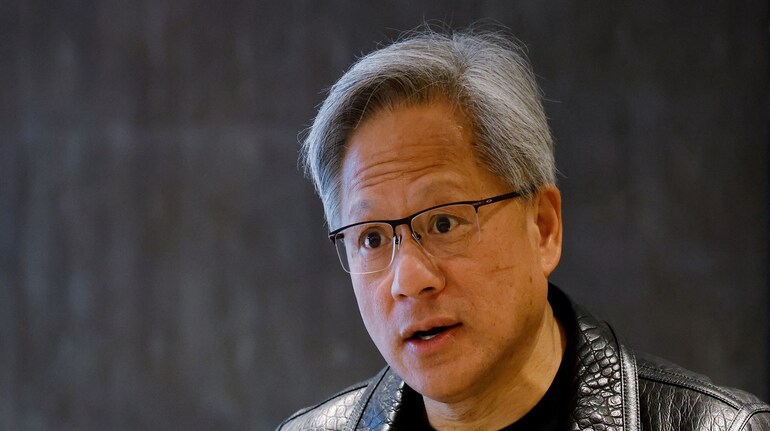

Jensen Huang has pushed back strongly against growing criticism around Nvidia’s expanding investments in AI infrastructure firms, rejecting suggestions that the strategy amounts to so-called circular financing. Speaking to Bloomberg News, Huang described the idea as “ridiculous” and said Nvidia’s financial backing of AI companies reflects long-term confidence in transformative businesses, not an attempt to artificially prop up demand for its own chips.
The comments come in the wake of Nvidia’s latest investment of around $2 billion in CoreWeave, a fast-growing cloud provider focused on AI workloads. Critics have argued that when Nvidia invests in companies that then go on to buy large volumes of its GPUs, it creates a self-reinforcing loop that distorts the market. Huang flatly rejected that framing.
According to Huang, Nvidia’s investments represent only a small fraction of the capital these companies ultimately need to raise. He said the suggestion that Nvidia is engineering demand through minority stakes ignores the sheer scale of funding required to build modern AI infrastructure. In his view, the investments are a vote of confidence in companies that are trying to build the next generation of computing platforms.
The latest deal with CoreWeave expands Nvidia’s existing stake in the company and is aimed squarely at scaling physical infrastructure. The funds are earmarked for land acquisition, power capacity, and large-scale facilities often referred to as AI factories. These sites are designed to house vast numbers of GPUs and deliver the computing power needed to train and run advanced AI models. Unsurprisingly, those facilities will rely heavily on Nvidia hardware, reinforcing the company’s central role in the AI ecosystem.
Huang has been keen to stress that this pattern applies across Nvidia’s broader investment portfolio. He pointed to Nvidia’s backing of firms such as OpenAI, Anthropic, and xAI, arguing that Nvidia’s contributions are marginal compared to the capital these organisations must secure from markets and partners. As an example, Huang noted that OpenAI alone has committed to spending around $1.4 trillion over the next eight years, much of it on data centres and computing infrastructure.
In a separate interview with CNBC, Huang reinforced the same message. He said that whatever Nvidia decides to invest typically represents a very small percentage of the total infrastructure funding these AI companies will need. From Nvidia’s perspective, the goal is not to control these businesses, but to support the growth of an ecosystem that ultimately drives demand for accelerated computing.
Nvidia’s relationship with CoreWeave also has a longer history. The chipmaker played a key role in anchoring CoreWeave’s initial public offering, placing a $250 million order at $40 per share at a time when investor appetite for new listings remained weak. Despite a cautious IPO market, CoreWeave managed to raise $1.5 billion through the offering, with Nvidia’s participation seen as a strong signal of confidence.
Strategically, the partnership benefits both sides. CoreWeave rents out Nvidia’s high-end GPUs to customers building and deploying AI models, allowing Nvidia to extend its influence deeper into cloud-based AI development without launching its own competing cloud platform. CoreWeave CEO Mike Intrator has described Nvidia as a “wonderful partner” and characterised the relationship as symbiotic, particularly in the period following the IPO.


Discover the latest Business News, Sensex, and Nifty updates. Obtain Personal Finance insights, tax queries, and expert opinions on Moneycontrol or download the Moneycontrol App to stay updated!
Find the best of Al News in one place, specially curated for you every weekend.
Stay on top of the latest tech trends and biggest startup news.