






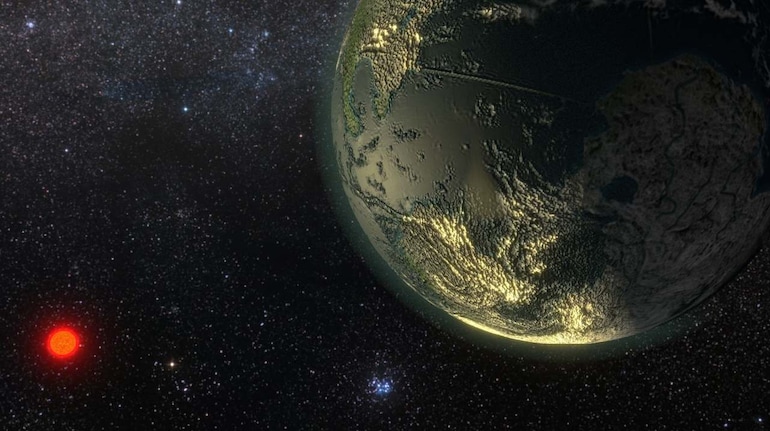
Astronomers continue improving techniques to detect planets beyond our solar system. These distant worlds, called exoplanets, remain difficult to observe directly using current technology.
Exoplanets are small, dark, and overwhelmed by starlight. Their parent stars shine far brighter than orbiting planets. Direct observation therefore remains extremely rare for astronomers.
Instead, scientists rely on faint signals from stars. These signals reveal planets through indirect but precise measurements. Advances in space technology have transformed these detection efforts.
How Indirect Methods Reveal Hidden Exoplanets
Most exoplanets have been discovered using indirect techniques. These methods track how planets affect their stars.
The radial velocity method measures subtle stellar movements. Orbiting planets pull stars slightly side to side. This motion shifts starlight wavelengths through the Doppler effect.
Blue shifts occur as stars move towards Earth. Red shifts appear when stars move away. Astronomers calculate planetary mass and orbits from these shifts.
This method mainly detects large planets near stars. Earth-sized planets cause movements too small to detect. Ground-based instruments face sensitivity limitations.
Read Also: NASA's James Webb Telescope detects thick atmosphere around scorching lava world
Astrometry tracks precise star positions over time. Tiny positional changes can reveal orbiting planets. Earth’s atmosphere previously limited measurement accuracy.
Space missions now overcome atmospheric distortion. The European Space Agency’s Gaia mission leads these efforts. Gaia aims to identify tens of thousands of giant exoplanets.
Why Transits and Direct Detection Matter
The transit method observes stars dimming briefly. This occurs when planets cross stellar faces. Astronomers determine planetary size from brightness reductions.
Combining transit and radial velocity data reveals density. Large planets are easier to detect using transits. Space missions enable detection of smaller rocky worlds.
Direct detection seeks light emitted or reflected by planets. This remains challenging due to stellar brightness. Infrared observations improve detection chances from space.
Advanced techniques continue under development worldwide. Doppler isolation separates planetary light through motion differences. Polarimetry detects reflected polarised planetary light.
Nulling interferometry cancels starlight using multiple telescopes. Future space missions may use this method. Scientists hope to study Earth-like atmospheres directly.
Space telescopes remain vital for exoplanet research. They avoid atmospheric distortion and thermal interference. Future missions aim to image planets and assess habitability.
Astronomers are also studying planets around white dwarfs. These faint stars allow easier planetary detection. The search for life beyond Earth continues expanding steadily.
Discover the latest Business News, Sensex, and Nifty updates. Obtain Personal Finance insights, tax queries, and expert opinions on Moneycontrol or download the Moneycontrol App to stay updated!
Find the best of Al News in one place, specially curated for you every weekend.
Stay on top of the latest tech trends and biggest startup news.




