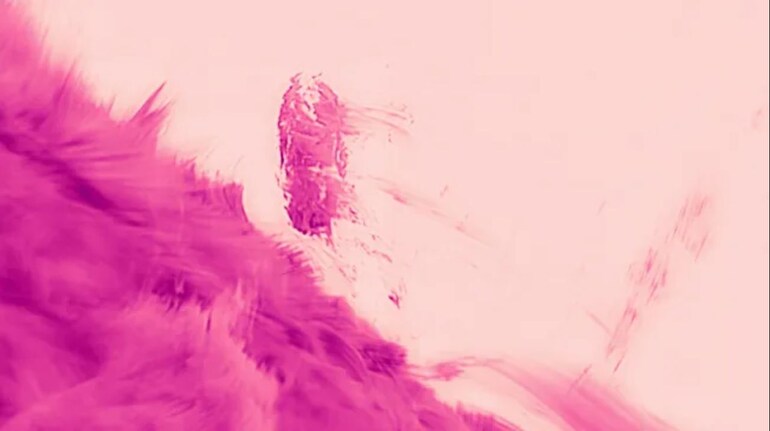
Sometimes, it takes a little earthbound magic to see the sun more clearly. Scientists in California have revealed stunning new images of solar "raindrops" falling from the Sun’s outer atmosphere—thanks to powerful new observing tools that cut through Earth’s blurry skies.
New Look at Solar Arches and Plasma Falls
The team used the Goode Solar Telescope at Big Bear Observatory to capture fine details of the solar corona. This is the sun’s outer atmosphere, invisible to the naked eye except during eclipses. What they found were plasma arches, called prominences, and streams of hot matter—condensing and falling back to the surface.
These “raindrops” are actually plasma cooling in space. As it travels along magnetic field lines, the plasma forms arcs before sinking back to the Sun’s surface. Scientists call this process coronal rain.
The images show these structures in pink hues. This color is added artificially, using hydrogen-alpha light to highlight key features.
 A fresh glimpse of coronal rain through the Goode Solar Telescope. (Image: NASA)
Sharper Images Using a High-Tech Upgrade
To get these crisp visuals, researchers used a special laser-powered system called Cona. The tech corrects for atmospheric distortion by reshaping mirrors 2,200 times each second. It works like an ultra-fast autofocus, adjusting in real time as the atmosphere shifts.
Without it, Earth’s atmosphere usually blurs solar images. But Cona allows scientists to see features down to just 63 kilometers wide. That’s a major leap from the earlier 1,000-kilometer resolution.
Vasyl Yurchyshyn, a co-author and solar expert at the New Jersey Institute of Technology, said these are the most detailed views ever captured. Some features are entirely new, and researchers are still trying to understand them.
Bigger Telescope, Bigger Plans Ahead
The team now plans to install Cona on the world’s largest solar telescope. That’s the 4-meter Daniel K. Inouye Solar Telescope in Hawaii. The aim is to improve future observations of solar wind, prominences, and other solar behavior.
The corona—despite being millions of degrees hotter than the sun’s surface—remains a puzzle. Scientists want to understand why it’s so hot and how it sends charged particles into space. These particles, known as solar wind, affect everything from satellites to auroras on Earth.
The study was published this week in the journal Nature.
Discover the latest Business News, Sensex, and Nifty updates. Obtain Personal Finance insights, tax queries, and expert opinions on Moneycontrol or download the Moneycontrol App to stay updated!
Find the best of Al News in one place, specially curated for you every weekend.
Stay on top of the latest tech trends and biggest startup news.