






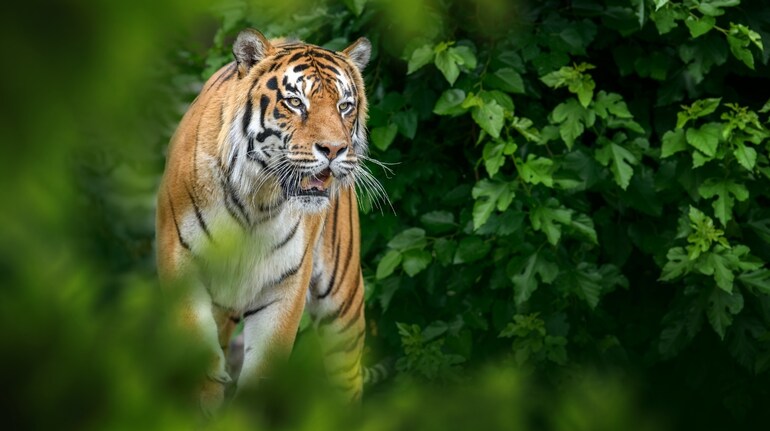

India has emerged as the world’s largest refuge for wild tigers, according to official conservation data released in recent years, highlighting a dramatic shift in the species’ global survival story.
Once roaming widely across much of Asia, tigers have seen their range collapse sharply over the past century. Habitat destruction, illegal hunting, and expanding human settlements pushed the species close to extinction. Today, only a few countries still support free-ranging wild tiger populations. Among China, India, and Russia, one nation now clearly dominates global tiger numbers.
India’s Role as Global Tiger Stronghold
India holds the largest wild tiger population worldwide, official figures confirm. The National Tiger Conservation Authority released its latest estimation in 2022 under the environment ministry. The report places India’s wild tiger population at about 3,682 individuals. Scientists assessed the range between 3,167 and 3,925 tigers nationwide. This single country now supports nearly three-fourths of the world’s remaining wild tigers.
Indian tigers occupy 58 officially notified tiger reserves nationwide. These reserves span forests, grasslands, wetlands, Himalayan foothills, and Sundarbans mangroves. Such ecological variety supports multiple tiger populations across diverse landscapes. Conservation experts describe India’s recovery as exceptional, given the country’s dense human population.
Why India’s Tiger Numbers Matter Globally
Tigers sit at the top of forest ecosystems worldwide. Healthy tiger populations signal balanced forests and strong prey systems. Because most wild tigers live in India, global survival depends heavily on Indian conservation outcomes. Any significant decline within India would immediately impact worldwide tiger numbers.
India’s conservation success followed decades of sustained efforts nationwide. Project Tiger began in 1973, shaping long-term policy and enforcement. Strong anti-poaching laws, habitat protection, forest corridors, and community involvement helped recovery. Advanced tools such as camera traps, DNA sampling, and modelling improved monitoring accuracy. States including Madhya Pradesh, Karnataka, Uttarakhand, and Maharashtra host major populations today.
Russia and China in the Global Comparison
Russia ranks second globally for wild tiger numbers. The country supports Amur tigers within the Russian Far East forests. Estimates place Russia’s population between 500 and 750 individuals. Cold climate, limited prey, and restricted habitat limit expansion there.
China once supported several tiger subspecies historically. Habitat loss and human expansion eliminated most wild populations. Present efforts focus on habitat restoration and prey recovery. China currently lacks significant free-ranging wild tiger populations.
Conservationists caution that rising tiger numbers bring new challenges. Human wildlife conflict, fragmented habitats, and climate pressures continue increasing. Experts stress coexistence strategies protecting both communities and wildlife.
India’s tiger story shows recovery remains possible. With official estimates near 3,682, India now carries the greatest responsibility globally. In comparisons with China and Russia, the conclusion remains clear. India leads global wild tiger conservation by a wide margin.
Discover the latest Business News, Sensex, and Nifty updates. Obtain Personal Finance insights, tax queries, and expert opinions on Moneycontrol or download the Moneycontrol App to stay updated!
Find the best of Al News in one place, specially curated for you every weekend.
Stay on top of the latest tech trends and biggest startup news.





