-
International Space Station set to dive into 'Point Nemo' in 2030
The International Space Station will meet its end in 2030, descending into the Pacific’s most remote spot, known as Point Nemo.
-

Killer whales target juvenile great white sharks in gulf of California
Researchers observed killer whales flipping young great whites to extract livers, revealing unique predatory behaviour in specialised orca pods.
-
Clocks turned back nationwide in US as daylight saving time ended
The United States ended daylight saving time on Sunday, allowing Americans nationwide an extra hour of sleep, as clocks fell back to standard time for winter.
-
Congo Pufferfish: The freshwater fish that looks like a tomato
Scientists and aquarists are amazed as the bright red Congo pufferfish resembles an heirloom tomato in both colour and shape.
-
Meet the young astronauts and mice on China’s latest Tiangong space mission
China’s new space mission pairs youthful ambition with scientific curiosity as three astronauts and four trained mice reach Tiangong.
-
Saturn’s moon Titan hosts bizarre chemistry where oil and water mix-Here is what study says
A new study reveals that Saturn’s moon Titan hosts bizarre chemistry where water-like and oil-like molecules can mix, hinting at alien chemical processes.
-
Water walking lizard: This lizard defies nature by running across water
Explore the science behind how basilisk lizard uses specialised adaptations to run on water, escape predators and survive in rainforest environments.
-
ISRO sends its record-breaking military satellite into orbit with rocket LVM3
ISRO will launch its CMS-03 satellite using the LVM3-M5 rocket, strengthening India’s secure defence communication network from geostationary orbit.
-
Scientists find evidence of microbes survived long after asteroid hit in Finland
Scientists reveal that an asteroid impact in Finland created a long-lasting habitat where microbes thrived millions of years after impact.
-
Tardigrade's protein 'Dsup' offers potential boost to human resilience-Here is what study says
Scientists have discovered a tardigrade protein, Dsup, that protects DNA from damage and may enhance human cellular resilience under extreme stress conditions.
-
Scientists extract oldest air ever measured from Antarctic Ice
Researchers have retrieved six‑million‑year‑old air from East Antarctica, revealing insights into Earth’s ancient climate and greenhouse gas history.
-
Astronomers spot Rogue planet growing faster than expected
Astronomers have observed a free-floating planet accreting massive amounts of gas and dust, shedding new light on planetary formation.
-
Scientists detect mysterious atomic patterns in processed metals
MIT researchers have discovered secret atomic structures that survive metal processing, reshaping how scientists understand alloys and manufacturing.
-
Astronomers Capture a Vast ‘Cosmic Bat’ Spreading Its Wings in Space
Astronomers have unveiled a striking new image of a colossal interstellar cloud resembling a bat in flight, captured perfectly in time for Halloween.
-
Don’t miss November’s celestial spectacle: Supermoon, meteor showers and rare planetary events await
November’s night sky promises a dazzling show with a radiant supermoon, multiple meteor showers and rare planetary alignments lighting up the heavens for stargazers everywhere.
-
Nanotyrannus declared a distinct tyrannosaur species, turning dinosaur research upside down
A long-standing dinosaur mystery has finally been solved, revealing surprising details about a small predator that once lived in the shadow of the mighty Tyrannosaurus rex.
-
China sends its youngest astronaut and four mice to Tiangong space station
The three astronauts will conduct scientific research, carry out spacewalks, and install anti-debris shields on the station’s exterior.
-
3I/ATLAS turns striking blue near the Sun, Harvard scientist flags sudden, unusual changes as ‘very surprising’
An interstellar visitor is puzzling scientists with its strange colour and rapid brightening, prompting fresh questions about what’s really happening as it travels through our Solar System.
-
Extinct for 50 years, India’s rare blackbucks make a stunning comeback in Chhattisgarh — here’s how it happened
After 50 years, blackbucks are back in Chhattisgarh’s Barnawapara Wildlife Sanctuary. Discover how a five-year reintroduction plan brought this elegant antelope species from extinction to revival.
-
The 'Bird Village' of India: With over 100+ rare species, how Menar became a global model for conservation
Once a small Rajasthan village, Menar is now a Ramsar site and global model for bird conservation — thanks to its people who turned protectors of over 100 rare bird species.
-
A third of Africa’s wildlife power has vanished, sparking global biodiversity alarm
A new Oxford study uncovers a hidden energy crisis within Africa’s wildlife, revealing how the loss of large animals may be silently reshaping entire ecosystems.
-
Star Wars-like system discovered with 3 Earth-sized planets orbiting twin suns
The twin stars in TOI-2267 orbit each other closely, forming what scientists call a “compact binary”. One of its planets resembles the desert world Tatooine from Star Wars, famous for its double sunsets.
-
Every monsoon, these toads turn bright yellow for love; scientists say it’s nature’s dating app filter
During the monsoon season, male Asian common toads in India and Southeast Asia undergo a stunning color transformation — turning bright yellow to attract mates. Scientists reveal how hormones trigger this glow-up, calling it nature’s own dating app filter.
-
Scientists may have found a panacea for snake bites, new broad-spectrum antivenom offers hope
Snake venom contains many proteins that damage the body, though key toxic sites often remain similar across species.
-
3I/ATLAS sending Fibonacci Signal 8 • 13 • 8 • 5 • 13 • 8 with mysterious message ‘The Gate Awaits,’ new claims suggest
3I/ATLAS made its closest approach to Earth on 29 October 2025, coming within 1.8 astronomical units, or around 167 million miles.
-
‘Hooked and Hungry’: Carnivorous ‘death-ball’ sponge found in Southern Ocean depths
Scientists from The Nippon Foundation-Nekton Ocean Census made the discovery during two 2025 expeditions with the Schmidt Ocean Institute.
-
Iceland’s first mosquitoes: Climate shifts redraw Arctic boundaries
Scientists confirm Iceland’s first mosquitoes, hinting towards how climate shifts may enable insects to thrive in previously frozen environments.
-
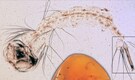
World’s Oldest mosquito larva found trapped in 99-million-year-old amber reveals secrets of dinosaur-era life
The fossil was uncovered in Myanmar’s Kachin region and has been identified as a new species named Cretosabethes primaevus.
-
Science behind why millions of Red Crabs march together in Christmas Island
Each year, millions of red crabs swarm across Christmas Island in a breathtaking migration from forest to sea for spawning.
-
Venus falls silent as Japan declares 'Akatsuki' spacecraft dead
The last voice from Venus has gone quiet. Japan’s Akatsuki mission, once the planet’s only active observer, has finally fallen silent after years of trailblazing science.
-
Global neutrino study brings scientists closer to solving the universe’s biggest mystery of existence
Neutrinos are among the universe’s most abundant yet least understood particles. They possess tiny masses and almost never interact with other matter.
-
New Arctic Rhino fossil reveals ancient warm world in Canada
Scientists have uncovered a 23-million-year-old rhinoceros fossil in the Canadian Arctic, reshaping views of ancient climates and mammal migration.
-
Astronomers create first 3D temperature map of a distant exoplanet's atmosphere
A team from the University of Maryland and Cornell University developed the first three-dimensional temperature map of WASP-18b, a gas giant orbiting a star about 400 light years away.
-
Black hole pairings reveal turbulent origins and unusual motion
Two newly detected black hole mergers by LIGO-Virgo-KAGRA reveal rare spins and opposing orbits, reshaping theories of cosmic evolution.
-
World’s oldest ice, dated six million years, discovered in Antarctica unlocks clues to a warmer past
A team of U.S. researchers uncovered the world’s oldest directly dated ice and air trapped deep within the Allan Hills region.
-
Oregon’s iconic Sea stars make a fragile comeback after years of decline
Once wiped out by wasting disease, ochre sea stars are re-emerging. Scientists now see rising numbers and renewed ecological balance.
-
Australia’s Mountain dragons face extinction as climate pressures mount
A new study warns that Australia’s Mountain Dragon lizards are running out of room to survive. Fossil and genetic evidence reveal a slow squeeze by climate change.
-
‘Handsome boy in the wild’: Lion with naturally curly mane stuns internet, crowned ‘the king of curls’ — watch viral video here
Nzuri’s mane is unlike any other seen in the wild. His thick curls give him an almost styled look, resembling a professional salon finish rather than the rugged mane typical of wild lions.
-
World’s first white Iberian lynx spotted in Spain stuns experts, internet calls it ‘conservation done right’
According to the World Wildlife Fund (WWF), the Iberian lynx is smaller than its Eurasian cousin, with long legs, a short tail, and distinctive black ear tufts.
-
New Trapdoor spider discovered in California’s dunes just in time for Halloween
A newly discovered trapdoor spider from California’s sand dunes has stunned scientists. The find proves hidden species still lurk in familiar landscapes.
-
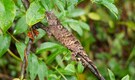
New pricklenape lizard with sharp knife-like spines found in Vietnam’s dense forests
A mysterious reptile found in Vietnam’s dense forests has puzzled scientists, revealing hidden secrets through its unusual features and genetic makeup that challenge what we know.
-
Roman-style concrete offers longevity and sustainability for modern times-Here is what study says
Scientists have uncovered how Roman concrete has endured millennia. The discovery reveals an ancient technique that allowed structures to heal themselves over time.
-
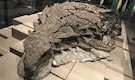
110-million-year-old dinosaur ‘mummy’ found in Canada with intact skin and organs
Researchers think the dinosaur perished close to the sea, sank onto the seabed and was rapidly buried by minerals.
-
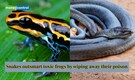
New study unveils some snakes outsmart toxic frogs by wiping away their poison
Scientists found a remarkable sight on how some snakes are wiping poison off from deadly frogs before eating them. The finding reveals new insights into nature’s chemical battles.
-
New spiny frog discovery near the China–Vietnam border, sparks urgent research plans
Scientists discovered a new spiny frog near the China–Vietnam border. Researchers now focus on safeguarding and studying its survival and evolution.
-
Perovskites shine faster than ever imagined-Here is what study says
Perovskite films release light in mere picoseconds thanks to ordered nanodomains. This discovery transforms materials once for solar power into quantum-grade light sources.
-
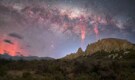
A Celestial Spectacle: Rare red sprites meet Milky Way, aurora and comet unite in one mesmerising shot
A photographer in New Zealand captured a once-in-a-lifetime celestial scene that blended multiple rare sky phenomena into one breathtaking moment, leaving scientists and stargazers amazed.
-
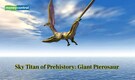
Giant Pterosaur: This sky titan of prehistory was larger than a T. rex
A colossal flying reptile with a wingspan near ten metres once dominated ancient skies, challenging dinosaur supremacy and rewriting flight records.
-
Scientists uncover how mechanical forces ripple across neuron membranes
Scientists reveal mechanical forces move across neuron membranes differently based on obstacle patterns. This explains how neurons sense and convert physical signals.
-
NASA silence raises questions after missed 3I/ATLAS chasing 'Juno'
NASA’s Juno probe missed a rare chance to chase interstellar visitor 3I/ATLAS, as politics and silence cloud mission decisions.