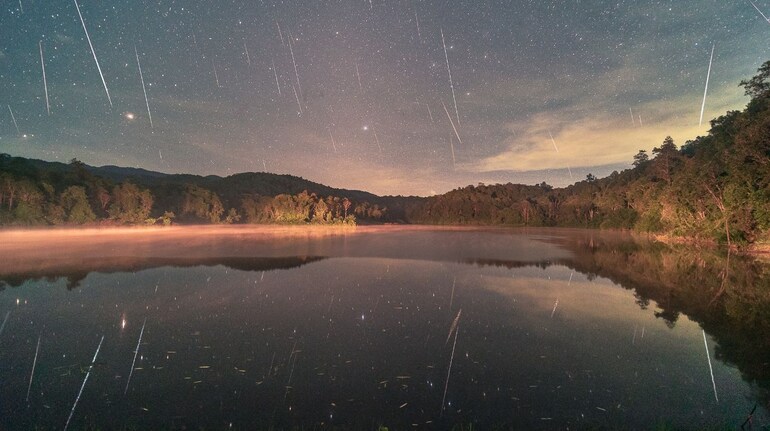
Skywatchers worldwide are preparing for a brief but powerful celestial display as the annual Quadrantid meteor shower reaches its sharp peak overnight between Jan. 03 and Jan. 04, 2026, despite bright moonlight affecting visibility.
The Quadrantids are among the strongest meteor showers each year. During its narrow peak, as many as 120 meteors per hour may streak across the sky. Astronomers note the peak lasts only about six hours. This short window makes timing especially important for observers hoping to witness the event. Even with interference from the full January moon, experts say the shower remains worth watching due to its frequent bright fireballs.
What is happening in the January night sky
The Quadrantid meteor shower runs annually from late December through mid-January. In 2026, its most intense activity occurs overnight on Jan. 03 and early Jan. 04. Under ideal dark conditions, observers might expect around 25 meteors per hour. According to the American Meteor Society, moonlight could reduce visible counts to roughly 10 meteors hourly. However, Quadrantids often produce larger, brighter meteors than other showers.
The meteors originate from debris left behind by asteroid 2003 EH. Discovered in 2003, the asteroid measures about 3 kilometres across. As Earth passes through this debris stream, particles burn up in the atmosphere, creating bright streaks of light. Unlike longer-lasting showers, the Quadrantids rise and fall rapidly, demanding careful observation planning.
Why the Quadrantids have an unusual name
Most meteor showers take names from nearby constellations. The Quadrantids are named after Quadrans Muralis, a constellation no longer officially recognised. NASA explains the radiant point now lies near the constellation Boötes. This area sits close to the handle of the Big Dipper. Observers are advised to face northward for the best chance of sightings.
Because moonlight will dominate the sky, experts say dark rural locations are less essential this year. A clear horizon and open northern view matter more. Short viewing sessions during the peak hours may still deliver rewarding fireball sightings.
What comes next for skywatchers in 2026
The Quadrantids coincide with January’s full Wolf Moon, which will also appear as a supermoon. This means the Moon will look slightly larger and brighter than usual. Just days later, on Jan. 10, Jupiter reaches its closest point to Earth, shining brightly throughout the night.
Later highlights in 2026 include a total lunar eclipse on Mar. 03. A rare total solar eclipse will cross parts of Europe on Aug. 12. The year ends with a Christmas Eve supermoon on Dec. 24, the closest since 2019. Together, these events make 2026 an exceptional year for skywatchers worldwide.
Discover the latest Business News, Sensex, and Nifty updates. Obtain Personal Finance insights, tax queries, and expert opinions on Moneycontrol or download the Moneycontrol App to stay updated!





Find the best of Al News in one place, specially curated for you every weekend.
Stay on top of the latest tech trends and biggest startup news.