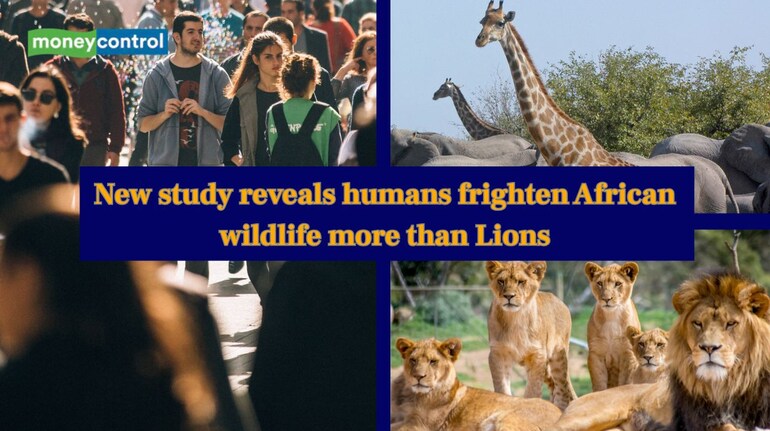
African wildlife, such as elephants, giraffes and zebras, are more afraid of human beings. This study was conducted at Kruger National Park. 10,000 recordings depicted that human sounds were more strongly causing the reactions compared to lions. Humans act as super-predators, reshaping behaviour and ecosystems.
What Did Researchers Find?
In 2023, this research was conducted by conservation biologist Michael Clinchy from Western University in Canada. The African lion is more afraid of humans. Animals such as elephants, giraffes, zebras and antelopes responded more to humans.
There were sounds of conversation, yelling dogs and gunshots in the wild. Comparatively, the vocalisations of lions produced much weaker fear reactions.
Where did this research take place?
Researchers examined this wildlife in Africa at Kruger National Park. More than 10,000 recordings exposed human scaredness of animals than of lions. Heightened fear was observed in approximately 95 per cent species. This study was published in Current Biology, which highlights humans as super-predators in the natural ecology.
How Was the Study Conducted?
Scientists studied more than 10,000 animal sounds in South Africa in the Kruger National Park. Soundings featured feeding sounds of natural predators and other manmade noises.
The response was rated on the level of fear expressed. Animals were frequently immediate reacting, fleeing or becoming frozen. The experiment included several species to make the research strong and consistent.
Indications and Observations
The evidence indicates that the fear of people is common among the African megafauna. The researchers place a strong emphasis on context, as human beings cause an ecological pressure unseen before. Now scientists believe that humans are super-predators that influence the behaviour of animals greatly.
Why Does This Matter?
Rapidly fear of the humans can pass across the complete western African ecosystems. Animals can change feeding, migration and social behaviours when subjected to stress. This impact may rely on predator-prey relationships and the distribution of vegetation.
The changes associated with human-induced behavioural changes have to be factored in conservation strategies. Non-lethal human activity has a significant impact on the natural animal habitats.
What Comes Next?
Researchers are optimistic of extension of recordings to other African parks. They are intended to quantify behavioural changes during long-term exposure of humans. Results indicate the urgent necessity to reduce the human influence on flora.
Humans can still be the highest order super-predator, manipulating ecosystems without saying a word though making a great impact. Future research can examine ecological impacts of human torment in the long term.
Discover the latest Business News, Sensex, and Nifty updates. Obtain Personal Finance insights, tax queries, and expert opinions on Moneycontrol or download the Moneycontrol App to stay updated!
Find the best of Al News in one place, specially curated for you every weekend.
Stay on top of the latest tech trends and biggest startup news.