






Moneycontrol PRO
Swing Trading 101
Swing Trading 101

Microplastics in city skies: How everyday breathing introduces tiny plastics into lungs

Researchers in Xi’an found city air microplastics tripled after COVID-19, with masks and pollution driving fibers into lungs, raising new questions about health risks and urban pollution patterns.

January 13, 2026 / 12:48 IST
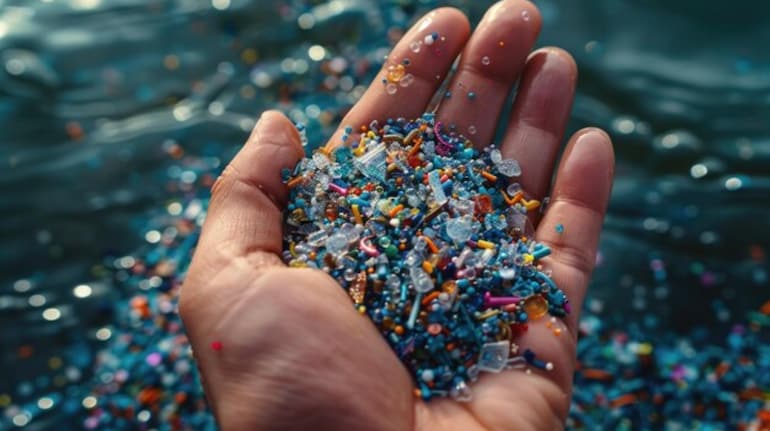
Researchers Warn Daily Inhalation of Urban Air Carries Dangerous Microplastic Fibres (Image: Canva)
Snapshot AI
A study by Xi’an Jiaotong University found microplastic levels in Xi’an’s air tripled after the COVID-19 pandemic, largely from disposable masks, synthetic clothing, and urban pollution. Researchers linked these fibers to PM2.5 particles, showing they can reach deep into lungs, especially in younger people, and stressed the need for better waste management, long-term monitoring, and toxicity studies to understand health impacts and reduce airborne plastic exposure in urban environments.

Researchers at Xi’an Jiaotong University have found that microplastic levels in city air have tripled since the COVID-19 pandemic, raising concerns about airborne pollution and potential health effects for residents.

A team led by Fobang Liu analysed PM2.5 air particles across Xi’an. They compared samples collected before and after the pandemic. PM2.5 particles are fine enough to penetrate deep into lungs. The study measured seasonal changes by sampling in summer and winter. Researchers focused on aerosols from dust, smoke, and traffic emissions. Airborne microplastics were found in both rural and urban areas. The findings were published in the Journal of Geophysical Research.

Pandemic impact and sources of microplastics

Disposable masks became widely used during the COVID-19 outbreak. Many ended up as litter or in crowded bins. Laboratory studies show masks release polypropylene fibers when worn or aged. Other sources include synthetic clothing, tires, and packaging materials. Filters captured fibres such as polyethylene terephthalate, used in bottles and clothing. Sorting by colour and shape revealed material types and possible origins. Before 2020, samples showed a wide variety of plastic fibres. After the pandemic, transparent and white fibers dominated filters. Researchers linked the change to widespread use of face masks.

Environmental factors and particle dispersal

COVID-19 Vaccine

Frequently Asked Questions

View more
How does a vaccine work?

A vaccine works by mimicking a natural infection. A vaccine not only induces immune response to protect people from any future COVID-19 infection, but also helps quickly build herd immunity to put an end to the pandemic. Herd immunity occurs when a sufficient percentage of a population becomes immune to a disease, making the spread of disease from person to person unlikely. The good news is that SARS-CoV-2 virus has been fairly stable, which increases the viability of a vaccine.

How many types of vaccines are there?

There are broadly four types of vaccine — one, a vaccine based on the whole virus (this could be either inactivated, or an attenuated [weakened] virus vaccine); two, a non-replicating viral vector vaccine that uses a benign virus as vector that carries the antigen of SARS-CoV; three, nucleic-acid vaccines that have genetic material like DNA and RNA of antigens like spike protein given to a person, helping human cells decode genetic material and produce the vaccine; and four, protein subunit vaccine wherein the recombinant proteins of SARS-COV-2 along with an adjuvant (booster) is given as a vaccine.

What does it take to develop a vaccine of this kind?

Vaccine development is a long, complex process. Unlike drugs that are given to people with a diseased, vaccines are given to healthy people and also vulnerable sections such as children, pregnant women and the elderly. So rigorous tests are compulsory. History says that the fastest time it took to develop a vaccine is five years, but it usually takes double or sometimes triple that time.

View more
Show

Microplastic levels were found to rise alongside ozone levels at times. Sunlight and heat cause photodegradation, breaking plastic surfaces into smaller fragments. Wind, vehicle traffic, and pedestrian movement lift particles into the air. Field studies showed microplastics travelled up to 59 miles from source. Aging and outdoor litter release fibers more easily in dry conditions. These processes illustrate how urban environments contribute to airborne pollution.

Health implications and prevention

Inhaled microplastics can enter the nose, throat, and lungs. Dosimetry models showed younger people may be more susceptible to deposition. Fibres may carry chemicals and microbes, complicating health risks. Outdoor air contributes to indoor exposure, especially in ventilated buildings. Improved waste management and cleaner streets can reduce future airborne plastics. Hospitals and cities are encouraged to track disposable gear and implement reusable mask policies. Liu’s team emphasised long-term sampling and better toxicity tests are needed. The study provides new insights into pandemic habits and city air quality.

first published: Jan 13, 2026 12:48 pm

Discover the latest Business News, Sensex, and Nifty updates. Obtain Personal Finance insights, tax queries, and expert opinions on Moneycontrol or download the Moneycontrol App to stay updated!

Subscribe to Tech Newsletters

  • On Saturdays

    Find the best of Al News in one place, specially curated for you every weekend.

  • Daily-Weekdays

    Stay on top of the latest tech trends and biggest startup news.

Advisory Alert: It has come to our attention that certain individuals are representing themselves as affiliates of Moneycontrol and soliciting funds on the false promise of assured returns on their investments. We wish to reiterate that Moneycontrol does not solicit funds from investors and neither does it promise any assured returns. In case you are approached by anyone making such claims, please write to us at grievanceofficer@nw18.com or call on 02268882347

