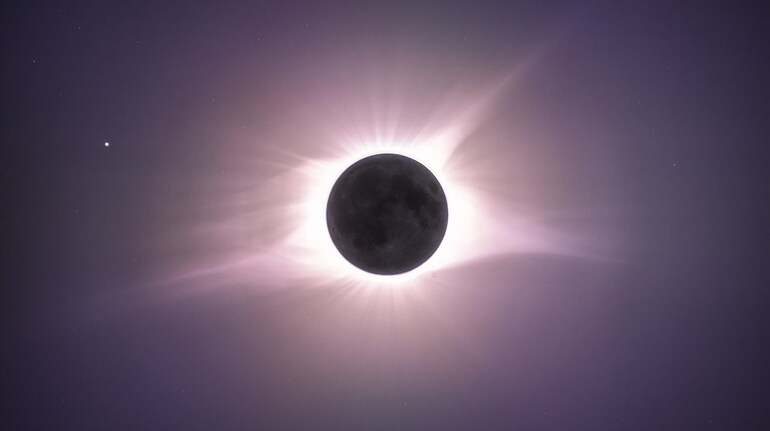
2026 will offer several breathtaking lunar eclipses, giving skywatchers rare chances to witness the Moon turning red or partially darkened. From total eclipses to partial phases, this year promises unforgettable celestial shows.
Lunar eclipses occur when the Earth comes between the Sun and the Moon, casting a shadow on the Moon. Unlike solar eclipses, lunar eclipses are safe to watch with the naked eye, making them accessible to everyone. Here’s everything you need to know about the lunar eclipses of 2026.
| DATE | TYPE | TIMINGS | VISIBILITY |
| 2026-03-03 | Total | 3: 44 AM – 9:23 AM EST | Asia, Australia, Pacific Islands, North and South America. |
| 2026-08-27 to 2026-08-28 | Partial | 9:22 PM– 3:03 AM EST | America, Europe, Africa and Western Asia. |
March 3: Total Lunar Eclipse Timings Explained
The lunar eclipse will appear in the sky 3 March 2026. It will be a total Lunar eclipse. It will be visible across Asia and Australia. The Pacific Islands will also see the eclipse. North and South America will experience full visibility.
The Moon enters the penumbra at 3:44 A.M. EST. Totality begins after the umbral phase starts. The eclipse ends at 9:23 A.M. EST.
In total lunar eclipse, the Moon may appear reddish-orange, a phenomenon called the “blood moon”. This is caused by Earth’s atmosphere scattering sunlight onto the Moon.
August 27–28: Partial Lunar Eclipse in details
The final eclipse spans 27 August and 28 August 2026. It is a partial lunar eclipse. Visibility includes the Americas and Europe. Africa and western Asia will also observe it.
The Moon enters penumbra at 9:22 P.M. EST. Umbra entry follows at 10:33 P.M. EST. The eclipse ends at 3:03 A.M. EST. Western regions may see the Moon rising mid-eclipse. The Moon could appear low on horizons.
In a partial eclipse, only a portion of the Moon passes through Earth’s shadow. This shadow creates a striking darkened segment on the lunar surface.
How to watch Lunar Eclipse safely?
Lunar eclipses occur during full Moon phases. Lunar eclipses span entire night hemispheres. Optical aids enhance contrast during partial shading of the eclipse. There are no special glasses needed to witness lunar eclipse.
Lunar eclipses span entire night hemispheres. It is safe for naked-eye observation. Use binoculars or telescopes for better detail and colors. Keep checking the local timings and weather conditions for clear views.
Discover the latest Business News, Sensex, and Nifty updates. Obtain Personal Finance insights, tax queries, and expert opinions on Moneycontrol or download the Moneycontrol App to stay updated!





Find the best of Al News in one place, specially curated for you every weekend.
Stay on top of the latest tech trends and biggest startup news.