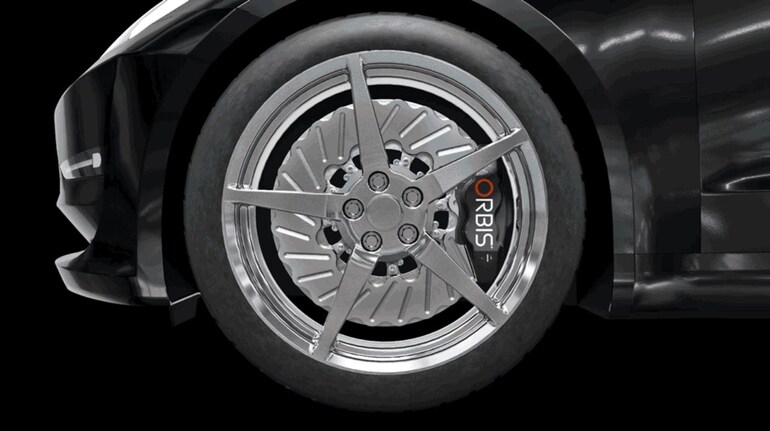
NASA’s innovations often find their way into everyday life. One such development, inspired by spacecraft design, is transforming vehicle brakes, enhancing performance and efficiency. Orbis Brakes Inc. has adapted NASA's patented technology, creating brake rotors that are lighter and more effective.
NASA Engineer Innovates for Earthly ApplicationsJonathan Lee, a structural materials engineer at NASA's Marshall Space Flight Center, contributed his expertise to this breakthrough. Lee, involved in projects like the Space Launch System, sought to improve automotive brake systems using advanced materials science.
His innovative design features a disc with fins around the hub. These fins pull air in and push it across the disc's surface, cooling the rotor, brake pads, and calipers. Additionally, long, curved depressions on the braking surface radiate from the centre, increasing air cooling efficiency by 30%.
Read Also: Astronomers spot a mysterious object colliding with supermassive black hole jet in a distant galaxyImproved Cooling and Friction for Better PerformanceThe rotor's unique design not only enhances cooling but also increases friction. These depressions act like grooves on concrete steps, preventing brake pads from slipping. This improves stopping reliability, even in challenging conditions.
The grooves also help remove water and debris during braking. Each groove ends with a small hole, allowing unwanted material to escape efficiently, ensuring consistent performance.
Read Also: NASA Mars Rover is looking out for 'Lookout Hill'From Space to Road: High-Performance ApplicationsThis NASA-inspired design offers significant advantages. The rotors are 42% lighter than conventional cast iron options. They also deliver performance similar to high-end carbon-ceramic brakes but at a more accessible price.
Orbis’s brakes are now available as aftermarket upgrades for high-performance vehicles. Models like the Ford Mustang and Tesla have already benefited from this advanced technology, showcasing its impact on Earth’s roads.
Discover the latest Business News, Sensex, and Nifty updates. Obtain Personal Finance insights, tax queries, and expert opinions on Moneycontrol or download the Moneycontrol App to stay updated!
Find the best of Al News in one place, specially curated for you every weekend.
Stay on top of the latest tech trends and biggest startup news.