






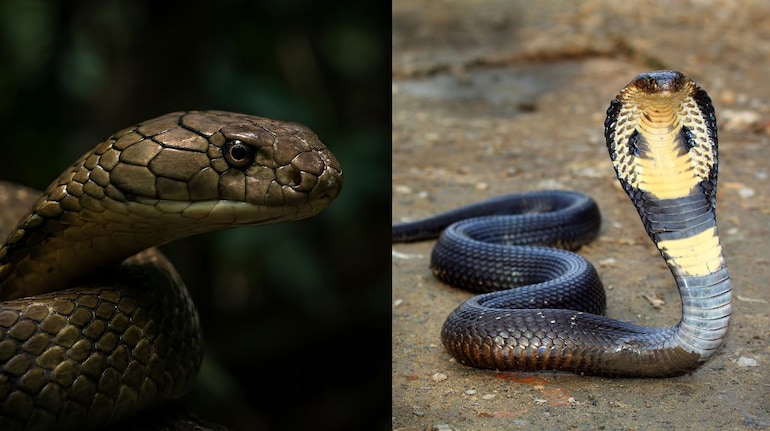
A raised hood and sudden stillness continue to define cobra encounters worldwide. This article examines how King cobras and common cobras differ in evolution, venom, behaviour, and risk to humans. According to a study published in a scientific journal, researchers report clear biological and ecological distinctions between the two species. The findings explain how size, diet, habitat, and temperament shaped their separate survival paths across Asia.
King cobra vs common cobra: What separates them
The King cobra, scientifically known as Ophiophagus hannah, belongs to a genus of its own. Its name means snake eater, reflecting its specialised feeding behaviour. The common cobra, Naja naja, belongs to the wider Naja genus, which includes several true cobras across Asia and Africa. Although both snakes belong to the elapid family, genetic evidence shows they evolved separately. Herpetologists note the two species rarely encounter each other in the wild, highlighting how different habitats reduced competition and encouraged distinct behavioural strategies.
Size remains the most striking physical difference. King cobras can grow up to 18 feet long, making them the world’s longest venomous snakes. Common cobras usually measure between 5 and 7 feet. This size gap affects hunting style, territorial dominance, and ecological influence. Appearance also helps distinguish them, as common cobras often display a spectacle mark on their hoods. King cobras have narrower hoods marked with pale chevrons and can lift a third of their body upright, a display experts describe as highly intimidating.
King cobra vs common cobra: What it means for behaviour
Diet marks the clearest behavioural divide between the two species. King cobras primarily hunt other snakes, including smaller cobras and kraits, which requires large territories and strategic movement. This feeding habit shapes their habitat choices and ecological role, helping regulate snake populations naturally. Researchers say this specialisation also influences venom evolution and hunting intelligence.
Common cobras, by contrast, have a generalised diet of rodents, frogs, birds, and lizards. This flexibility allows them to thrive near farmlands and villages, increasing human contact. Behaviour around people also differs. King cobras usually avoid confrontation and issue warnings, including a low growl-like hiss, before striking. Common cobras are encountered more frequently and are responsible for more bites, mostly in self-defence.
King cobra vs common cobra: What comes next for humans
Venom composition further separates the two snakes. King cobra venom is less toxic per milligram but delivered in much larger quantities, enough to kill elephants or several humans. Common cobra venom is more chemically potent and acts quickly on the nervous system, often causing respiratory paralysis. These differences affect medical treatment, antivenom use, and emergency response priorities.
In India, common cobras cause thousands of snakebite deaths each year due to their proximity to people. King cobra bites are rare but almost always life-threatening without immediate treatment. Experts stress that awareness, rapid medical care, and access to antivenom remain critical in reducing fatalities.
Habitat preference explains much of their future outlook. King cobras inhabit rainforests, mangroves, and bamboo thickets across India, Southeast Asia, and Indonesia, favouring humid, isolated environments suitable for nesting. Common cobras are highly adaptable and live across forests, fields, wetlands, and urban edges throughout South Asia, increasing both ecological importance and human conflict.
Both species play essential roles in maintaining ecological balance. King cobras help regulate snake populations, while common cobras control rodents and reduce crop damage. However, habitat loss, road deaths, and human conflict threaten both. The IUCN lists the King cobra as vulnerable, while common cobras show regional declines despite stable overall numbers.
Researchers emphasise that strength favours the King cobra in the wild, but human danger remains higher from the common cobra. Understanding these differences, they say, encourages coexistence rather than fear. In nature, there is no rivalry, only adaptation, reminding humans that both kings and commoners are vital to the same ecosystem.
Discover the latest Business News, Sensex, and Nifty updates. Obtain Personal Finance insights, tax queries, and expert opinions on Moneycontrol or download the Moneycontrol App to stay updated!
Find the best of Al News in one place, specially curated for you every weekend.
Stay on top of the latest tech trends and biggest startup news.




