






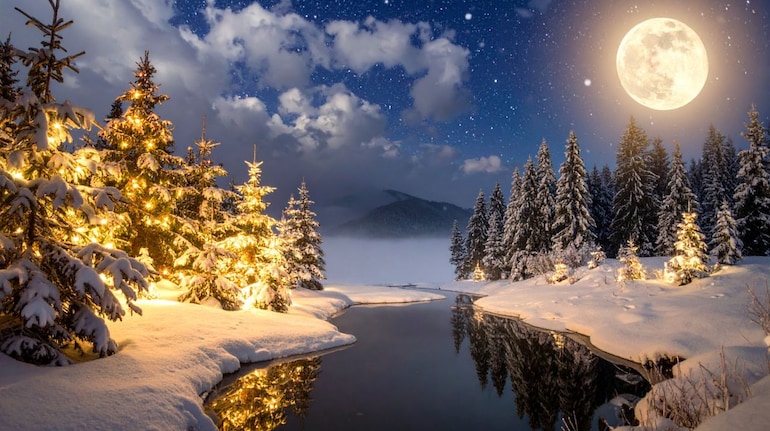

A full moon will light February skies worldwide this weekend. The lunar event arrives on 1 February, drawing attention for its quiet timing and rare proximity to familiar stars. Astronomers say the Snow Moon will appear prominent during evening hours across many regions. The moon will rise near sunset and remain visible overnight. Clear skies will offer steady views without specialised equipment.
According to EarthSky, the moon reaches peak fullness at 22:09 UTC. In central North America, this timing aligns closely with local sunset. Observers will notice a gradual exchange between fading daylight and moonlight. This slow transition often makes the moon appear larger. The effect is visual rather than physical but remains striking.
In India, the Snow Moon peaks early on 2 February. Indian Standard Time places maximum illumination at 03:39 am nationwide. Skywatchers across the country may view it clearly. Visibility depends largely on local weather conditions overnight.
Why February’s Snow Moon Matters
February’s full moon is traditionally called the Snow Moon. The name reflects seasonal history rather than astronomical characteristics. In North America, February historically brought heavy snowfall and hardship. Travel often became difficult and food supplies sometimes ran low. Other names include Hunger Moon and Boney Moon. These labels helped communities track seasons and survival challenges. The moon itself remains unchanged regardless of its name.
Regulus Appears Near the Full Moon
This February full moon appears near Regulus, Leo’s brightest star. Regulus usually rises about ninety minutes after the moon. The star may be difficult to see due moonlight. Observers can block moonlight using a hand or structure. The pairing shifts nightly as the moon continues orbiting Earth. Such close alignments occur briefly and then pass quietly.
Beehive Cluster Adds Subtle Detail
The moon also moves near the Beehive Cluster. This star cluster is usually visible through binoculars. Moonlight will wash out most cluster details during peak brightness. Still, astronomers note the alignment remains noteworthy. These familiar objects rarely share such close sky positions. After February’s passage, the sky continues its steady changes.
Nothing dramatic defines this lunar event, scientists emphasise. Its appeal lies in timing, placement, and visibility. Anyone stepping outside can observe it easily. The February Snow Moon offers a calm moment above.
Discover the latest Business News, Sensex, and Nifty updates. Obtain Personal Finance insights, tax queries, and expert opinions on Moneycontrol or download the Moneycontrol App to stay updated!
Find the best of Al News in one place, specially curated for you every weekend.
Stay on top of the latest tech trends and biggest startup news.





