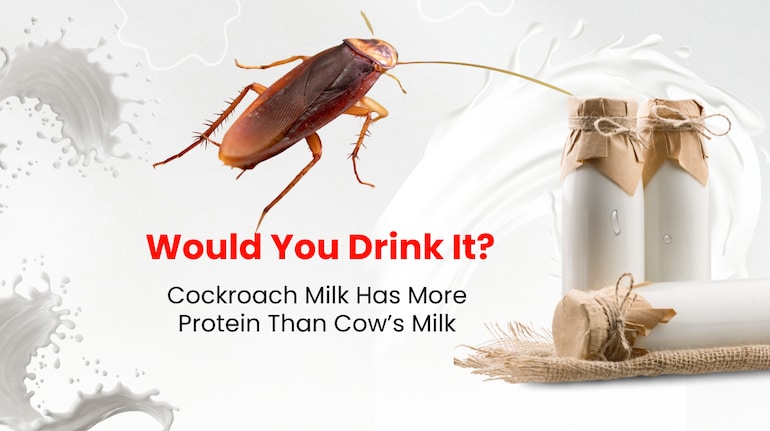
Milk alternatives are booming, but scientists have identified one that sounds shocking, and incredibly powerful. Cockroach milk, produced by a rare species of cockroach, is being studied for its exceptionally high nutritional value, with research suggesting it could be four times more nutritious than cow’s milk.
While the idea may make many uncomfortable for many, scientists say the findings raise serious questions about the future of nutrition, food security, and alternative protein sources.
What Is Cockroach Milk?
Cockroach milk is not milk in the traditional sense. It is a protein-rich crystal substance produced by the Pacific beetle cockroach (Diploptera punctata) to nourish its newborn young.
Unlike most cockroach species that lay eggs, this species gives birth to live young and secretes milk-like crystals inside its body, making it the only cockroach species capable of producing milk.
Why Are Scientists Studying Cockroach Milk?
Researchers became interested after discovering that cockroach milk crystals contain:
This combination makes it a complete food, something few natural products can offer.
How Nutritious Is Cockroach Milk Compared to Cow’s Milk?
The difference is striking.
A single glass of cow’s milk contains about 8 grams of protein, while a glass of cockroach milk is estimated to provide around 32 grams of protein - four times more.
To put this in perspective:
This has led scientists to describe cockroach milk as a potential “superfood.”
Can Cockroach Milk Replace Plant-Based Milk Alternatives?
Many popular milk alternatives, such as almond, oat, or rice milk, low in protein. People who avoid dairy often need to compensate through other protein sources.
In theory, cockroach milk could outperform most existing milk alternatives nutritionally. However, experts stress that it is not currently available for consumption.
Why Isn’t Cockroach Milk Available in Stores?
Despite its benefits, producing cockroach milk is extremely impractical with current technology.
To extract the milk:
Can Any Cockroach Be Milked?
No. Out of nearly 4,600 cockroach species worldwide, only the Pacific beetle cockroach produces milk.
This significantly limits supply and makes mass harvesting even more difficult.
Could Cockroach Milk Help People With Milk Allergies?
Milk allergies affect millions globally, driving demand for dairy-free alternatives. Cockroach milk contains no lactose, which could make it suitable for those who cannot digest traditional dairy.
However, scientists caution that human safety studies are still limited, and potential allergic reactions are not yet fully understood.
Are There Any Health Risks or Drawbacks?
Yes, several concerns remain:
These challenges make commercial availability unlikely in the near future.
Could Cockroach Milk Help Solve Global Food Shortages?
Some scientists believe it could, if technology advances.
Indian researchers, including scientists from the Institute of Stem Cell Biology and Regenerative Medicine, have studied the protein structure of cockroach milk crystals and describe them as “time-released, complete food.”
Experts argue that such calorie-dense nutrition could one day help address food insecurity, especially in regions affected by climate change and poverty.
So, Will Humans Ever Drink Cockroach Milk?
Not anytime soon.
While cockroach milk shows extraordinary promise on paper, experts say it will likely remain a scientific curiosity until production becomes affordable, ethical, and scalable.
Still, as food technology evolves and demand for alternative proteins grows, what sounds strange today may not seem so unusual tomorrow.
For now, cockroach milk remains one of science’s most surprising discoveries, raising a simple but powerful question: Would you drink it?

Discover the latest Business News, Sensex, and Nifty updates. Obtain Personal Finance insights, tax queries, and expert opinions on Moneycontrol or download the Moneycontrol App to stay updated!
Find the best of Al News in one place, specially curated for you every weekend.
Stay on top of the latest tech trends and biggest startup news.