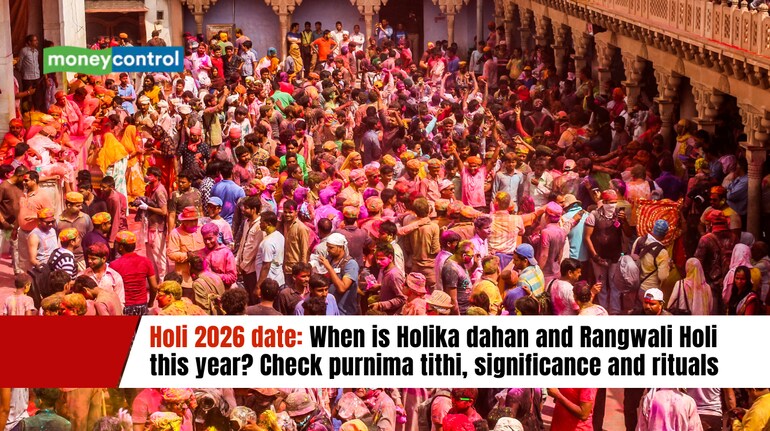

Rangwali Holi 2026: Also known as Dhulandi, will be celebrated with joy and colours across India on Wednesday, March 4, 2026, a day after Holika Dahan. One of the biggest Hindu festivals after Diwali, Holi marks the victory of good over evil and celebrates love, unity, and the arrival of spring. Devotees follow Panchang-based timings to observe Holika Dahan rituals and enjoy Rangwali Holi in an auspicious manner.
Rangwali Holi 2026 date and Holika dahan timings
According to the Hindu Panchang, Holi celebrations in 2026 will take place over two days:
| Festival | Date and Time |
| Holika Dahan / Holi | Tuesday, March 3, 2026 |
| Rangwali Holi / Dhulandi | Wednesday, March 4, 2026 |
| Purnima Tithi Begins | 05:55 PM on March 2, 2026 |
| Purnima Tithi Ends | 05:07 PM on March 3, 2026 |
(Note: Timings may vary slightly depending on your city.)
What is Rangwali Holi or Dhulandi
Rangwali Holi is the main day of the Holi festival when people play with colours, gulal, and water. It is celebrated the day after Holika Dahan, symbolising joy, togetherness, and the spirit of forgiveness. Rangwali Holi is also popularly known as Dhulandi or Dhulendi, while in some regions it is called Dhuleti or Dhulheti.
On this day, people smear colours on each other, exchange greetings, and celebrate with music, sweets, and festive food.
Holika dahan significance and rituals
The first day of Holi is known as Holika Dahan, also called Chhoti Holi or Jalanewali Holi. Bonfires are lit after sunset to commemorate the burning of Holika and the victory of devotion and righteousness, inspired by the story of Prahlad.
In South India, Holika Dahan is also referred to as Kama Dahanam. Devotees offer prayers to the sacred fire, seeking protection from negativity, illness, and obstacles.
Religious importance of Holi festival
Holi is a deeply spiritual festival in Hindu tradition and is celebrated by Hindus across the world. It represents the triumph of good over evil, the power of devotion, and the renewal of relationships. Holi also signifies the end of winter and the beginning of a new agricultural season, making it both a religious and seasonal celebration.
Holi celebrations in Braj region
The Braj region, associated with the life of Lord Krishna, is world-famous for its grand Holi celebrations. Places such as Mathura, Vrindavan, Gokul, Govardhan, Nandgaon, and Barsana host unique and traditional Holi festivities.
Among them, Lathmar Holi of Barsana is globally renowned, where women playfully hit men with sticks, recreating a divine tradition linked to Radha and Krishna. These celebrations attract devotees and tourists from across the globe.
How Rangwali Holi is celebrated
On the morning of Rangwali Holi, people come out to play with dry colours known as gulal. Dry colours are widely preferred as they are gentle and easy to apply. However, wet colours remain an inseparable part of Holi celebrations.
Wet colours are prepared by mixing water with gulal and are applied on faces or poured using pichkaris, water balloons, and buckets. The festive spirit is marked by laughter, dance, music, and community bonding.
Why Rangwali Holi 2026 is special
Rangwali Holi 2026 brings another opportunity to celebrate harmony, joy, and togetherness. Following correct Holika Dahan muhurat and understanding the spiritual meaning of the festival adds deeper value to the celebrations.
As colours fill the air and hearts, Rangwali Holi reminds everyone to let go of past differences and welcome happiness, positivity, and new beginnings.

Discover the latest Business News, Sensex, and Nifty updates. Obtain Personal Finance insights, tax queries, and expert opinions on Moneycontrol or download the Moneycontrol App to stay updated!
Find the best of Al News in one place, specially curated for you every weekend.
Stay on top of the latest tech trends and biggest startup news.