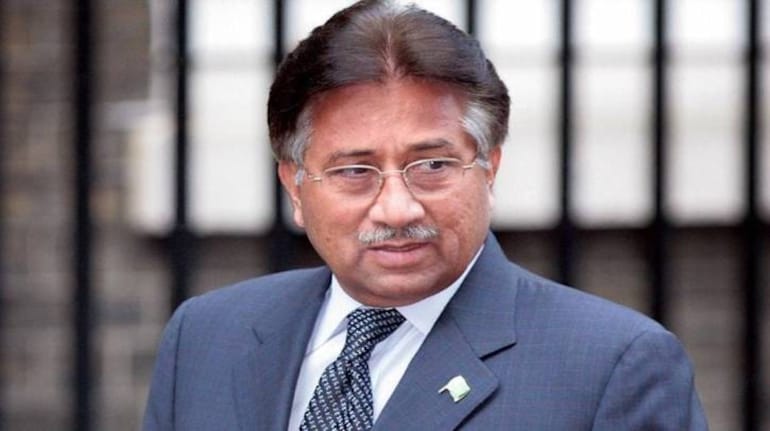
Gen Pervez Musharraf, the flamboyant former army chief of Pakistan, who died at 79 on February 5 will be remembered in India not only as the mastermind of the Kargil conflict but also as the president who brought the two countries close to signing an agreement on Kashmir.
Musharraf, a four-star general, was suffering from amyloidosis, a rare disease that causes organ damage, which left him wheelchair-bound. He died in a private nursing home in Dubai.
He ruled Pakistan from 1999 to 2008 and was the only army general in the country to be handed out a death sentence for “high treason”.
While the charges and the death penalty were subsequently revoked, the Pakistani army has hesitated from taking control of the country directly since his departure from the political scene.
The Kargil conflict
As the army chief, Musharraf masterminded the 1999 Kargil intrusion, surprising many in India and elsewhere, as it came within months of Indian Prime Minister Atal Bihari Vajpayee’s taking the famous “peace bus” to Lahore to reset ties with Pakistan.
Vajpayee and Pakistan Prime Minister Nawaz Sharif also agreed on what came to be known as the Lahore Declaration, which listed several measures to improve relations between the two sides, including preventing terrorist activities emanating from Pakistani soil against India.
Musharraf was born in pre-partition Delhi in 1943 but settled in Karachi with his family. He joined the Pakistani Army in 1964 and rose through the ranks to be chosen as its chief by Prime Minister Nawaz Sharif in 1998.
But the two soon fell apart. Sharif dismissed Musharraf as he was returning home on a flight from Sri Lanka.
The coup
The Sharif government denied his aircraft the landing right even though it was low on fuel. The army staged a bloodless coup.
Musharraf, who landed in Pakistan safely, took charge and put the country under martial law in 1999. He soon declared himself the president and ruled the country until 2008.
Despite his role in the Kargil conflict, Vajpayee invited Musharraf for talks at Agra in 2001. Though the two sides engaged with each other over the two-day summit, talks fell through.
Musharraf, who took charge in the wake of the 9/11 terrorist attack in the United States, was smart enough to align Pakistan with the Americans in their fight against global terror and managed to fob off attention from his country’s close links with terrorist groups and organisations.
Ceasefire, back-channels
Musharraf’s flamboyance was for all to see during the Kathmandu SAARC Summit when he walked up to Vajpayee after his address and shook hands with him to break the ice to resume political engagement between the two countries that had stopped after Agra.
In subsequent years, he entered into a ceasefire agreement and also assured not to allow terrorist attacks against India from Pakistan or territory controlled by it.
In 2004, Musharraf also worked out an arrangement with the Indian side to encourage “back-channel” talks to find solutions to many outstanding issues, including that of Kashmir.
Officials from both sides agree that they were very close to signing an agreement on Kashmir that could have ended the violence in the Valley.
But after Musharraf was forced to resign, his successors refused to acknowledge the progress, bringing back strains in the ties, with Kashmir at its centre.
In Pakistan, Musharraf will be remembered for losing the Kargil conflict to India, staging a coup to topple the Sharif government and his protracted war with the judiciary.
Musharraf was charged with the murder of former prime minister Benazir Bhutto and other political leaders. Bhutto was assassinated in a suicide bomb and gun attack in December 2007.
He survived at least two deadly attacks within the Pakistani military installation by disgruntled and radicalised members of the army for aligning with the Americans.
But despite his deft moves for survival and media-savvy image, Musharraf was responsible for lowering the stature of the army and raising the profile of the civilian leadership by allowing it to put a Pakistani general to trial for the first time in its history.
Though he survived the trial, the Pakistani army’s all-too-powerful image took a beating and has not recovered.
Musharraf was forced to resign as the president after impeachment proceedings were set in motion and could never return to the country from his refuge in the United Arab Emirates.

Discover the latest Business News, Sensex, and Nifty updates. Obtain Personal Finance insights, tax queries, and expert opinions on Moneycontrol or download the Moneycontrol App to stay updated!
Find the best of Al News in one place, specially curated for you every weekend.
Stay on top of the latest tech trends and biggest startup news.