






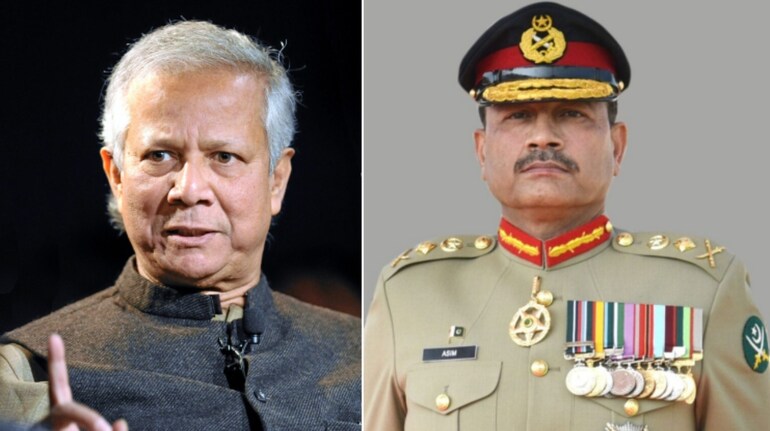
As Bangladesh struggles through a fragile political transition, intelligence inputs suggest a troubling resurgence of Pakistani influence in Dhaka. For the first time in more than fifteen years, the “long shadow” of Pakistan’s Inter Services Intelligence, or ISI, is once again falling across Bangladesh’s political and security landscape.
What initially appeared to be a diplomatic “thaw” after the fall of the Sheikh Hasina government in August 2024 has now taken the shape of a deeper and more coordinated realignment. Indian intelligence agencies are increasingly alarmed by what they describe as a rapidly consolidating Dhaka-Islamabad axis that threatens regional stability.
The ‘Dhaka Cell’ inside Pakistan’s mission
The most serious red flag is the reported creation of a dedicated ISI Special Cell operating from within the Pakistan High Commission in Dhaka. First reported by CNN-News18 in October 2025, the unit is believed to be staffed by senior military and intelligence officers.
According to top intelligence sources, the initial structure of this so-called “Dhaka Cell” includes one Brigadier, two Colonels, four Majors and several officers from Pakistan’s Navy and Air Force. Such a heavy footprint, officials say, goes far beyond normal diplomatic engagement.
The cell was reportedly formalised after a four-day visit to Dhaka by Pakistan’s Chairman of the Joint Chiefs of Staff Committee, General Sahir Shamshad Mirza, in late October 2025. During the visit, Mirza and senior ISI officials held multiple closed-door meetings with Bangladesh’s National Security Intelligence and the Directorate General of Forces Intelligence.
While these meetings were officially described as cooperation on Bay of Bengal surveillance, intelligence assessments suggest the real focus is monitoring India’s eastern borders.
Rapid embrace between Dhaka and Islamabad
The pace at which Bangladesh and Pakistan have drawn closer has been unusually fast. Since August 2024, the Muhammad Yunus-led interim setup and the Shehbaz Sharif government have moved in near lockstep.
One of the most controversial steps came on July 23, 2025, when both countries agreed to grant visa-free access to diplomats and official passport holders, including military personnel. Intelligence officials say this significantly lowers barriers for covert movement.
Military exchanges have followed. Bangladesh’s Quartermaster General visited Rawalpindi in August 2025, while Pakistan’s Lieutenant General Tabassum Habib received a red carpet welcome in Dhaka in October. These visits have been interpreted as signals of deepening defence cooperation.
At the same time, new economic links such as a direct Karachi-Chittagong shipping route and plans for direct flights have provided logistical cover for increased bilateral movement.
Intelligence fears of radicalisation drive
Indian intelligence analysts warn that the ISI’s “core mission” in Bangladesh goes beyond diplomacy or trade. The focus, they say, is systematic radicalisation of youth and the strengthening of extremist groups such as Jamaat-e-Islami and the Inqilab Manch.
The larger objective, analysts believe, is the creation of a “Hybrid Regime” similar to Pakistan’s own power structure, where civilian authority is overshadowed by military and intelligence control. Such a setup, they argue, would be inherently hostile to Indian interests.
This concern has intensified after the violent unrest that followed the death of student leader Sharif Osman Hadi on December 18.
Violence seen as a “managed” crisis
The chaos triggered by Hadi’s death is increasingly being viewed as a “managed” crisis by security observers. Attacks on the Indian High Commission in Dhaka and the Assistant High Commission in Chattogram, along with the burning of media offices such as The Daily Star, have deepened fears of orchestrated instability.
Analysts say the atmosphere of fear and disorder is being used to delay the February 12 elections. Radical elements are gaining ground on the streets, while the interim government appears either unwilling or incapable of restoring control.
Instead of acting as a stabilising force, the Yunus administration is being accused of allowing extremist and foreign-backed actors to fill the vacuum.
A timeline that raises alarms
Developments since Sheikh Hasina’s ouster point to a steady tightening of Pakistan-Bangladesh ties. Pakistan quickly expressed solidarity after the fall of Hasina’s government in August 2024 and welcomed Chief Advisor Muhammad Yunus.
High-level meetings followed in New York, Cairo and Rawalpindi. Intelligence delegations exchanged visits. Visa rules were relaxed. The Pakistan High Commission in Dhaka expanded its staff strength. Military and economic engagements resumed after long gaps.
To Indian analysts, the pattern is clear and deeply concerning.
India flags threat to regional security
India has raised the issue directly with Dhaka. On November 19, 2025, during the Colombo Security Conclave Summit in New Delhi, National Security Advisor Ajit Doval reportedly flagged the presence of the “ISI Cell in Dhaka” to his Bangladeshi counterpart, Dr Khalil ur Rehman.
While New Delhi continues to emphasise its support for the people of Bangladesh, officials see the growing Pakistani footprint as a direct challenge to India’s “Neighbourhood First” policy.
With Bangladesh facing political uncertainty and Pakistan seeking strategic leverage, the renewed intelligence axis is being viewed not as a coincidence but as a calculated move that risks destabilising eastern South Asia.
Discover the latest Business News, Sensex, and Nifty updates. Obtain Personal Finance insights, tax queries, and expert opinions on Moneycontrol or download the Moneycontrol App to stay updated!
Find the best of Al News in one place, specially curated for you every weekend.
Stay on top of the latest tech trends and biggest startup news.




