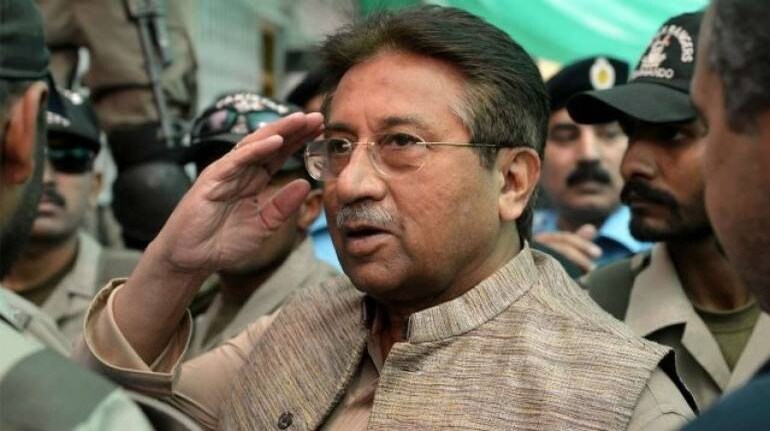
Pervez Musharraf, Pakistan’s former military dictator who ruled for nearly a decade from 1999 but spent later years fighting a litany of charges in exile, died in Dubai on February 5. He was 79.
Musharraf, a retired four-star general, passed away after a long battle with a rare disease named amyloidosis, Pakistani media reported.
The Inter-Services Public Relations, the Pakistan military’s media unit, confirmed his demise in a statement.
Musharraf was head of Pakistan’s armed forces when he took charge of Pakistan’s administration in a bloodless coup in 1999. The military overthrew the elected Nawaz Sharif government.
In 2001, Musharraf became president and held power for seven years. It was an especially turbulent period even for a country whose history is littered with assassinations, coups and instability. Musharraf himself faced assassination attempts and fought charges of oppression from political rivals and human rights activists.
In March 2014, Musharraf was indicted for high treason and subverting the Constitution on November 3, 2007. A special court handed him the death sentence in the case of treason in December 2019. Musharraf always denied the charge.
He left Pakistan in March 2016 for Dubai to seek medical treatment after the military sided with him in the cases. He did return to Pakistan only to go back to Dubai.
Amyloidosis is a rare disease that occurs when a protein called amyloid builds up in organs. This amyloid build-up can affect the functioning of organs such as the heart, kidneys, liver, spleen, nervous system and digestive tract.
On Musharraf's watch, India and Pakistan ties swung between hope and despair. As the Pakistan army chief, Musharraf launched the Kargil war in 1999 but as the president made an effort to resolve the Kashmir issue.
He even visited India in 2001 for the Agra summit which unravelled spectacularly. The same year, an attack on Indian Parliament brought the two countries to the brink of war.
A few months later, efforts were renewed to improve ties and it is believed that back-channel talks between the two sides continued but a solution remained elusive.
Musharraf quit as the president in August 2008. A few months later, Mumbai was hit by multiple terror strikes on November 26 attacks by Pakistan-based Lashkar-e-Taiba terrorists and the relationship never recovered.
In exile, Musharraf seemed to have gone back to his old ways. In an interview in 2017, the former president said he was the biggest supporter of Lashkar and its founder Hafiz Saeed, who masterminded several attacks against India, including the 26/11 Mumbai strikes. He said Saeed was “involved in Kashmir” and he supported his involvement.
Discover the latest Business News, Sensex, and Nifty updates. Obtain Personal Finance insights, tax queries, and expert opinions on Moneycontrol or download the Moneycontrol App to stay updated!
Find the best of Al News in one place, specially curated for you every weekend.
Stay on top of the latest tech trends and biggest startup news.