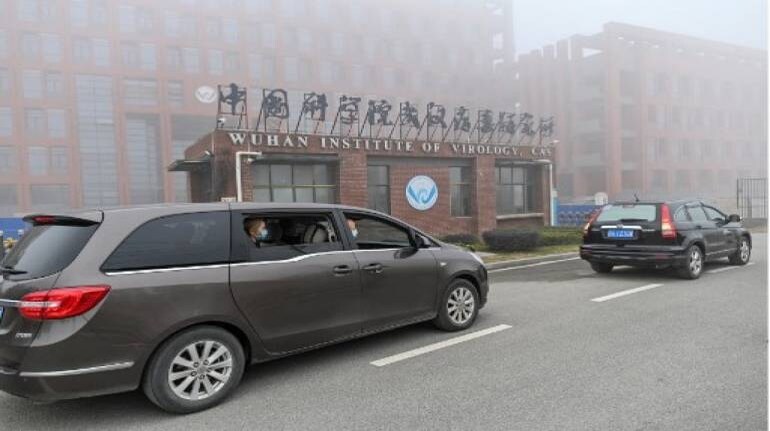
US-based scientist, Andrew Huff, who worked at a controversial research lab in China's Wuhan, has said that COVID-19 was a "man-made virus" that leaked from the facility.
COVID was leaked from Wuhan Institute of Virology (WIV), a state-run and funded research facility, two years ago, news agency ANI reported quoting an article published in the New York Post. The article mentioned US-based researcher Andrew Huff's statement in the British newspaper The Sun.
Moneycontrol could not independently verify these reports.
In Huff's latest book, "The Truth About Wuhan," he claims that the pandemic was caused by the US government's funding of coronaviruses in China. Excerpts of epidemiologist Andrew Huff's book have been out in the UK-based tabloid The Sun.
Also Read | China set to ease COVID curbs further as markets cheer change of tackHuff claims in his book that China's gain-of-function experiments were conducted with inadequate security, resulting in a leak at the Wuhan lab, according to New York Post.
According to the New York Post report, Huff is the former vice president of the EcoHealth Alliance, a non-profit organisation based in New York that studies infectious diseases.
Since the pandemic broke out, the Wuhan lab has been the centre of heated debates over the origins of COVID. Both Chinese government officials and lab workers have been denying that the virus originated there.
"Foreign laboratories did not have the adequate control measures in place for ensuring proper biosafety, biosecurity, and risk management, ultimately resulting in the lab leak at the Wuhan Institute of Virology," Andrew Huff, reportedly said in his book.
For more than a decade, the organisation has been studying several coronaviruses in bats with funding from the National Institutes of Health (NIH) and has forged close ties to the Wuhan lab. The NIH is the primary agency of the United States government responsible for biomedical and public health research, the report added.
Huff, stated that the non-profit assisted the Wuhan lab for many years in developing the "best existing methods to engineer bat coronaviruses to attack other species."
"China knew from day one that this was a genetically engineered agent," Huff wrote. "The US government is to blame for the transfer of dangerous biotechnology to the Chinese. "I was terrified by what I saw," he told The Sun, as per New York Post. "We were just handing them bioweapon technology."
The Post also reports that according to a recent investigation published by ProPublica/Vanity Fair, the WIV is home to China's riskiest coronavirus research.
This research institute has been under immense pressure from the ruling Chinese Communist Party to produce scientific breakthroughs to raise its global status despite the lack of resources.
Discover the latest Business News, Sensex, and Nifty updates. Obtain Personal Finance insights, tax queries, and expert opinions on Moneycontrol or download the Moneycontrol App to stay updated!
Find the best of Al News in one place, specially curated for you every weekend.
Stay on top of the latest tech trends and biggest startup news.