




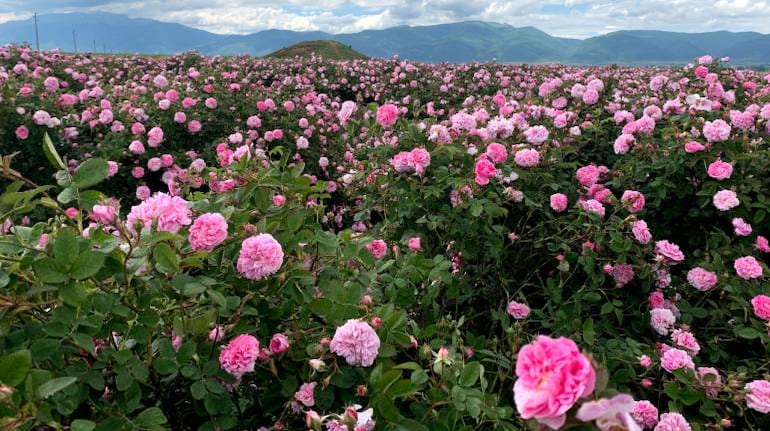
The scenic town of Kazanluk seems to leap straight out of a picture postcard. Everywhere I look there’s beauty to behold. The Stara Planina mountains – part of the mighty Balkan range – loom in the distance; the Tundzha river valley plunges precipitously into a deep gorge while the glutinous Koprinka Reservoir rests amid the beautiful ruins of the ancient Thracian Capital of Sevtopolis.
Nestling in the 'Valley of Roses’ in southeastern Bulgaria, Kazanluk is most famous as the epicenter of the country’s rose oil production. The Rose Festival, held here every year from May-end to June, draws thousands of tourists for curated rose picking rituals, competitions, contests, theatre performances, concerts and exhibitions, all revolving around the rose blossom.
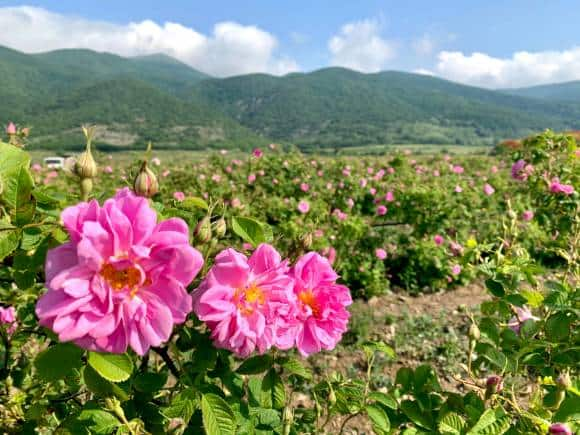 Damascene roses (Photo by Neeta Lal)
Even though I missed the Rose Festival this year, a visit to the Valley gave me an insight into the region’s floral heritage. Meeting with the locals, trying delicious local cuisine, and interacting with rose oil producers added to my deeply immersive experience.
According to Marin Shishev, one of Kazanluk’s biggest essential oils producer, Bulgaria is one of the world’s largest producers of rose, lavender, melissa and yarrow oils. “The country produces 70% of the world’s rose oil and we’ve bagged several awards at international fairs for our craftsmanship. The quality of the Bulgarian oils is among the best in the world, largely because Rose Valley’s climate helps the prized Damascene Rose thrive which gives the fullest spectrum of elements.”
According to legend, soldiers of Alexander the Great brought the first roses to Thrace (ancient name of southeast Europe) from Persia through Syria and Damascus in the Middle Ages. The cultivation of roses was introduced to the region around Kazanluk, a town founded by the Turks, in 1420. Since 1650, industrial quantities of oil-yielding roses have been produced in Bulgaria. In 1740, a French company from Bulgaria exported the first batch of rose oil and Bulgarian rose oil became a preferred raw material for French perfumers.
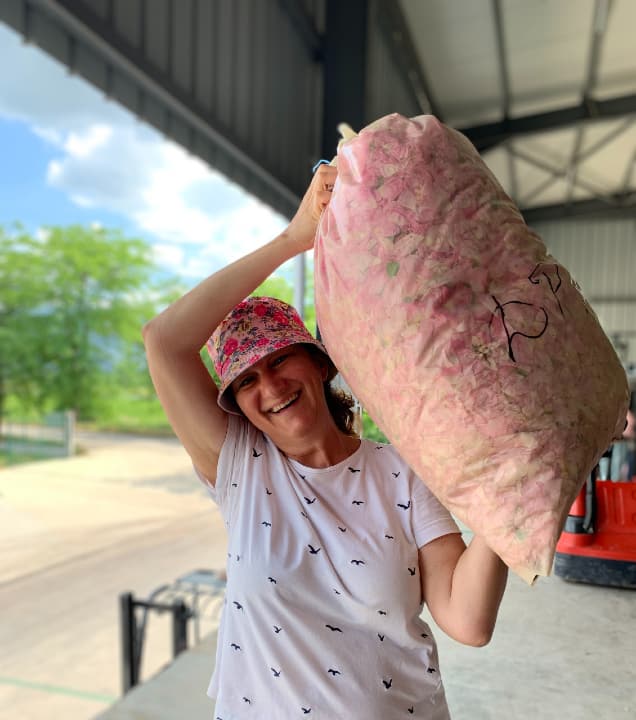 Nadia Zaharieva (Photo by Neeta Lal)
During the rose picking season the entire valley is redolent of the fragrance of roses and swathed in a riot of flowers. The gathering process, traditionally considered a woman’s task, requires great dexterity and patience. The flowers are carefully cut one by one and laid in willow-baskets which are then sent to the distilleries.
Such is the meticulousness involved in the processing that in September 2014 the European Commission approved Bulgarian rose oil as a new Protected Geographical Indication (PGI). The oil is extracted from the rose blossoms between 5 am and noon before the dew evaporates, a local grower informed me. Because no machines have yet been invented for the rose picking, its oil production remains a labour intensive process.
“One kilo of rose oil requires four tons of rose petals,” Shishev explained as we ambled through a rose field. “The process of extracting the oil and its fermentation is even longer than in the case of whiskey and that’s why a liter of rose oil costs a whopping 7,000 euros. To extract oil, rose petals are put in boilers, the process repeated several times until this magical and aromatic elixir is extracted.”
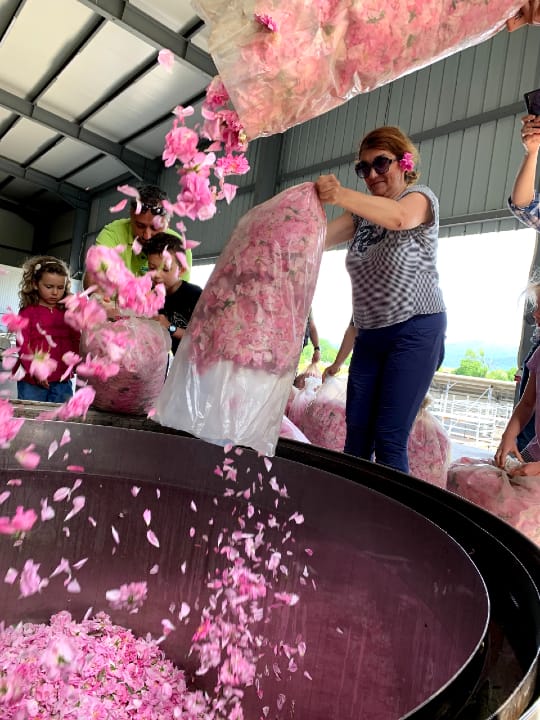 Rose oil extraction is still labour-intensive. (Photo by Neeta Lal)
According to the oil producer, the Bulgarian rose oil is of an exceptionally high quality because of the technology used in its manufacture – the double distillation method and the intermediate cooling. “This way, the yielding of rose oil from rose water surges manifold,” he added.
Shishev’s charming wife Nadia Zaharieva, a cultural heritage development expert, informed me that the couple love calling the Rose Valley home because it is gorgeous throughout the year. “The mountain hills are green and the forests are deep and cool throughout the year. It is the roses and poppies first in May, then it is the acacia trees in June, the lavender in July, the sunflowers in August,” she explained as I took a 360 view of the region’s alluring panorama.
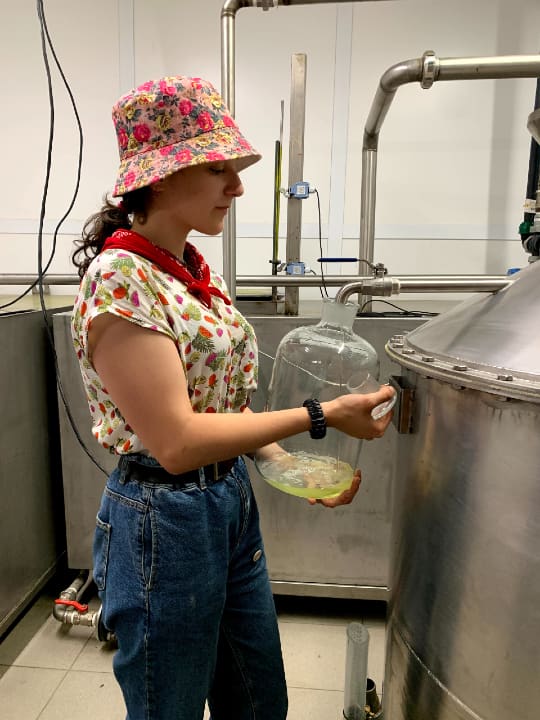 Bulgaria has a three-centuries-old tradition of producing rose oil (Photo by Neeta Lal)
To end my visit, I accompanied the couple to the local Rose Museum, the only one of its kind in the world. A large collection of objects, photos and documents showcased here helped me trace the nearly three centuries old history of the Bulgarian rose industry.
Among the exhibits are some original pieces of equipment: stills for distilling the rose oil; instruments for separating the oil from the rose water; bottles, containers and crates for storing and exporting the oil; logos of rose traders, photographs and documents of rose traders families, etc.
I next ambled into a kiosk selling rose-related souvenirs: rose, mint and lavender essential oils; rose liqueur, rose brandy, rose water, fragrances and more. I picked up a hand cream and rose oil from the motley collection. Back home, every time I dab on the aromatic concoctions, I’m transported to the stunning landscapes of the Rose Valley.
Discover the latest Business News, Sensex, and Nifty updates. Obtain Personal Finance insights, tax queries, and expert opinions on Moneycontrol or download the Moneycontrol App to stay updated!
Find the best of Al News in one place, specially curated for you every weekend.
Stay on top of the latest tech trends and biggest startup news.