






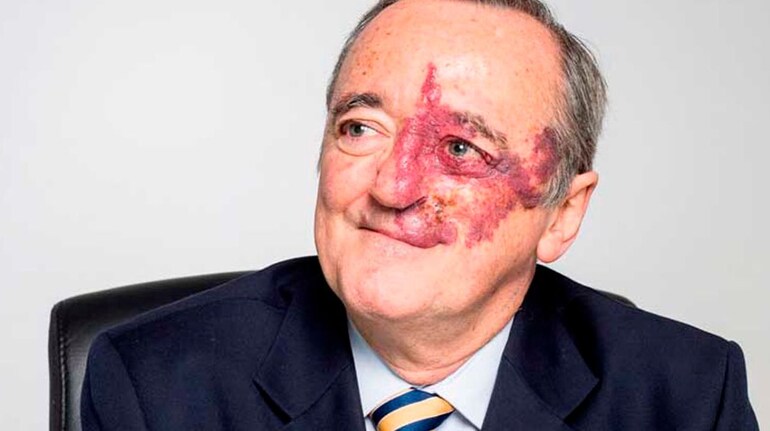

Mariano Barbacid, who leads the Experimental Oncology Group at the Spanish National Cancer Research Centre (CNIO), developed a treatment that has successfully and completely eradicated pancreatic tumours in mice, without any major side effects. The discovery was hailed as a potentially significant turning point in the fight against this disease. However, a segment of social media users mocked a birthmark on Barbacid's face and made numerous offensive and superficial comments, rather than recognising the scientific achievement.
While Barbacid’s study appeared in PNAS, some social media commentators shared memes and remakes that shifted the focus from scientific breakthrough to online mockery.
However, many defended Barbacid, celebrating his achievement and condemning the shallow comments online.
Even when talking about one of the greatest discoveries for the humankind, if all you can talk about is his face, Then the ugliest scars are the ones you carry within and no Mariano Barbacid can cure it for you! https://t.co/r4gSfQ4BEz— Pavi (@Paviii_27) January 30, 2026
;
One user wrote, “Even when talking about one of the greatest discoveries for the humankind, if all you can talk about is his face, Then the ugliest scars are the ones you carry within and no Mariano Barbacid can cure it for you!”
Another X user commented, “At least, Dr. Mariano Barbacid isn’t afraid of showing his face and has talents, unlike those trolls whose only skills are behind a keyboard in their mother’s basement and are too scared to show their actual faces.”
A third user said, “For the ones making assumptions Mariano Barbacid, a renowned Spanish oncologist who leads key research at the National Cancer Research Centre (CNIO). What he has on his face is a hemangioma (or port-wine stain), a reddish or purplish birthmark caused by an anomaly in the blood vessels of the dermis.”
Who is Mariano Barbacid?
Mariano Barbacid earned his PhD (1974) from the Complutense University of Madrid and completed postdoctoral study at the US National Cancer Institute (1978). In 1982, his research resulted in the identification of the first human oncogene, a gene that has the potential to cause cancer. He later isolated the TRK oncogene from a colon carcinoma.
The recent study, “A targeted combination therapy achieves effective pancreatic cancer regression and prevents tumour resistance,” was co-led by Carmen Guerra, with Vasiliki Liaki and Sara Barrambana as first authors.
Discover the latest Business News, Sensex, and Nifty updates. Obtain Personal Finance insights, tax queries, and expert opinions on Moneycontrol or download the Moneycontrol App to stay updated!
Find the best of Al News in one place, specially curated for you every weekend.
Stay on top of the latest tech trends and biggest startup news.





