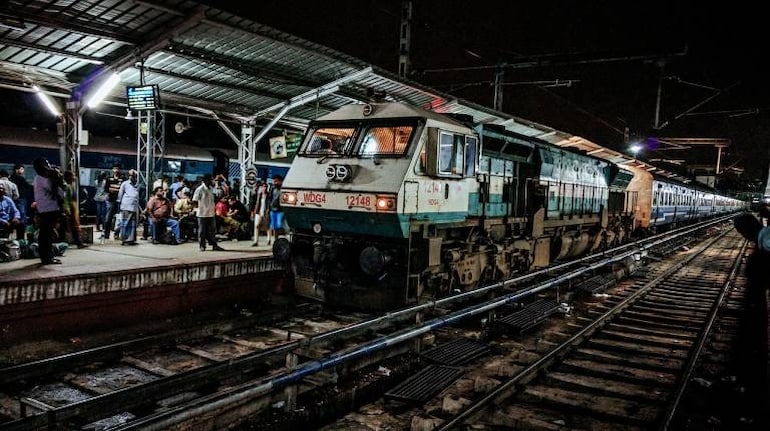
The second wave of the pandemic and the consequent lockdowns and curfews in different parts of the country have reduced Indian Railways' occupancy to around 45 percent when compared to that of March, a senior official in the Ministry of Railways told Moneycontrol.
Ticket booking of Indian Railway Catering and Tourism Corp Ltd has fallen to around 500,000 tickets per day compared to around 900,000 bookings seen in February and March, the official said.
Due to the lower demand, the Indian railways was also forced to cancel close to 400 trains on different routes across the country, sources told Moneycontrol.
Since the start of May, the railways has cancelled nearly 200 trains due to lockdowns being imposed in Karnataka, West Bengal, Odisha and Assam, sources said.
Most trains with ridership under 30 percent have been cancelled temporarily.
“When the lockdown was imposed, there were no restrictions on train services. However, ridership dropped drastically on certain routes. A decision on resumption of services will be taken after the lockdown is lifted,” officials said.
The Indian Railways has adopted a flexible approach, cancelling trains when demand drops and quickly adding new ones if there is a rush.
Officials said that if the pandemic continues to rage and more restrictions are imposed, railway operations may fall even further.
Railway Board Chairman Suneet Sharma had on May 17 said that the Indian Railways was currently operating 1,005 trains on an average per day.
According to Sharma, at the end of April, the national transporter was running 1,514 specials trains on an average per day and 5,387 suburban services per day. It has also pushed into service 28 special trains as clones of highly patronised trains and running 984 passenger services.
Sharma had added that at the end of April, as many as 70 percent of train services were operational and that the railways was also running additional trains wherever there is demand.
He had also said that if there is any rush, Indian Railways can run train services immediately to meet demand.
With the rising number of COVID-19 cases, a sudden surge in the movement of railway passengers at stations was reported from across the country. Many travellers had said that the fear of an imminent lockdown due to the COVID-19 crisis was the reason behind their trips.
On May 19, India reported 2,67,334 new COVID-19 cases with active cases falling by 1,27,046 in the past 24 hours to 3,226,719 patients and deaths due to the disease rising to 2,83,248 as of 0800 IST.
Discover the latest Business News, Sensex, and Nifty updates. Obtain Personal Finance insights, tax queries, and expert opinions on Moneycontrol or download the Moneycontrol App to stay updated!
Find the best of Al News in one place, specially curated for you every weekend.
Stay on top of the latest tech trends and biggest startup news.