Note to readers: Soch to Success is a weekly column to enhance critical thinking skills for you to achieve success. Each article is packed with insights, tools, and a roadmap to action.
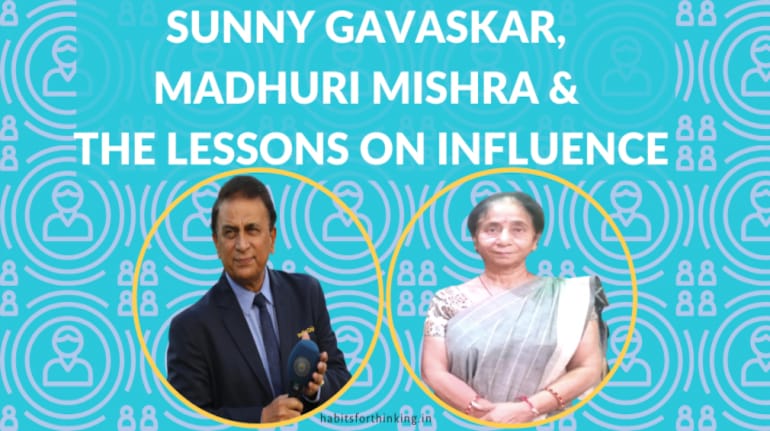
He stuffed hand towels in the front pockets of his trousers to make them work like thigh guards and she, far away from him, walked nearly eight kilometres a day to accomplish her mission. He created a path, she knocked on doors. He flew from country to country; she went from village to village. He retired years ago; she retired from service last week. Both unique in their pursuit but both built bridges that we’re all walking on today. The two, unknown to each other, have influenced our lives in the largest possible way—in cricket and in vaccines. This month, the cricketing world and India celebrated Sunil Gavaskar for accomplishing what no other Indian had done before. March 6 was the 50th anniversary of Gavaskar’s test debut against the West Indies in Port of Spain, Trinidad. He made 774 runs in that series, which is still a record for most runs by a debutant in a series.“Gavaskar’s feat signalled a change in mindset for Indian cricketers. The belief that his achievement gave the team showed up in the sport and how India battled with the opposition, often in the lion’s den. Given the pittance that sportspersons were paid then, his feats catapulted him into India’s first sports superstar, opening up opportunities for endorsements,” said an article.
Gavaskar said in an interview that during his early days, there was no gear for protection—no helmets, no thigh guards. They just went on. No paraphernalia. What he remembers today is the feeling of pride and happiness when he first wore the India cap. The summer of 1983In 1983, the iconic year for Indian cricket, in a small town, Madhuri Mishra, far away from cricket, defied her family and circumstances to become a health worker. This was almost five years after the launch of the nationwide immunisation programme. Mishra retired from service in March.Before we move ahead, here is a quick note on the immunisation programme: smallpox was eradicated in 1977 and the first version of the national immunisation programme was launched in 1978 as Expanded Programme of Immunization (EPI) with the introduction of BCG, OPV, DPT and typhoid-paratyphoid vaccines. The EPI target was at least 80 percent coverage in infancy. The vaccination was offered through major hospitals and largely restricted to urban areas and thus understandably, the coverage remained low. EPI was rechristened and launched as Universal Immunisation Programme (UIP) with some major changes on November 19, 1985. UIP’s aim was not only to increase production and distribution capacity but also to rapidly increase immunisation coverage and reduce mortality. It meant phased implementation—all districts to be covered, including a district-wise system for monitoring and evaluation.
District-wise monitoring meant health workers on the ground. This is where Mishra stepped in. For 30 years, Madhuri, now 60, walked 8 km a day to remote villages and immunised those with least access to healthcare.In an interview, she said, “The first few years were very tough. People didn't want to get immunised.” Myths and rumours like vaccines can cause infertility or will make them sick were her battles. “But I’d keep walking, stopping at villages and vaccinating children. It had to be done. At times, people would misbehave. At others, they wouldn't let me enter. I would keep going back, sometimes with others who had vaccinated their children until I could convince them,” Mishra said. She barely took a day off. Her ward managers said wherever she went, there was a surge in mass immunisation. Such was her influence.

a) Resolve: It is the determination to work that carries one forward. No paraphernalia, no conveniences yet perseverance made Mishra walk and work every day.
b) Purpose: No matter how many times she had to repeat herself, the nurse kept going back to the families that declined her initially. Her purpose was not to keep a count of how many homes she covered but not to leave anyone uncovered.
c) Consistency: If you have worked for 30 years without taking a break, without any excuse with the same enthusiasm as you did on Day One, you would have influenced many co-workers in your journey. Consistency in performance, in showing up everyday becomes the reason for success.
(Vishakha Singh, author of a forward-thinking course SHIFT, is a business strategist & a design thinking practitioner. She writes at www.habitsforthinking.in, offering insights into the ever-changing business environment.)
Discover the latest Business News, Sensex, and Nifty updates. Obtain Personal Finance insights, tax queries, and expert opinions on Moneycontrol or download the Moneycontrol App to stay updated!
Find the best of Al News in one place, specially curated for you every weekend.
Stay on top of the latest tech trends and biggest startup news.