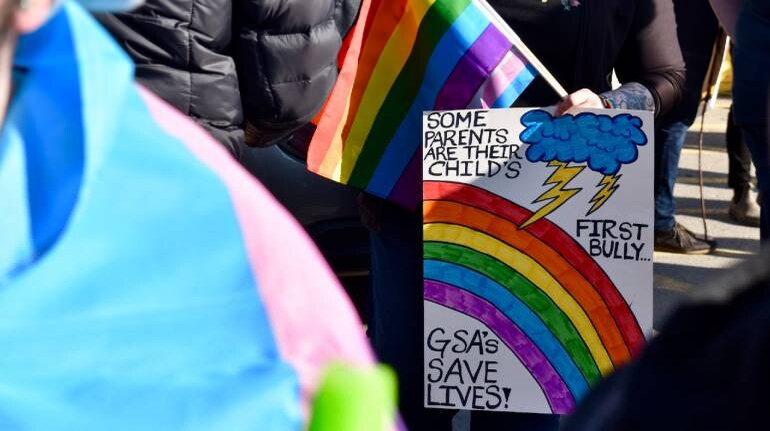
Nonbinary, gender nonconforming, and trans people, especially children, face constant bullying while growing up and find themselves isolated in a heteronormative society that continuously others them.
Moneycontrol connected with queer individuals from various fields to understand how a more queer-affirmative world can be built—and if this world-building is possible, then what role can individuals play in this process.
Parents of trans peopleChitraksh Ashray, marketing and publicity assistant at Yoda Press, says that most parents “haven’t seen anyone else like their child, so (they) fail to even try to understand their child. Besides this, there’s that persistent fear of what will other people in the extended family and society think, say, and do.”
Chitraksh adds, “A trans or gender nonconforming child must be parented with a lot of patience, without putting the pressure of unrealistic parental expectations on them, and without trying to fit them in a particular gendered label or box. Who needs labels any more anyway? A good approach starting with young kids is to use they/them pronouns for them. Let them decide what clothes they want to wear and allow them to figure out their gender themselves.”
Tejaswi Subramanian, journalist, researcher, and editor at Gaysi Family, echoes Chitraksh’s thoughts. As “parents are not educated about trans-affirmative healthcare”, they “often think their child is making the wrong choice,” Tejaswi observes. They find that parents “fear social consequences, alienation from extended family or other social circles. They have not sought therapy or worked through their understanding of gender roles and stereotypes, and might often incorporate it in their own lifestyles through practices of faith and other social settings.”
According to Tejaswi, “making educational spaces more queer-affirmative and sex-ed-positive, involving the parents and larger community in these exercises is the way to go.” Because it’s “impossible to address these things in isolation.” They say that policy changes at various levels, community-led media representation, educational initiatives and mental health support, and systemic sensitisation initiatives are key.” They also find “group therapy and support groups helpful as well, although it can’t be just that, as it often becomes about the parents’ woes than about actual inclusion and progressing towards a gender-inclusive society.”
Support networkCo-founder of Sweekar: The Rainbow Parents, a group of parents of Indian LGBTIQA+ children, co-producer of queer-themed movie Evening Shadows (2018), and recipient of several awards, Aruna Desai says that “it would be wrong to say that Indian parents are more or less accepting” of their trans or gender nonconforming children as “this (reluctance) is universal.”
“Gender incongruence, which manifests very early in childhood, is more difficult to understand as compared to (the) difference in sexual orientations, which manifests later, in teenage years,” she says. “From the parent’s viewpoint, the child (needs) to be directed and protected, whereas it is common knowledge that parenting a teenager requires the parents to be providers and friends. Hence, when a child is bringing forth a narrative very early in childhood, it is often negated, forcing the child to the closet themselves.”
Aruna recommends parents listen to their children, and “if there is something you do not understand, then do not try to change the child’s behaviour. Instead, change your behaviour, seek the help of professionals.” She also says that a “nurturing environment” can be created by sensitising caregivers in educational institutions and elsewhere.
Dr Aqsa Shaikh, director of the Human Solidarity Foundation, feels that “our social systems are so binary that even if the parents wish to support, they find it extremely challenging.” She believes “questioning (the gender) binary at the beginning, from birth certificates to schools to washrooms to laws, can help in creating space for nonbinary, trans and intersex persons.”
Shaikh submits that there’s a need for “parents’ support networks,” which can serve as a platform for parents to learn from “experiences and challenges that parents of queer people (have faced) and how they navigated them.” Extending Aruna’s point, Aqsa says that there’s a dearth of professional counsellors, but “unfortunately there’s taboo around it (counselling), too. However, such services can support parents, family members, and partners of queer, trans and intersex persons. Lastly, I believe we need strong laws against conversion therapy and bullying in educational spaces.”
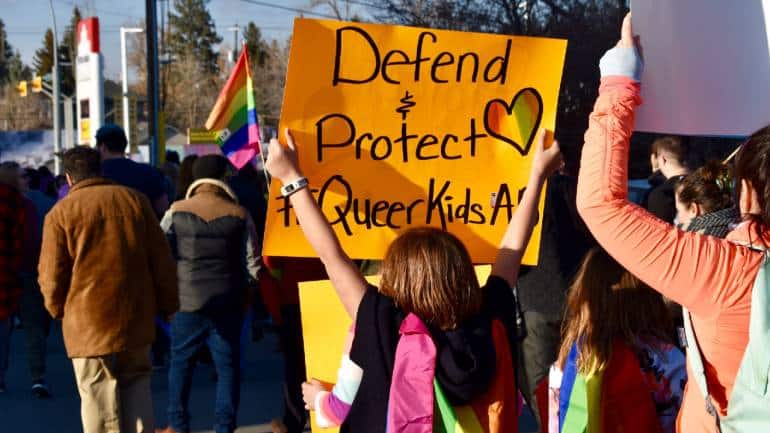 (Representational image: Denin Lawley via Unsplash)Acceptance is a journey
Mumbai-based filmmaker Faraz Arif Ansari finds that there is no “singular reason for (nonacceptance among Indian parents). Acceptance is multi-layered, multi-dimensional.” Sharing the example of their short film Sheer Qorma (2021), they note that while they were “talking to Shabana (Azmi) ji, who is mother to a nonbinary child in the film, we’re discussing that she (the character) somewhat accepts her. But some aspects (of acceptance) take time. Through their relationship, we wanted to show that acceptance is a journey for parents as well.”
They also concur with Aruna and Aqsa’s viewpoints, noting that parents “fear well-being of their child, because the world is cruel to anyone or anything that’s different or is outside of the binary... Unfortunately, they (the parents) are made villains, but as a writer and filmmaker, I see all aspects of humanity.” According to Faraz, while “embracing your child for who they are” is the first step in the journey to acceptance, “it doesn’t have a single destination.” Raising a gender nonconforming or trans child warrants multiple destinations, as they observe in their own life. They came out to their mother nine years ago and find that this process of acceptance is still “evolving”.
To accelerate this journey, however, they have a one-word answer: Education. “Discussion on sexual health, etc., is still distant. These conversations must begin at school, which is really a child’s first outing from home.”
Last year, a 115-page report “Inclusion of Transgender Children in School and Education: Concerns and Roadmap” was pulled down by the NCERT from their website following an organised campaign.
Sharing an incident from their childhood, Faraz says that when they were in first grade their counsellor asked them who they like, they told her that they like a “boy very much”. Learning this, the counsellor called their mother and made a big deal of it. “It’s strange that children are taught World Wars and cruelty, but they’re not taught about love,” Faraz asserts.
Recalling an interaction with a child in a school in Calgary, Alberta, in 2017, where their movie Sisak (2017) was screened, they say, “this eight-year-old comes, tells me their name, and says my pronouns are they/them. I was alarmed seeing a child being so affirmative and assertive about their identity because this school was welcoming of this child’s identity. There was this place for them in this institute to be themselves. Therefore, I believe education is the answer to everything.”
Summary• Avoid gendering your children and let them feel comfortable in expressing their gender identity growing up.
• Foster an environment where your child can openly discuss their gender identity, or lack thereof, and/or instances of bullying and harassment with you, without fear of being judged and misunderstood.
• Create or join support groups for parents of LGBTQIA+ children.
• Seek professional help in sensitising yourself and ensure that caregivers to LGBTQIA+ children are sensitised as well.
Discover the latest Business News, Sensex, and Nifty updates. Obtain Personal Finance insights, tax queries, and expert opinions on Moneycontrol or download the Moneycontrol App to stay updated!
Find the best of Al News in one place, specially curated for you every weekend.
Stay on top of the latest tech trends and biggest startup news.