
Maintenance of an efficient supply chain can pose an especially difficult challenge in developing countries. Companies need to modernize logistics, but they need to do so in a way that adapts digital technologies to on-the-ground realities. Consider, for example, the case of Rivigo, a trucking company headquartered in Gurugram. When I visited the company’s offices in May 2018, founder and CEO Deepak Garg said he had created the name from the phrase ‘river on the go’. The imagery captures how Rivigo is 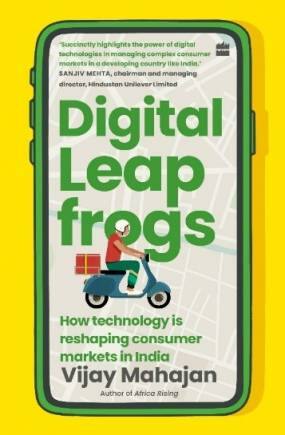 transforming trucking and delivery in India, adapting both digital systems and the physical construction of its trucks to improve both efficiency and quality of life for the drivers it calls ‘pilots’. In the past, India’s disorganized market and infrastructure challenges meant truck drivers would have to leave home for long periods of time. Because cabs and trailers of most trucks in the country were inseparable, neither could drivers leave a trailer behind at a warehouse and hitch up to a full load, nor could they drop a trailer for another driver to take across the next leg. Rivigo changed that, creating what it calls ‘relay as a service’ that makes it possible for drivers to relay trailers from hub to hub, allowing them to stay within a certain distance of home and spend more time with family, while ensuring that the company gets to keep thousands of its trucks on the move, thereby delivering freight faster and with less downtime.
In May 2018, I met one of Rivigo’s drivers, a man named Laxman, standing by his truck along a quiet roadway outside of Delhi. Dressed in the brown uniform the company provides all its ‘pilots’—part of its effort to raise the profile and standing of truck driving as a profession—Laxman took great pride in his work; I could tell from what I saw and heard. Earlier that day, he’d driven his truck to the Pataudi hub, exchanged trailers and was able to drive back to Jaipur—about 250 kilometres and four to five hours each way. He made a decent living, earning ₹27,000 (about $385) per month, and touted being paid on time as the biggest advantage of working for Rivigo. He had more free time and could go home and clean up each day, rather than stay on the road for days on end. Plus, he said, the company also offered its employees insurance, which helped him out when his son’s eye was damaged in an accident and needed plastic surgery.
Already a hit with drivers, Rivigo became popular among customers by heightening efficiency and slashing turnaround times. It did this by essentially making each truck a mobile hub of sensors—a driving Internet of Things. The company covers each truck and trailer with an array of intelligent sensors that constantly interact with a real-time, responsive logistics network. For example, ‘smart’ tyres include sensors that alert drivers when the tyre pressure is low, and keep a tab on vertical load and temperature. Trucking and fleet companies can use the data to check when repairs might be needed, retain their production and delivery records, and lower the amount of downtime for drivers. The drivers, meanwhile, have an app they can use to track trips, stay in touch with managers and stay on schedule. All told, the company tracks almost 200 data points—everything from tyre wear-and-tear and location data to fuel efficiency and loading times—all of which serve as performance measures for drivers. Rivigo slashed 50 to 70 per cent off turnaround times, opening up new markets, reducing inventory and significantly cutting costs for clients in the e-commerce, pharmaceutical, automotive, cold chain and FMCG sectors.
Transforming How People Get Around in IndiaWhile Rivigo transformed how companies move consumer goods and other products around India, redBus refashioned the way people moved around the country. Back in 2006, when this Bengaluru-based company was founded, virtually all the ticketing for bus trips occurred offline. Finding the best buses, the fastest routes or the least expensive tickets meant looking up each service individually. The idea of booking a trip online seems commonplace now, but back then, it was revolutionary, and redBus got the jump on nearly everyone. Seven years after it launched, redBus became one of India’s first big VC exits, with the Ibibo Group paying a reported $100 million to acquire 80 per cent of the company. By then, the company had more than 2 million users and had sold more than 12 million tickets annually, according to reports at the time. The platform allowed users to make online reservations and then delivered confirmations via text messages, which made it available to Indians who didn’t yet have full-function smartphones—a sizeable number back in the day.
With the acquisition, redBus integrated into MakeMyTrip Limited, the first Indian Internet company in the travel domain to be listed on the Nasdaq market in the US. That capital firepower helped redBus expand rapidly—in terms of products, markets and customers alike. When I spoke with CEO Prakash Sangam in July 2018, he explained how the relationship between redBus and its sister companies at MakeMyTrip had allowed them to establish an array of new services, such as online hotel booking. The company had already started operating in Singapore and Malaysia when we spoke, and when I write this, almost three years later, its operations have grown to include Indonesia, Colombia and Peru. And the 2 million users redBus had in 2013, when it was acquired…Well, this figure skyrocketed to 18 million users over the same span, according to its website.
The scale made possible by the acquisition certainly helped, but carving out a first-mover advantage, and then continuously improving and growing from that base ensured its market leadership. In particular, Sangam told me, its efforts to bring global technology to bear on local needs in a developing country provided the initial foundation upon which they could build their business. The company also created an entire ecosystem atop that digital platform, he explained, cobbling together a wide-reaching network of bus operators, booking agents and customers. Finally, it minded its own business, too, working diligently to streamline operations and keep costs down, including the routing of all transactions through one location, he told me. The result, at the time, was that for each sale that had an average ticket cost of $12, an average transaction of 1.3 tickets and a 10 per cent fee would go to redBus. The business took a significant hit in 2020 due to the Covid-19 lockdowns, but data from the year preceding this one indicated that it showed no signs of slowing in more normal circumstances. According to filings with the US Securities and Exchange Commission, MakeMyTrip’s bus ticketing revenue, the bulk of which comes from redBus, grew by 21 per cent—to $65 million from $53.7 million—during its last full fiscal year, which ended on 31 March 2020.
To be sure, redBus and its success aren’t exactly news in India, but it’s useful to look also at the startups that have matured and scaled—and, hence, set an example for the consumer startups that are setting out to reshape their own industries and markets today.
Excerpted from Digital Leapfrogs: How Technology is Reshaping Consumer Markets in India by Vijay Mahajan, with permission from HarperCollins Publishers India.Discover the latest Business News, Sensex, and Nifty updates. Obtain Personal Finance insights, tax queries, and expert opinions on Moneycontrol or download the Moneycontrol App to stay updated!
Find the best of Al News in one place, specially curated for you every weekend.
Stay on top of the latest tech trends and biggest startup news.