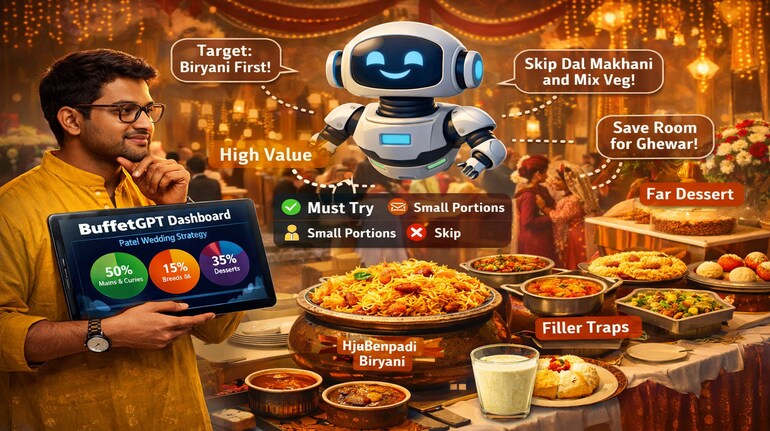
In Bengaluru, where engineers rarely switch off their AI-driven problem-solving instinct, even wedding food is now getting an AI makeover. An AI engineer named Pankaj has gone viral after building “BuffetGPT”, a playful but surprisingly logical AI agent designed to help guests decide what to eat and what to skip at big Indian weddings.
Pankaj explained that the idea came from a familiar dilemma where too many dishes with limited stomach space is a problem, and regret kicking in midway through the meal. BuffetGPT, he said, approaches a wedding buffet the same way an AI would tackle a business or data problem by analysing inputs, setting priorities and optimising outcomes.
So how does BuffetGPT work?
Pankaj said that the first step is visual scanning. In simple terms, the system looks at the buffet layout and identifies individual dishes such as biryani, kadhi, rotis, rice and desserts. Instead of seeing everything as “food,” it categorises items into two broad groups which are high-value dishes (special, rare or wedding-exclusive items) and filler foods (things commonly eaten at home or designed to fill you up quickly).
Next comes strategic allocation. In one example shared online, BuffetGPT analysed 13 food items at a wedding in Ahmedabad and divided the stomach’s “capacity” like a budget. Half of it was reserved for main dishes and curries, just 15% for breads and sides, and a generous 35% for desserts, based on the logic that wedding sweets are usually unique and worth prioritising.
The real fun begins with the execution strategy. BuffetGPT creates a step-by-step eating plan. For instance, it marks Hyderabadi biryani as a “first target,” reasoning that meat-heavy dishes disappear fast and take time to be refilled. At the same time, it advises skipping items like dal makhani and mixed vegetables because they are easily available elsewhere and placed early in the buffet line to make guests full faster.
It even applies the science of fullness. Kadhi pakoda, it notes, expands in the stomach, while raita creates a false sense of fullness because of its water content. Interestingly, the system recommends drinking buttermilk before dessert, claiming it can help create extra stomach space for sweets.
When choosing desserts, BuffetGPT looks at opportunity cost. Rasmalai, it suggests, should be picked over kheer because it is richer and denser, while kheer is something most people can make at home. Ghewar gets special treatment too, with the AI suggesting the dessert counter placed farthest away, fewer crowds and a short walk that helps digestion.
The system finally sorts dishes into clear categories: “must try,” “small portions,” and “skip.” Biryani, ghewar and rasmalai make the must-try list, while steamed rice and dal makhani land firmly in the avoid section.
Unsurprisingly, the idea exploded online, drawing both praise and sarcasm. One user joked that Pankaj had built exactly what they never knew they needed. Another wondered whether a drone might someday scan buffet counters automatically. Not everyone was impressed, though. One commenter dryly thanked him for “solving a problem no one had.”

Discover the latest Business News, Sensex, and Nifty updates. Obtain Personal Finance insights, tax queries, and expert opinions on Moneycontrol or download the Moneycontrol App to stay updated!
Find the best of Al News in one place, specially curated for you every weekend.
Stay on top of the latest tech trends and biggest startup news.