






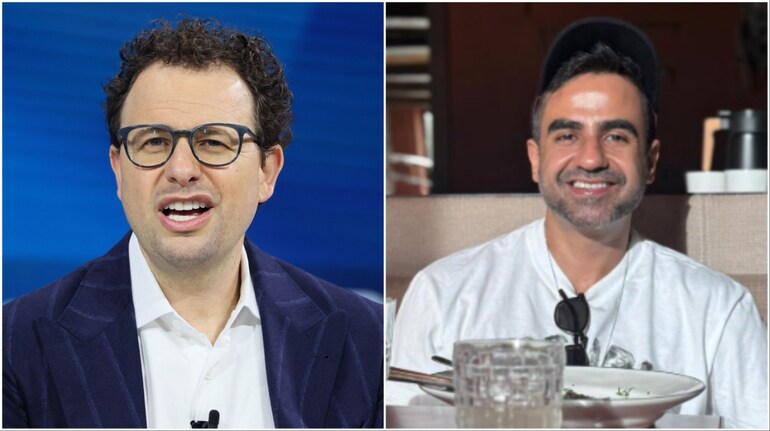
Anthropic CEO Dario Amodei, in a conversation with Zerodha co‑founder Nikhil Kamath in Bengaluru, said he believes AI would one day be better than humans at almost everything — but society must adapt to the shift gradually.
Speaking to Kamath, Amodei said it is possible that in the long run, AI becomes better than humans “at everything”, though he stressed that the transition must be approached step by step.
Using radiology as an example, he cited British-Canadian computer scientist and cognitive psychologist Geoffrey Hinton’s nine-year-old prediction that AI would replace radiologists. "Indeed, AI has gotten better than radiologists at doing scans. But what's happening today is that there aren't fewer radiologists," Amodei said. "What the radiologists do is that they walk the patient through the scan and they kind of talk to the patients. So the most highly technical part of the job is going away, but there is still some kind of demand for that kind of underlying human skill."
He added that while this pattern may not hold across all professions, AI progress should still be understood empirically and adapted to gradually.
Human roles will remain where underlying skills matter
The Claude-maker told Kamath that there will continue to be demand for human‑centred work, even as AI systems advance. He noted that radiology demonstrates how automation shifts the nature of work instead of eliminating it outright.
The most technical tasks may be handled by AI, he said, but underlying interpersonal and interpretive skills remain valuable. He cautioned, however, that AI may eventually move into areas it has not yet mastered — and that such changes could occur faster than expected, making incremental adaptation essential.
Do AI systems think they have consciousness?
Asked whether AI believes it has consciousness, Amodei -- who had started off as biologist looking for a tool to cure disease before he set off to develop AI tools -- said the question remains deeply unresolved.
"This is one of the mysterious questions that we don't have answers to. We don't know what human consciousness is and therefore we don't know if AI have it," he told Kamath.
Amodei, however, suggested that consciousness may be an emergent property of sufficiently complex systems capable of reflecting on their own decisions. "I do think that when our AI systems get advanced enough, I suspect they will have something that resembles consciousness or moral significance," he said, adding it may not mirror human consciousness, given that AI systems learn differently and have different sensory modes.
Despite these differences, he said he does not believe AI systems are fundamentally unlike the human brain in ways that matter at the deepest level, and he expects future models to cross that threshold.
Discover the latest Business News, Sensex, and Nifty updates. Obtain Personal Finance insights, tax queries, and expert opinions on Moneycontrol or download the Moneycontrol App to stay updated!
Find the best of Al News in one place, specially curated for you every weekend.
Stay on top of the latest tech trends and biggest startup news.




