One quick thing: Digital India draft bill to be open for consultation from June 7
In today’s newsletter:
- Zomato CEO's ESOPs a costly bite
- Edtech soonicorns get a reality check
- Infosys unveils AI-first offering Topaz
Was this newsletter forwarded to you? You can sign up for Tech3 here
 Top 3 stories
Zomato CEO's ESOPs a costly bite
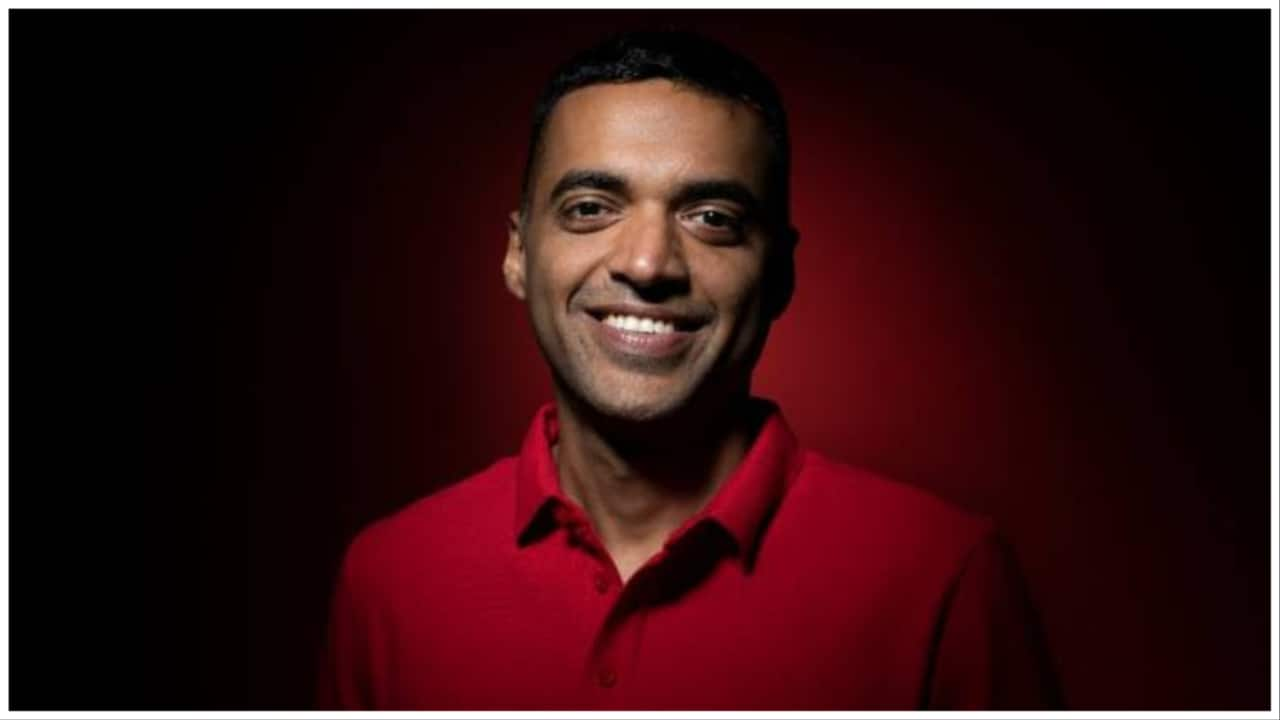
It is generally believed that ESOPs (employee stock options) help startups create wealth for their employees. However, this idea may be changing.
Driving the news
ESOPs given to Zomato co-founder and CEO Deepinder Goyal cost the company Rs 143 crore in the first half of FY23. This amount was also 67.5% of the entire ESOP cost incurred by the company during the period.
- The CEO and CFO cumulatively accounted for 74% of the total ESOP cost of Rs 212 crore
- This means that the cost of ESOPs for all other employees was 26% or Rs 55 crore
Meanwhile, Zomato saw the gross order value of its food delivery business shrink about 1% to Rs 6,569 crore in the March quarter. This dip can be attributed to an industry-wide slowdown as well as the company's decision to withdraw from 225 cities.
Hurtling towards profitability?
This comes at a time when Zomato is trying to convince public market investors of imminent profitability.
- ESOP costs have decreased from 54% of all employee benefit costs in FY22 to 35% in FY23
- Zomato management has said that its goal is to become profitable in the next 4 quarters
Zomato has announced that it turned adjusted EBITDA positive in the March quarter, excluding quick-commerce business Blinkit. This announcement came just a day after its rival, Swiggy, said that its food delivery business was also operationally profitable as of March, without accounting for ESOP expenses.
Edtech soonicorns get a reality check

During the peak of the Covid pandemic, several edtech companies gained significant attention, alongside industry giants such as Byju's and Unacademy.
- These companies attracted considerable funding, leading to impressive valuations driven by the edtech boom.
But two years down the line, have these companies truly lived up to their valuations?
The plot
Edtechs such as Doubtnut, Classplus, Leap Scholar, and Teachmint, are sitting on unprecedented revenue multiples, considering their peak Covid and latest valuations.
- In fact, Teachmint had a revenue of just Rs 77 lakhs for a Rs 4,000 crore valuation
While these companies did raise large rounds of funding, industry observers believe that these were not big enough to cover their high burn rates. As a result, it is likely that these companies will go for further fundraising.
But at what valuation?
Post-Covid, valuations of edtech companies have dropped globally, and this has had a knock-on effect in India as well.
Even the country's largest edtech company had to settle for a flat valuation once, and is now raising another round at the same valuation. This makes it very unlikely for second-order edtech companies to raise money at higher valuations.
- This is compounded by a slowdown in demand for online learning and an unprecedented funding winter
What next?
Edtech investors Anirudh Malpani and Mujtaba Wani anticipate further consolidation within the sector, while also predicting potential shutdowns.
“...companies might continue to be zombie companies going forward because these valuations make no sense,” Malpani said.
Go deeper
Infosys unveils AI-first offering Topaz
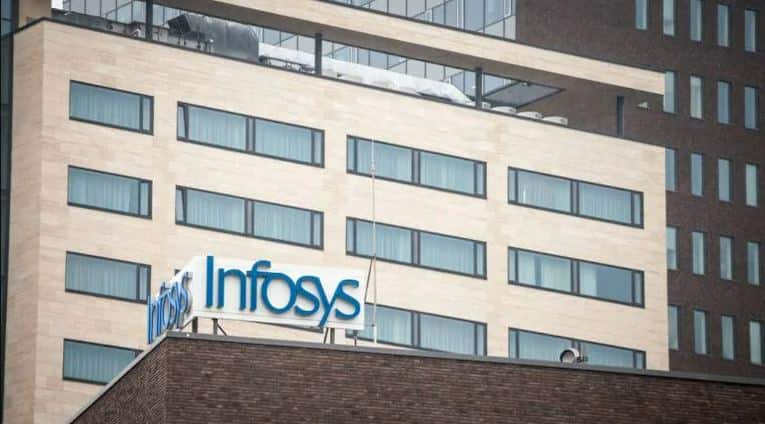
IT companies are now sinking their teeth into AI offerings, with Infosys launching a suite of services called ‘Topaz,’ signifying the growing importance of this fast-evolving technology.
What is Topaz?
- It combines data analytics, artificial intelligence, and generative AI
- Potentially has over 12,000 use cases, more than 150 pre-trained models, and over ten platforms
Tell me more
The company’s new AI offering comes at a time when there has been a slowdown in major markets such as the US and Europe. By introducing an AI-first offering, it company aims to provide clients with a more compelling proposition when tech spends have been slowing across industries due to increasing headwinds.
Satish HC, Infosys EVP and co-head of delivery, said that the company is first experimenting with AI within the organisation. They are taking experiences from these experiments and then curating solutions for clients.
What about pricing? It will be priced at a premium.
They see three established use cases:
- To deliver a new class of solutions and business models that are ecosystem-led
- To have the ability to disrupt business processes so that they are more intelligent and sentient
- To empower or make people more productive
Infosys already has a large data, analytics, and AI team. The focus for the company now is on prompt engineering, according to Satish.
What about the jobs?
Will jobs become redundant? Satish said that he does not see an immediate impact. However, generative AI can help people solve higher-order problems.
He maintained that it will not immediately reduce headcount, but over time, learning will change and help people become more productive.
Find out more
MC Special | Modify DPDP Bill to prevent jurisdictional conflicts: Justice Srikrishna

The recent tussle between the European Union (EU) and the United States over privacy regulations, which contributed to the EU imposing a record $1.3 billion fine on Meta, could be repeated in India.
How? Retired Supreme Court judge BN Srikrishna, who led the committee that drafted the Personal Data Protection Bill in 2018, said that the proposed exemptions for the government in the upcoming data protection bill could lead to a tussle with other jurisdictions such as the EU.
- EU's General Data Protection Regulation (GDPR) requires companies to identify whether the laws in other countries provide an adequate level of protection for EU citizens' data
However, in India's upcoming data protection law, the government can exempt any agency from any of the provisions of the Act. Srikrishna opined that this provision implies that any agency can access people's data without consent.
Go deeper
Today in tech history: Java is unveiled

On May 23, 1995, Sun Microsystems launched the Java programming language. It was created by James Gosling with the goal of providing a platform-independent language for software development.
Java is known for its ‘write once, run anywhere’ principle, which means that Java programs can run on any device or operating system equipped with a Java Virtual Machine.



 PREVIOUS
 Tweet of the day
 QUICK HITS
 GLOBAL PICKS