
1 important thing: Top IT services companies TCS and Wipro said that they are constantly monitoring the situation to enable business continuity and safety of employees as heavy rains and water logging continue to disrupt life in Bengaluru.
- Wipro is invoking plans to continue business while TCS has internally cautioned delivery teams to ensure safety.
In today's newsletter:
- Meta warns gatekeeper norms will hurt startups
- 1mg gets $1 billion valuation tag
- MPL backs employees' web3 startup
Also, a beloved smartphone company is the subject of an upcoming movie. Scroll below for more deets!
 Top 3 Stories
If gatekeepers sneeze, startups will catch a cold

Instilling a fear psychosis might be the latest trick in the book of tech giants looking to avert antitrust regulations.
Facebook parent Meta has told a parliamentary panel that enacting 'gatekeeper' norms similar to the ones proposed in the European Union could stifle innovation and have a chilling effect on Indian startups, hurting their ability to scale or be acquired, sources tell us.
What's a gatekeeper?
Gatekeeper norms are anti-competition rules that apply to digital platforms having huge user bases and clocking voluminous transactions. Such rules have been included in the Digital Markets Act of the European Union, although they have not been enforced yet.
Rear view
Officials of Meta, Google, Amazon, Apple and others appeared before the parliamentary panel on finance last month which is looking into anti-competitive practices in the digital space.
- They were asked about specific definitions of the markets that they operate in, competition concerns about their businesses in other countries, how their algorithms are structured to distribute content, and views on competition regulation, among other things.
Domestic companies such as Flipkart, MakeMyTrip, Ola, Paytm, Swiggy and Zomato have told the committee that big tech companies like Google and Meta were unfairly promoting their platform operator's products, services or lines of business.
A step ahead
Meanwhile, the parliamentary standing committee on commerce has recommended that India should identify 'gatekeeper' platforms of a certain size that need tougher regulation.
It has said that antitrust regulation be amended to prescribe criteria such as the number of registered or active consumers and sellers on the platform, number of transactions taking place and volume of revenue generated to identify entities that act as a gatekeeper platform.
Tough luck for tech
While the latest draft of a new bill on competition law doesn’t mention such norms, it looks to add investigative muscle and professional expertise to the intensifying scrutiny of big tech companies by the regulator.
- The bill also seeks to introduce "knowledge and experience in the field of technology as additional criteria for the members of the selection committee".
1mg gets $1 billion valuation tag
Tata-owned online medical consultation and e-pharmacy platform 1mg has become the latest entrant to join the coveted unicorn club.
Tata 1mg has become the third unicorn minted by the salt-to-software conglomerate in two years, the other two being--Curefit and BigBasket.
Details
1mg has raised about Rs 319.36 crore or about $40 million, by allotting 30,992 equity shares having a face value of Rs 1 each at a premium of Rs 1.03 lakh (Rs 1,03,046) to a clutch of investors including Tata Digital that has put in about $32 million.
- The premium was over 5x of 1mg's previous fundraise, which had valued the startup at $240 million, according to our estimates. The round now values 1mg between $1.25-$1.30 billion.
Why is it crucial?
Tata's investment in 1mg hints at the company's optimism on the healthtech space in India as the company seeks to race ahead of its biggest rivals--Tiger Global-backed Pharmeasy and Reliance-owned Netmeds--in a slowing market.
We had recently reported how teleconsulting platforms, e-pharmacies and at-home diagnostics were hit by tepid demand with the pandemic-induced boost wearing off.
MPL backs employees' web3 startup
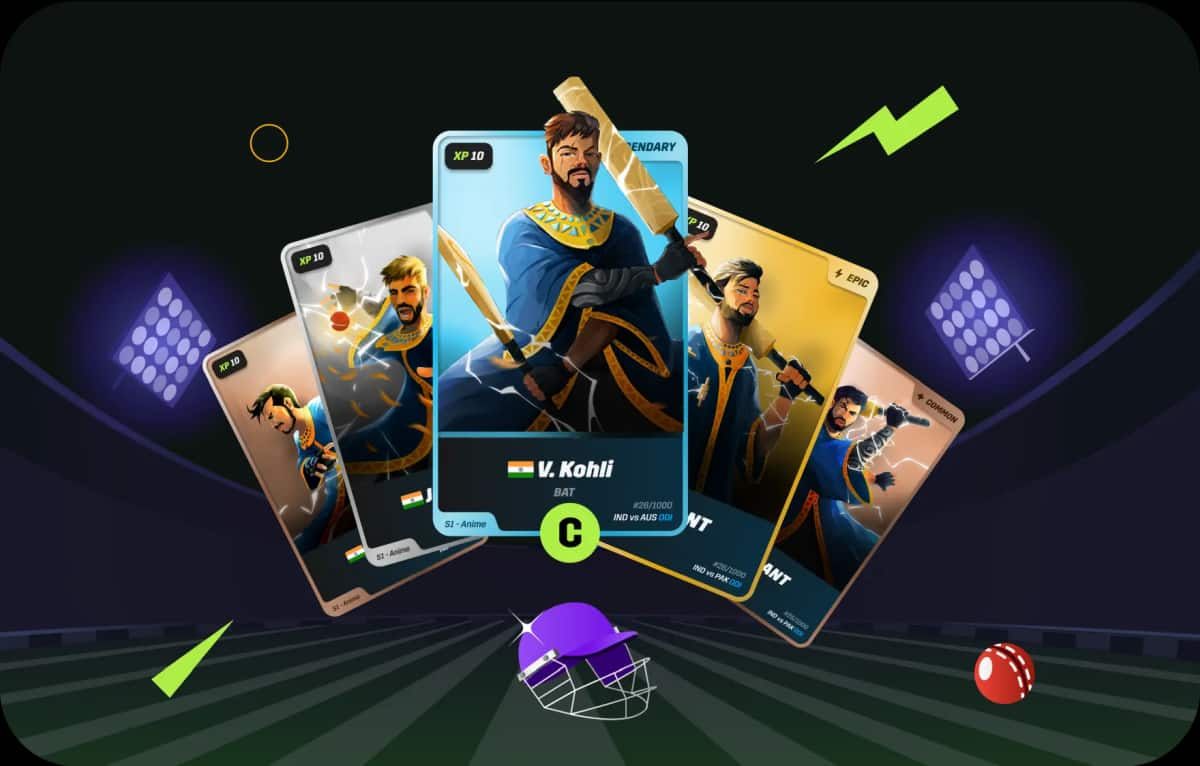
Do you remember the old Cricket trump cards which was the rage among youngsters in the early part of this decade? What would happen if it gets a Web3 reboot along with a mix of fantasy sports? We will know soon...
Driving the news
Esports and skill gaming app Mobile Premier League (MPL) has backed a digital sports collectibles platform Striker - started by two of its employees Krishna Mohan Vedula and Nitesh Jain - as the company gears up for its own foray into the nascent Web3 gaming space.
- Vedula and Jain continue to be employees of MPL but Striker is not part of the gaming unicorn.
What do they do?
Striker enables users to collect and trade digital player trading cards in an open marketplace. It is currently working with a range of artists to create digital art collectibles. Apart from the remuneration for their creations, Striker is also testing a model that provides them a commission when their art is sold to the fans, sources tell us.
- Striker also enables people to create teams from the cards they own and earn points based on the player's real-life performances to compete in a range of fantasy contests.
Yes, but...
MPL's backing is in terms of providing tech/infra support and it has not made any financial investment to the project as yet, people familiar with the matter told us.
- MPL's upcoming Good Game Exchange (GGX) platform will operate the marketplace. The platform will allow users to display and trade digital assets such as NFTs (non-fungible tokens) and Good Game Token (GGT), a utility token that will be used within the games associated with the GGX platform.
The big picture
The Web3 gaming space has gained steam in the country over the past year with the growing adoption of blockchain and digital assets. Some founders say Web3 gaming models could provide potentially better monetisation opportunities for game developers in the country, compared to the current gaming ecosystem.
"Until now, in the world of gaming, the end gamer actually never got anything out of it, apart from enjoyment. They were the last person holding the bag while everybody else was making money. In these new models, the actual customer is going to be a stakeholder who will have value in terms of the assets that they own in the game" MPL co-founder Sai Srinivas said at a recent industry event.
Among others eyeing the space include Dream11 parent Dream Sports, Nazara Technologies, Tegro, and nCore Games.





 PREVIOUS
 Tweet of the day
 QUICK HITS
 DEALS OF THE DAY
 GLOBAL PICKS