-
Not just China, Chabahar Port win may help India counter Suez crisis, delays in IMEC
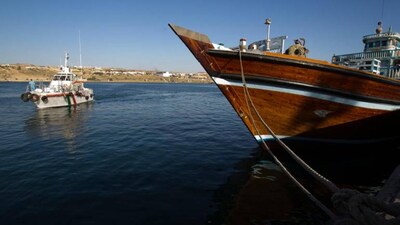
According to India Ports Global (IPGL), Chabahar can emerge as a potential global trading hub – and an arena for geopolitical competition. It may also allow India and Iran to reduce their dependence on the Suez Canal for transporting cargo to Europe.
-

Shipping industry braces for more disruptions as Iran-Israel conflict to further drive up freight rates, travel times
The average shipping cost for a 40-foot container for the South East Asia-India-European Union route was around $ 3,077 in March
-
Red Sea crisis: Indian traders on edge as exports worth $64 billion at risk
A FIEO survey revealed that cotton yarn exporters are facing a 50-600 percent increase in costs for their shipments to Bangladesh, Europe, and Egypt. The full impact of the crisis is likely to be visible in India’s export figures February onwards.
-
Red Sea crisis may have limited India's goods export growth in January: Official
The drop in exports in January 2024 compared to December 2023 is primarily on account of seasonality, Commerce Secretary Sunil Barthwal separately said during a briefing on February 15. Goods exports fell nearly 4 percent in the first month of 2024 compared to the previous month.
-
Red Sea crisis: Indian exporters save on higher shipping costs as importers start sharing burden
Contracts have been renegotiated so that exporters and importers share the increase in freight costs and pass them on to customers
-
Red Sea crisis: India’s Russian oil buys get more expensive on detour due to Houthi attacks
Shipments from Moscow are taking a longer route via the Cape of Good Hope to avoid attacks on commercial vessels on the Red Sea route
-
Red Sea crisis: Indian buffalo meat, basmati rice exports to some African nations hit, but loss not too large
When it comes to agricultural items like Basmati rice, coir, cereals that have high cargo volume but lower value, the impact is very high since their container costs could be as much as 30-40 percent of the whole consignment, said Israr Ahmed, FIEO President (officiate).
-
A prolonged Red Sea crisis could bring back inflation scare for the world and India
The attacks on commercial vessels in the Red Sea have forced freight companies to take the longer route around Africa to reach the west or wait at nearby ports to ensure safe passage through the Suez Canal. Whether the attacks will escalate or not is anybody's guess, but India is betting on its recent resilient track record to beat the pessimistic global trends.
-
Trade deficit softens in December but watch out for volatility from Red Sea standoff: Nomura
Overall, despite the geopolitical tensions, they estimate that CAD will fall to 1.1 percent of GDP in FY24 from 2 percent of GDP in FY23.
-
Supply Chains: Canals aren’t even the world's biggest shipping chokepoints
Five thousand miles from the canals of Suez and Panama lie even more important shipping lanes, chokepoints that could cripple global trade should any disaster befall them
-
Exclusive: Red Sea attacks compel at least 65% of Indian exports shipments to Europe to take longer routes, sources say
The Indian government has asked exporters to focus on markets in the east such as Australia in a bid to avoid higher costs as well as security issues associated with sending their outbound shipments to Europe following the spate of attacks on vessels taking the Red Sea route.
-
Red Sea attacks have started to hurt
While the Red Sea crisis has affected trade for India and Europe, crude oil exports from the US to Europe have benefited
-
India’s exports may take a $30 billion hit on Red Sea threats
The initial assessment, conducted by the Research and Information System for Developing Countries, a New Delhi-based thinktank, would mean a 6.7% drop in Indian exports, based on last fiscal year’s $451 billion total.
-
Suez crisis: India provides security to consignments in high seas: Official
The central government met and discussed with representatives from shipping companies and exporters regarding the Suez Canal crisis and the resulting increase in shipping costs.
-
Half of Red Sea container-ship fleet avoids route after attacks
he tally compiled by Flexport Inc. shows 299 vessels with a combined capacity to carry 4.3 million containers have either changed course or plan to. That’s about double the number from a week ago and equates to about 18% of global capacity.
-
Shipping firm Maersk says it's preparing for resumption of Red Sea voyages after attacks from Yemen
Houthi attacks have led to a major disruption of shipping through the Suez Canal and the Red Sea, one of the most important arteries for trade in oil, natural gas, grain and consumer goods between Europe and Asia.
-
Shipping, energy companies navigate Red Sea challenges amid regional tensions
The escalating violence, particularly attacks on cargo ships, has prompted a wave of precautionary measures within the industry
-
Weekly Tactical Pick: A pharma stock set to ride emerging opportunities
With the emerging threat of the new COVID variant, JN.1, equity markets are likely to be volatile in the coming days. Defensive stocks like Divi’s Lab will merit attention
-
India reiterates support for unrestricted commercial shipping, keeps close eye on Red Sea situation
Bagchi stated that India is closely observing the ongoing developments in the region and actively participating in international initiatives aimed at ensuring the freedom of shipping, addressing concerns such as piracy.
-
Shippers know the Suez is always a crisis waiting to happen
Houthi attacks on civilian vessels, rerouting strategies, and calls for a 40-nation military alliance to protect 15% of global maritime traffic pose challenges for the Suez Canal. Despite recurrent emergencies, the vital waterway connecting Europe to the Indian Ocean demands continuous preparedness from shippers.
-
Red Sea crisis: Little impact on India’s coal imports, say analysts
The logistical hurdle will affect India’s imports of about 20 million tonnes of non-coking coal combined from the US and Russia routed via the sea lane. However, this volume constitutes only 14 percent of India’s total non-coking coal imports
-
Equity strategy: Is a spoiler in the making for the Santa Claus rally?
The emerging Suez trade channel crisis might rekindle inflation fears. Advanced economies are already facing a sharp deceleration in growth indicators
-
Rebel Ripples: Oil prices may rise temporarily due to the Red Sea crisis, say analysts
India imports most of its crude from the UAE, Saudi Arabia, and Iraq through the Strait of Hormuz, while Russian crude is brought in through the Northern Sea Route. These shipping lanes are largely immune to supply risks arising from the situation in the Red Sea.
-
Why the India Middle East Europe Economic Corridor is a poor alternative to the Suez Canal
The IMEEC has kicked up a lot of excitement given the possibility of a new trade route that can rival the Suez and the BRI. But the logistics industry is sceptical about whether it can offer cheaper and quicker cargo transportation
-
Two tankers run aground after collision in Suez Canal; shipping channel cleared later
MarineTraffic has shared a time lapse report on microblogging site X, formerly Twitter, which shows Burri turning sideways and colliding with an already sideways BW Lesmes at 8:40pm (GMT) before backing up and pointing straight.