-
Powell's September rate cut hint, JPMorgan's TCS upgrade fire up IT shares
A JPMorgan note has said that TCS may see growth recovery from the second half of FY26, and the stock has underperformed Nifty and Nifty IT owing to earnings downgrades.
-

What central bankers must tackle at Jackson Hole
Monetary policymakers are on divergent paths, but face common threats
-
What Jerome Powell should say at Jackson Hole, but won’t
In this imaginary farewell address at Jackson Hole, Jerome Powell drops the euphemisms and delivers the blunt, uncomfortable truths the Fed—and the US—have long avoided
-
Treasuries extend losses ahead of key Jackson Hole Powell speech
The benchmark 10-year yield rose two basis points to 4.34%, extending a move that began on Thursday when wholesale inflation jumped the most in three years
-
RBI unlikely to follow US Fed on rate cut, may monitor domestic cues, say economists
In the August monetary policy, the central bank left the benchmark repo rate at 6.5 percent for a ninth time
-
Asian stocks rise as investors count down to interest rate cuts
The prospect of the US finally easing borrowing costs is shaping trading across financial markets. The yield on 10-year US Treasuries declined two basis points to 3.79% during Asian trading
-
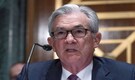
Fed Chair Jerome Powell signals interest rate cut at Jackson Hole: 'Time has come', inflation risk has shifted
The US Fed Chair Jerome Powell, at the Jackson Hole address, hinted at possible interest rate cuts, shifting focus from inflation to the labour market, as risks to employment rise.
-
Jackson Hole Meeting 2024 Highlights: Powell highlights FOMC's role in restoring price stability through stronga actions
Jackson Hole Meeting 2024 Highlights: Federal Reserve Chair Jerome Powell said "the time has come" for the U.S. central bank to cut interest rates as rising risks to the job market left no room for further weakness and inflation was in reach of the Fed's 2% target, offering an explicit endorsement of an imminent policy easing.
-
Fed’s Jackson Hole conference is underway: Here’s what to expect
With the Fed on the cusp of lowering borrowing costs from a more than two-decade high, Powell’s comments will be closely parsed for any kind of signal about the timing, size and pace of interest-rate cuts.
-
Asian equities climb ahead of key US Fed, Bank of Japan events
Minutes from the latest Fed policy meeting showed several officials acknowledged a plausible case for cutting rates, before the central bank voted to keep them steady.
-
S&P 500 will attempt to keep going for a ninth session, its longest streak since November 2004
The MSCI All Country World Index (MSCI ACWI) too will attempt a ninth day of rise — its longest gaining streak since December, data from Bloomberg showed.
-
Central bankers diverge on rates path ahead of Jackson Hole
Today, with inflation having come down but remaining above 2% targets, there’s more distance among the group as officials weigh the risk of price pressures remaining too high against the danger of tipping their economies into a downturn. For investors, it makes for a more volatile backdrop
-
Asia shares, gold underpinned by rate cut hopes ahead of Powell's Jackson Hole speech
The Fed is hardly alone in contemplating looser policy, with Sweden's central bank expected to cut rates this week, and possibly by an outsized 50 basis points
-
Expiry week to start on a positive note
Setting the stage: Market expectations for the week ahead
-
ECB president quotes Kierkegaard at Jackson Hole to warn of policy risks
Christine Lagarde said in the medium-term a combination of higher investment needs and greater supply constraints is likely to lead to stronger price pressures
-
Bond investors brace for supply freight train before fed confab
The highest long-term Treasury yields in years are headed for a major hearing next week as investors place their bids for two risky auctions — right before the Federal Reserve’s potentially game-changing annual gathering at Jackson Hole.
-
Jackson Hole | US Fed reiterates its focus on price stability
Jerome Powell’s comment on the three policy lessons from the past means that the US Fed will have to continue to keep interest rates high to fight inflation
-
Jackson Hole: A speech that can act as a preamble for central banks
The responsibility of central bankers to deliver price stability is unconditional.
-
Rupee hits record low of 80 to a dollar as global equity slump hammers currencies
US Fed Chair Powell reiterated the central bank’s unconditional commitment to tackle inflation, besides highlighting risks posed by elevated and extended periods of high price growth
-
The stark warnings from Jackson Hole
BIS general manager says the global economy may be approaching ‘what in aviation is called a “coffin corner”, the delicate spot when an aircraft slows to below its stall speed and cannot generate enough lift to maintain its altitude’
-
Fed’s inflation stand was expected, could mean 75 bps rate hike next: Experts
Market experts in India said that the US economic data will need to be watched closely from now on
-
Stocks slide, dollar cuts losses as Powell warns of economic pain
Tight monetary policy "for some time" means slower growth, a weaker job market and "some pain" for households and businesses
-
Oil prices fall after US Fed chair warns of economic pain ahead
The U.S. economy will need tight monetary policy "for some time" before inflation is under control, a fact that means slower growth, a weaker job market and "some pain" for households and businesses
-
Powell says history warns against ‘prematurely loosening’ Fed policy
He said restoring inflation to the 2% target is the central bank’s “overarching focus right now” even though consumers and businesses will feel economic pain.
-
Too much hype over Jackson Hole?
The index was typically up 0.5% after five days; 0.1% after 20 days; and 4.5% by the end of the year, counting from the day of the speech. In other words, the typical moves are less than one standard deviation, and there isn’t a whole lot of dispersion around the mean. The chair’s speech is generally no big deal.