

co-presented by
ASSOCIATE SPONSORS
co-presented by

ASSOCIATE SPONSORS


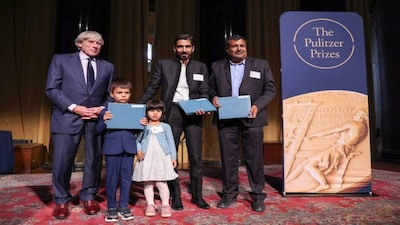
Reuters photojournalist Danish Siddiqui, known worldwide for his striking work, was killed during the Afghanistan turmoil in July last year.
Pulitzer Prizes 2022: A "special citation" was awarded to the journalists of Ukraine for their persistent efforts to report the reality of Russia's war.
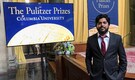
Danish Siddiqui, 38, was on assignment in Afghanistan when he was killed in July last year. The Pulitzer Prize-winning journalist was covering clashes between Afghan troops and the Taliban in the Spin Boldak district of Kandahar city.
The New York Times reviewed multiple photographs, some provided by Indian officials and others taken by Afghan health workers at the hospital, that showed Danish Siddiqui’s body had been mutilated.
Danish Siddiqui, 38, was on assignment in Afghanistan when he died. The award-winning journalist was killed while covering clashes between Afghan troops and the Taliban in Spin Boldak district of Kandahar city.
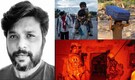
Pulitzer winner Danish Siddiqui covered war zones and crises from Iraq to Hong Kong to Nepal. He was killed on Friday covering Afghan-Taliban clashes near the Pakistan border.
Taliban spokesperson Zabiullah Mujahid expressed regret over Siddiqui’s death, but added that journalists should “inform” them when entering war zones.

Siddiqui had shared his on-the-field experiences on social media in threads. His last tweet on July 13 was during the coverage of Afghanistan’s situation, where he travelled with the convoy of Afghan Special Forces and felt ‘lucky’ to survive after Taliban attacked the vehicle he and Afghan forces were travelling.
Friends and colleagues described a man who cared deeply about the stories he covered, carrying out meticulous research before embarking on assignments and always focusing on the people caught up in the news.
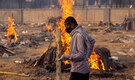
Danish Siddiqui, who earned widespread acknowledgment for his photojournalistic work amidst the raging pandemic, had once said, "I respect my subjects the most – they give me my inspiration."
In 2018, Siddiqui, who recently did extensive coverage of the graveyards and mass cremations during the COVID-19 outbreak in India, became the first Indian, along with his colleague Adnan Abidi, to win the Pulitzer Prize for Feature Photography for documenting the Rohingya refugee crisis.


