-
OPINION | Areas where budget 2026-27 can simplify compliance for corporate tax payers
There is a need for easing compliance burden, strengthening the dispute resolution framework and providing clarity on various issues where ambiguities and interpretational challenges could brew litigation in coming years
-

OPINION | RSS Redefines Hindutva: A living, inclusive civilisational idea
RSSFACTS: RSS redefines Hindutva as a timeless, inclusive philosophy, focusing on unity, diversity, and the principles of Dharma. It connects Hindu culture, society, and civilisation while aligning with India's Constitution and values
-
OPINION | The global AI Race and India’s regulatory dilemma
Much like earlier regimes governing nuclear and satellite technologies, AI is now being managed through international controls rather than traditional technology regulation
-
OPINION | AI in Education: Why rural and Tier-3 India risks being left behind
AI has transformative potential in Indian education, but unequal access risks deepening the digital divide. To avoid exacerbating existing inequalities, inclusive, grassroots-focused AI solutions are essential for equitable learning
-
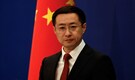
China slams US report on India border tensions, says ties with New Delhi ‘stable’
The Pentagon’s report distorts China’s defence policy, sows discord between China and other countries, and aims at finding a pretext for the US to maintain its military supremacy, said Chinese Foreign Ministry spokesperson Lin Jian
-
From taxes to jobs to laws: How 2025 became India’s biggest reform year
India’s economic momentum remained strong through the year, with GDP growth touching 8.2 per cent—outpacing global estimates.
-
China’s Arunachal claims and deepening Pakistan ties: Why the Pentagon report alarms India
The Pentagon warns that China is exploiting eased border tensions with India while strengthening ties with Pakistan, expanding its nuclear arsenal, and claiming Arunachal Pradesh, raising strategic concerns for New Delhi.
-
Year Ahead: Worst may be over for rupee, yet US trade deal key for stability in 2026
Major research and brokerage houses expect the rupee to exit its current depreciating phase in 2026, but much will depend on the progress of the trade deal between India and its largest trading partner, the US.
-
Aravallis Explained: Supreme Court’s verdict, public outcry and what the government says
Supreme Court’s acceptance of a government committee’s new definition of the Aravallis has sparked concerns among activists and the general public, who fear that lower hills and connecting landforms could be left unprotected despite assurances on monitoring and conservation.
-
OPINION | 2025 Roundup: The year Indian startups got its mojo back
In 2025, Indian startups revived with AI-driven applications, particularly in voice tech and quick commerce, while venture capital investment surged, focusing on full-service AI and global expansion
-
OPINION | Beyond Capital: Why India’s philanthropists must lead with trust
India’s social sector needs more flexible, trust-based funding to build resilient NGOs. Long-term partnerships empower grassroots leadership, driving sustainable, systemic change and impact
-
Rare Red Fox near Pangong Tso captivates tourists, viral video triggers 'Conservation Alert'
A rare Himalayan red fox was spotted near Pangong Lake, Ladakh. Experts explain why such encounters are uncommon and why conservation focuses on behaviour, not numbers.
-
OPINION | Risk-Based Deposit Insurance: Banking’s long-awaited adulthood?
Risk-based deposit insurance aligns premiums with behaviour. Its success now depends on whether Indian banks and their boards are prepared to accept accountability rather than rely on systemic cushioning. Over time, it could become the foundation for a banking system where trust is earned through conduct, not assumed through regulation
-
OPINION | India’s strategic shift to strengthen rare earth supply chains
India has approved a $820 million scheme to boost rare earth magnet production, aiming to diversify supply chains and reduce dependence on China, with US-India collaboration key
-
OPINION | The futility of export curbs
Both the U.S. and China weaponised export curbs. It backfired. Countries at the receiving end of the curbs have been incentivised to seek alternatives. It’s a lesson India should heed
-
Yunus is 'working to improve' ties with India, says Bangladesh's finance adviser Salehuddin Ahmed
Bangladesh interim government’s finance adviser Salehuddin Ahmed said Chief Adviser Muhammad Yunus is working to improve ties with India, separating economic interests from politics, approving 50,000 tonnes of rice imports.
-
Year Ahead: Private capex seen taking the baton in 2026 as public-led infra spend peaks
The growth outlook for 2026 for public and private capex appears to be more balanced, say economists. Private capex would be supported by continuing low levels of global crude prices, likely easing of global supply situations, and India’s FTA push.
-
FTA with New Zealand offers India a $2-billion chance to replace Chinese imports
Gains from tariff concessions are likely to be gradual, as exporters will need time to adjust to supply chains, secure buyers and expand their presence in New Zealand.
-
OPINION | Religion, the fuel that drives West Bengal’s’ politics
Humayun Kabir’s new political party suggests class antagonism has been consigned to the dustbin of electoral history. The state is headed for an election in 2026 where religious polarisation may play an unprecedented role
-
OPINION | Beyond First Impressions: Why the India–New Zealand FTA will matter more than its critics admit
India-NZ FTA will have to be ratified by New Zealand’s parliament, where some members are expected to oppose it. Their dismay about the FTA is based on a narrow approach which doesn’t account for the larger economic and strategic benefits that will come the way of both countries
-
OPINION | Reimagining wealth management, a digital-first future
India’s wealth management industry needs to adopt fee-based advisory, digital tools, and hybrid models to serve a wider range of customers
-
OPINION | Balancing India's AI Ambitions: CCI's approach to competition and innovation
The CCI’s market study on AI highlights its transformative role in India’s economy. It recommends flexible, sector-specific regulation and voluntary self-audits to ensure fair competition while encouraging technological growth
-
OPINION | VB- G Ram G will have a consequential impact on state finances
The attempt to get states to shoulder a greater share of the financial burden of welfare schemes is over a decade old The financing formula in the MNREGA replacement builds on it without concurrently providing states greater autonomy in implementation
-
SWOT analysis of India’s T20 World Cup squad: Suryakumar Yadav’s form remains a big concern
The decision to drop Shubman Gill was a brave one. Bringing Rinku Singh back to the fold was a bold call. But now, as the focus shifts to the upcoming World Cup.
-
OPINION | Transformative initiatives for India's future growth and resilience
This article outlines thirteen innovative proposals to address India’s challenges, focusing on healthcare, infrastructure, technology, and social equity,
aiming to drive sustainable growth, self-reliance, and global leadership