






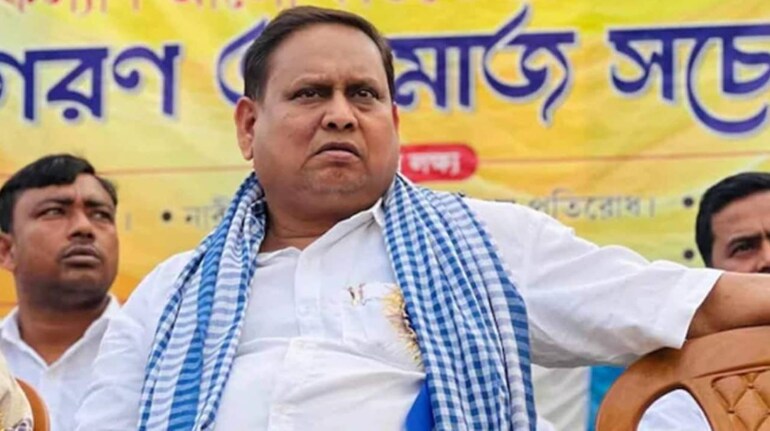
With assembly elections approaching, West Bengal is witnessing a rise of religion-based politics, a marked departure from the earlier tradition of class-based politics. The latest example is the laying of foundation stone of the Babri Masjid in Beldanga of Murshidabad district — a Muslim majority district of the state — by suspended ruling Trinamool Congress legislator Humayun Kabir, who also announced a new political party for the Muslims.
Beldanga is a Muslim majority area with a modest proprtion being Hindus, and has witnessed riots in April 2024, barely weeks before the Lok Sabha elections. While Humayun is an MLA from the Bharatpur constituency, his choosing of Beldanga for the Babri Masjid seems to be a deliberate attempt to polarise the area and expand this polarisation to the district as well as the state.
The name itself suggests the aim to polarise the voters
There is nothing wrong in laying a foundation stone for a mosque for Muslims in Beldanga or any area of the state. The problem arises when the name of the mosque is named as Babri Masjid, the controversial mosque which was built under Mughal emperor Babur in Ayodhya. This Babri Masjid-Ram Temple debate has for decades polarised India's politics as well as society, and through the historic judgement in 2019, the Supreme Court has tried to bury the debate by giving the judgement in favour of Ram Temple.
Certainly aware of the backlash from the Hindus of the state, Humayun intentionally chose this name to polarise Murshidabad and the state.
Assertion of a new Muslim-identity based politics
Muslims are around 28% of the state’s population. The ruling TMC derives much of its political strength from the majority of the Muslim population, which earlier rallied mostly behind the Communist Party of India (Marxist) or the CPI(M), and also the Congress, particularly in Murshidabad and Malda.
However, there seems to be an attempt to change this trend. Humayun’s declaration to form a new political party for Muslims signals a desire among a section of Muslims to assert their political power through their own parties, instead of just rallying behind the established parties. This was seen when Muslim cleric Abbas Siddique tried to form a Muslim party named Indian Secular Front (ISF), which currently has a legislator — Naushad Siddiqui, chairman of the party — in the state assembly from the Bhangar assembly constituency.
As witnessed in the 2023 panchayat elections, apart from winning seats in Bhangar of South 24 Parganas, ISF won seats in other districts like Howrah, North 24 Parganas, Hooghly, Murshidabad and Birbhum. In the Lok Sabha elections of last year, although it failed to win a single seat, it emerged as the third player behind TMC and BJP in four constituencies falling under North and South 24 Parganas, highlighting its growing prominence among a section of Muslims.
ISF’s slow growth shows that there is a space — although limited for now — for Muslim political parties in the state.
Role of communal clashes in the rise of identity politics
Interestingly, Humayun’s district Murshidabad, which has 22 assembly constituencies, has witnessed an increase of religious riots in recent times. In April this year, the district witnessed horrific religious riots, resulting in the death of three people.
These developments appear to be driving Humayun Kabir to pursue Muslim identity politics. He views this identity politics as a vehicle to emerge himself as a potential kingmaker of state politics. Having traversed multiple parties — from Congress to TMC to BJP and again TMC to now a party of his own — Humayun currently seems to be following the path of Badruddin Ajmal, the supremo of the All India United Democratic Front (AIUDF), which is primarily a Muslim political party with strong influences in the Muslim-dominated areas of Assam.
Competitive politics based on religion
Humayun’s proposed Babri Masjid comes after the ruling TMC’s efforts to build temples with government money. This year a Lord Jagannath temple in Digha in East Midnapore district was inaugurated by chief minister Mamata Banerjee. The event sponsored by the state government was marked with great enthusiasm and grandeur. This building of the grand Jagannath temple in the state was a part of Mamata’s strategy to correct the perception of being “anti-Hindu” — often labelled by the BJP. This temple politics is to prevent the saffron party from eating into its Hindu votes.
The main Opposition BJP, which has been aiming to remove Mamata-led TMC from power in next year’s elections, is not in the mood to let go of this opportunity. It is banking on Hindutva for counter polarisation. Already, the BJP, including state president Sukanta Majumdar and Leader of Opposition Suvendu Adhikari, has been accusing Mamata Banerjee for appeasing Muslims, and giving shelter to illegal Bangladeshis. Following Humayun Kabir’s proposed Babri mosque plan, local BJP leaders conducted Bhumi Puja for a proposed Ram Temple in Murshidabad — an attempt to counter polarise the minority Hindus of the district, who account for around 33% of the population.
In addition to this, the persecution of Hindus and the growth of Islamic fundamentalists in neighbouring Bangladesh is also fuelling the rise of religion-based politics in the state. With the state elections approaching, one thing becomes clearer — religion-based politics is gradually becoming a normal in Bengal.
(Views are personal, and do not represent the stance of this publication.)
Discover the latest Business News, Sensex, and Nifty updates. Obtain Personal Finance insights, tax queries, and expert opinions on Moneycontrol or download the Moneycontrol App to stay updated!
Find the best of Al News in one place, specially curated for you every weekend.
Stay on top of the latest tech trends and biggest startup news.




