






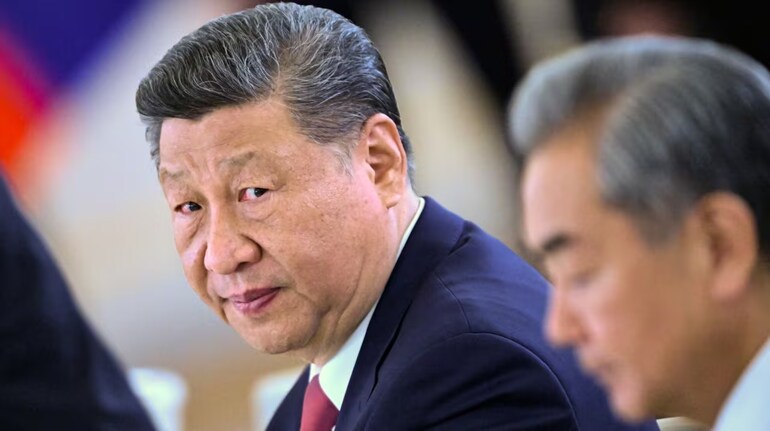
China is attempting to leverage easing border tensions with India to blunt the expansion of New Delhi’s strategic partnership with Washington, according to the Pentagon’s latest annual report to the US Congress on China’s military developments.
The US Department of Defense report, released on Tuesday (December 23), assesses that Beijing sees the recent thaw along the Line of Actual Control (LAC) as an opportunity to stabilise relations with India while discouraging closer India-US alignment. At the same time, the report underscores that China continues to deepen military cooperation with Pakistan and rapidly expand its nuclear arsenal.
The document also reiterates China’s territorial claims over Arunachal Pradesh, describing the Indian state as part of Beijing’s stated “core interests”.
Why Beijing is courting New Delhi
According to the Pentagon, China’s outreach towards India is driven by broader strategic concerns, particularly Washington’s growing engagement with New Delhi. The report states that Beijing is seeking to capitalise on reduced tensions along the LAC to stave off deeper ties between India and the US.
For years, the United States has viewed India as a key counterweight to China’s expanding influence in the Indo-Pacific. The report suggests that Beijing hopes diplomatic engagement with India can prevent the consolidation of this alignment.
Relations between India and China deteriorated sharply after the violent clash in Ladakh’s Galwan Valley in 2020, which resulted in the deaths of 20 Indian soldiers. Beijing has claimed it lost four troops. Following the standoff, both sides engaged in multiple rounds of military, diplomatic and political talks, though areas such as Demchok and Depsang remained unresolved.
The report notes that in October last year, India and China announced a patrolling arrangement along the LAC, “leading to the disengagement” of forces in eastern Ladakh. This development paved the way for a meeting between Prime Minister Narendra Modi and Chinese President Xi Jinping on the sidelines of the BRICS Summit in Kazan, Russia — their first formal interaction since the 2020 clashes.
Cautious engagement amid persistent distrust
The Pentagon observed that the leaders’ meeting “marked the onset of monthly high-level engagements between the two countries”, with discussions focused on border management and steps to improve bilateral ties. These measures included the resumption of direct flights and the reopening of visa services.
However, the report emphasised that New Delhi remains guarded about Beijing’s intentions. India “probably remains sceptical of China’s actions and motives”, it said, adding that “continued mutual distrust and other irritants almost certainly limit the [India-China] bilateral relationship”.
Arunachal Pradesh and China’s ‘core interests’
The report also draws attention to China’s expansive territorial claims, particularly its stance on Arunachal Pradesh. According to the US Department of Defense, Beijing has broadened the scope of what it terms “core interests” to include sovereignty claims over Taiwan, Arunachal Pradesh, nearly the entire South China Sea and the Senkaku Islands “amid territorial disputes”.
China refers to Arunachal Pradesh as “Zangnan, the southern part of Tibet”, a claim firmly rejected by India, which maintains that the state is an integral part of the country.
The document states that China considers three “core interests” essential for national rejuvenation and not open to negotiation: maintaining Chinese Communist Party control, advancing economic development, and defending and expanding territorial claims.
Taiwan and military uncertainty
The Pentagon report also assessed China’s posture towards Taiwan, noting that Beijing views unification — even by force if necessary — as a “natural requirement” for national rejuvenation. However, it added that Chinese leaders “remain unsure of the [People’s Liberation Army] PLA’s readiness to successfully seize Taiwan while countering US involvement”.
Despite these doubts, the report said China “continues to refine multiple military options to force Taiwan unification by brute force”.
Pakistan as a strategic lever against India
While engaging diplomatically with India, Beijing continues to strengthen defence ties with Pakistan. The report notes that China is supplying Pakistan with advanced military platforms, including frigates, combat aircraft and armed drones.
By May 2025, China had delivered 20 of 36 J-10C multirole fighter jets to Pakistan, along with strike-capable Caihong and Wing Loong unmanned aerial vehicles.
US defence assessments, cited in the report, indicate that China and Pakistan are working together to pressure India through coordinated “grey zone operations”, using coercive tactics short of open conflict. US intelligence sources described Islamabad as China’s “pressure valve” against India.
China’s expanding nuclear arsenal
The Pentagon report also highlights China’s rapid nuclear expansion. Beijing is estimated to be adding around 100 nuclear warheads annually, with its stockpile reaching the “low 600s” by the end of 2024.
By 2030, China is projected to possess around 1,000 nuclear warheads deployable across missiles, submarines and bombers. The report concludes that China’s “historic” military build-up has increased US vulnerability and reshaped the regional security balance.
Discover the latest Business News, Sensex, and Nifty updates. Obtain Personal Finance insights, tax queries, and expert opinions on Moneycontrol or download the Moneycontrol App to stay updated!
Find the best of Al News in one place, specially curated for you every weekend.
Stay on top of the latest tech trends and biggest startup news.




