-
India–EU FTA includes ‘lesser duty’ provision for anti-dumping duties
The FTA also includes public interest safeguards, preventing authorities from applying trade remedies if doing so clearly does not benefit the public, considering domestic industry, importers, users, and consumer groups.
-

India, EU agree on 5-year most-favoured nation treatment in trade deal
This means that the listed sectors, services and service suppliers of each Party will be treated at least as well as those from any other country, with certain limits and conditions.
-
India–EU FTA makes uncommon reference to cooperation on CBDCs
India’s digital rupee, issued by the Reserve Bank of India, is currently in the pilot phase, with both retail and wholesale segments under testing.
-
India-EU FTA to include structured mediation mechanism
As per the draft text, an annexure on “model mediation procedures” outlines how disagreements related to trade measures can be handled.
-
India, EU FTA to kick in within a year, says Commerce Secretary Rajesh Agrawal
India and the European Union announced the conclusion of negotiations for the FTA on February 27.
-
Tata Steel welcomes CBAM exclusion from India-EU FTA, calls it "equalisation" on overseas steel
Due to the CBAM, steelmakers exporting to the EU face varying tariffs based on the "intensity" of carbon emissions (carbon dioxide emissions per tonne), while India's duty-free stel export quota to the EU has also been reduced
-
RBI policy meeting: India-EU FTA to support exports over medium term, says Sanjay Malhotra
The RBI raised the full year GDP forecast for FY26 by 10 basis points to 7.4% even as it held the key repo rate steady at 5.25%
-
India’s next big trade bet: Why an FTA with six Gulf nations matters and why it's bad new for Pakistan | Explained
The resumption of GCC talks comes just days after the India-EU trade agreement and the announcement of a US-India trade deal that reduced American tariffs on Indian goods to 18 per cent.
-
India opens economic front with EU: Why Pakistan and Bangladesh are rattled by the FTA | Explained
For New Delhi, the deal is a strategic breakthrough that aligns trade with geopolitics. For Islamabad and Dhaka, it threatens to dismantle decades of hard-won advantage built on special trade regimes rather than competitiveness.
-
With 'mother of all deals' in bag, Piyush Goyal says mother will be compassionate, fair to all 28 children
The India-European Union free trade agreement (FTA) is widely termed as the "mother of all deals".
-
India-EU Free Trade Agreement will boost footwear, leather exports: Official
The European Union is the largest market for India’s footwear and leather sectors, accounting for 43 per cent of exports, Council for Leather Exports Executive Director R Selvam said.
-
From Manmohan Singh to Narendra Modi: How India’s 1991-2026 trade journey delivered its biggest deal with Europe
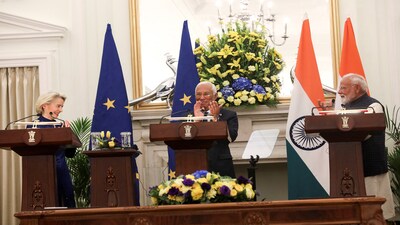
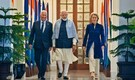
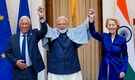
The deal, announced by Prime Minister Narendra Modi and European Commission President Ursula von der Leyen, creates the world’s largest bilateral trade bloc.
-
India-EU FTA strategic signal to US, but gains hinge on efficiency: Nobel laureate Abhijit Banerjee
The agreement, which will account for almost a quarter of global GDP, will reduce tariffs on 99 per cent of Indian exports to the EU and cut duties on over 97 per cent of the EU's exports to India, according to officials.
-
India to slash tariffs on high-end EU cars to 30% in boost for luxury carmakers
India and the European Union finalised a long-delayed deal on Tuesday that will cut tariffs on most goods and boost trade
-
India-EU FTA cushions India against external trade headwinds: S Mahendra Dev
The EAC-PM Chairman called the India-EU FTA a great opportunity for both parties. "India will benefit with this. Exports in many labor intensive commodities, like textiles, gems and jewelry and auto parts will benefit."
-
India keeps government procurement out of EU FTA, unlike UK deal
A government official said that India has not offered any commitments that would require opening central government tenders to EU companies, keeping this area outside the scope of the FTA
-
India-EU trade deal won’t offset US tariff shock but sector gains are real: Goldman Sachs
Diversification is now the dominant strategy in a fragmenting global trade system. But it remains a strategy of margins, not miracles.
-
It’s not just tipplers: EU trade deal could make pet food cheaper for Indian households
Premium European brands such as Farmina and Royal Canin are likely to become more affordable if duties are reduced
-
Govt to stick to fiscal deficit target, no space for easing, says PM-EAC chairman Mahendra Dev
The top economist said the recently concluded India-EU free trade deal will help soften blow from external factors, as New Delhi seeks to cut trade dependence on few countries
-
First-ever rapid response mechanism in FTA to safeguard India from any challenging EU rules
These provisions will help India in dealing with challenges arising from EU's regulations in the future and protect FTA benefits.
-
India–EU FTA opens new export and investment runway for Uttar Pradesh industries
The agreement provides Indian exporters with improved access to the EU’s market of nearly 450 million consumers across 27 countries and is aimed at boosting two-way trade while reducing over-dependence on traditional markets amid rising global trade tensions.
-
India to grant tariff concessions to 100,000 EU ICE cars in year 1 of FTA; EVs below €20,000 excluded
The quota will gradually rise to 160,000 units in the tenth year of the FTA while import duties on ICE cars will fall to 10 percent in year 5, making European models more affordable for Indian consumers.
-
India caps EU apple imports at 50,000 tonnes at 20% duty; wine cuts phased over 7 years
India, and the EU announced the conclusion of talks for a trade deal on January 27 after nearly two decades of negotiations.
-
India–EU FTA: Government, private sector must seize opportunity to unlock gains, says EY’s DK Srivastava
One of the areas with significant potential under the evolving India–EU framework is defence manufacturing, particularly through joint ventures focused on co-development and co-production, Srivastava tells Moneycontrol
-
LIVE: Trump's Climbdown, India-EU FTA, And The Need To Engage With Pakistan With Shyam Saran
Shyam Saran, Former Foreign Secretary of India decodes the new global order and the need for India to pursue a neighbourhood first policy in spirit and push back against Trump's bullying tactics