Both Donald Trump and Benjamin Netanyahu have made their intentions in Iran clear: they are pushing for regime change.
Trump in particular has called on the anti-regime protestors to take to the streets and put pressure on the regime. This comes at a time when the Iranian regime is at its most vulnerable. Most members of the top leadership have been eliminated. Internally, the regime faces a growing opposition. Its chain of proxies across the region from the Hezbollah to the Hamas have been systematically weakened.
However, despite these vulnerabilities, it would be wrong to assume that regime change is going to be easy. Iran, is not a Venezuela or Syria.
The current regime has established deep roots, that is going to make them hard to dislodge. From the leadership structure, to contingency plans and the ideological support, there is strong reason to believe that regime change is not going to be straight forward in Iran.
In many authoritarian regimes, the power structure revolves around one person or one family. This was evident in Syria, Libya and Iraq under Saddam Hussein. In such cases, decapitation of the top leadership can act as a catalyst for regime change.
In Libya by targeting Gaddafi and his family the regime was weakened to the point of collapse. A similar story played out in Iraq once Hussein and his family were targeted.
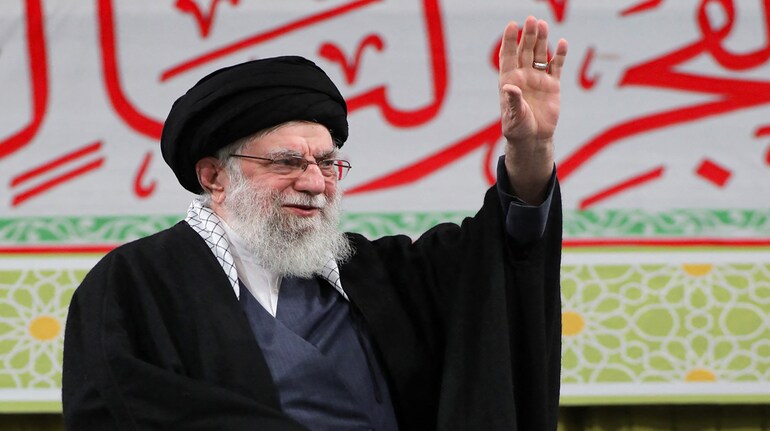
In Iran, as powerful as Ayatollah Khamenei was, the leadership structure is different in two ways.
Firstly, the leadership structure has not been monopolised by one individual or family. The leadership network is diverse, multiple candidates being considered for succession. Within 24 hours of the Ayatollah’s death an interim leadership was announced. Now, there are already reports that the Khamenei’s son Mujtaba Khamenei has been chosen as the next Ayatollah.
Secondly, the Iranian regime has built in contingency plans for situations like these. Despite Ayatollah Khamenei being killed on the first day of the operation, it has not hampered Iran’s response. The IRGC has had clear plans for such eventualities. Once Ayatollah Khamenei was eliminated, the leadership structure was de-centralised with regional commanders having the operational autonomy to take decisions. One could argue that this has made the IRGC far more dangerous. Instead of one centralised command structure, you have to deal with multiple independent regional command structurers. Therefore, a decapitation of the leadership alone is unlikely to work in this case.
The Iranian regime has strong ideological and religious roots. Other authoritarian regimes in the region often maintain loyalty through a network of patronage and material benefits. While it is true that the senior leadership in the IRGC have amassed significant wealth, money and patronage are not the only reasons that ensure loyalty to the regime. There are strong ideological and religious factors behind the support and loyalty.
This has important implications for the US and Israel’s regime change objectives. Unlike Syria, Iraq, Libya, Afghanistan and more recently in Venezuela, engineering defections is going to be challenging.
In Syria, once Assad’s army sensed that the regime was vulnerable the resistance virtually collapsed. Similarly in Afghanistan, once it was clear the Taliban were moving towards Kabul, the Afghan Army abandoned their posts and the Taliban were able to walk into Kabul unopposed.
A similar situation is highly unlikely in Iran. Even if the regime is vulnerable, and the patronage networks weakened, the IRGC members are not going to abandon posts and widespread defections are not going to be seen. This is largely because the IRGC’s members are not motivated by patronage and wealth alone. There are strong ideological and religious motivations that transcend rational and calculated support.
Despite the recent anti-regime protests, one needs to remember the regime has a significantly large support base. As much as there were celebrations after the death of Ayatollah Khamenei, there were also a large number of mourners who took to the streets of Iran. If anything, the ongoing military campaign may likely strengthen this support base even further.
The larger point being, even if you succeed in removing the current regime, the ideological foundations are not going to go away. These are likely to remain, and will be influential even if a new democratic system is established.
A good example is the Arab Spring in Egypt. The fall of Hosni Mubarak was celebrated as a victory to democracy. This was particularly true in the West, where many saw a democratic Egypt as a natural partner. However, once, elections were held and the Muslim Brotherhood led by Mohammad Morsi won the elections, the West quickly realised a transition to a democracy need not necessarily guarantee a pro-Western regime. The same analogy can also be applied to Iran. Even if you succeed in overthrowing the current regime and establishing a democracy, there is no guarantee the future regime will be pro-West.
The current regime has a strong ideological support base at the grassroots that is not going to go anywhere.
As we are nearing a week of hostilities, it is clear regime change in Iran is not going to be straightforward. It will be naive to believe that regime change is a low hanging fruit. Iran is fundamentally different from other authoritarian regimes in the region. The regime’s structure and the contingencies they have in place means that just taking out the leadership will not yield results. Making matters more complex, the deep-rooted ideological support base means even if the current regime is overthrown, there is no guarantee the regime that emerges is likely to be pro-West.
(Sanjal Shastri is Assistant Professor, International Studies, FLAME University.)
Views are personal, and do not represent the stand of this publication.
Discover the latest Business News, Sensex, and Nifty updates. Obtain Personal Finance insights, tax queries, and expert opinions on Moneycontrol or download the Moneycontrol App to stay updated!
Find the best of Al News in one place, specially curated for you every weekend.
Stay on top of the latest tech trends and biggest startup news.