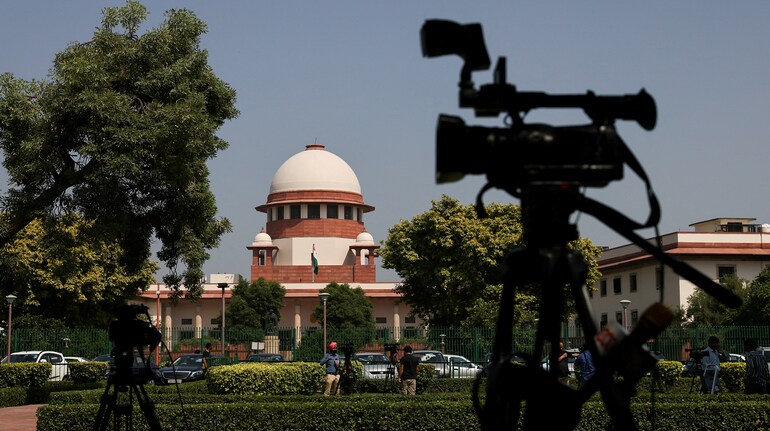
The frequent misuse of Article 356 of the Indian Constitution, which empowers the Union to take over the administrative control of a State on the recommendation of the Governor, was acknowledged by the Supreme Court on several occasions. However, it was only in SR Bommai vs Union of India (1994) case that the Court laid down institutional safeguards to curb this misuse.
These safeguards made the arbitrary imposition of President’s Rule significantly more difficult. In the Bommai judgment, the Supreme Court laid down the rule of the ‘floor test’ and also clearly defined the limited circumstances in which President’s Rule may be imposed without first conducting a floor test.
A milestone in removing grey areas
The Bommai case marked a major constitutional development by firmly establishing the floor test as the primary mechanism to determine a government’s majority. In essence, the requirement of a floor test was not merely a procedural suggestion but the central principle of the judgment, reinforcing legislative supremacy over executive discretion.
While Bommai addressed the misuse of a specific constitutional provision, the Kesavananda Bharati case two decades earlier had evolved the Doctrine of Basic Structure, which placed definitive limits on Parliament’s amending powers.
In the years that followed, several important pieces of legislation were examined through the lens of this doctrine and, in many instances, were held unconstitutional. One of the most significant recent examples was the striking down of the National Judicial Appointments Commission (NJAC) Act, reaffirming the inviolability of the Constitution’s basic structure.
Institution charged with imparting certainty
The Supreme Court stands as the final interpreter of constitutional principles. Its landmark judgments—ranging from Indra Sawhney, which introduced the concept of the creamy layer; to Vishaka, which laid the foundation for laws against sexual harassment at workplace; to Lily Thomas, which clarified the legal consequences of conversion; and I.R. Coelho, which subjected laws placed in the Ninth Schedule to judicial review—have consistently resolved ambiguities and strengthened constitutional governance.
A recent trend of leaving issues partly unresolved
However, in the recent past, some judgments of the apex court have stopped short of conclusively addressing the issues placed before it for interpretation, leaving important questions open-ended and unresolved.
On November 20, the Supreme Court delivered its verdict in the reference made by the President of India under Article 143 of the Constitution regarding questions related to the grant of assent to Bills. It reversed its April 2025 judgment, wherein it had set timelines for the President to act in accordance with Article 201 of the Constitution on the bills that the Governor had reserved for the President's assent. The Court had held that the President must decide within three months on the Bills reserved.
The November verdict was a carefully balanced exercise, which did not fully resolve the underlying constitutional question. Acting under its advisory jurisdiction, the Court acknowledged that its intervention is limited to “glaring circumstances” where a Governor’s inaction becomes prolonged, unexplained, and indefinite. While the Court cannot review the merits of a Governor’s decision, it may issue a limited mandamus directing the Governor to act within a reasonable time. By describing the assent process as an “advisory, persuasive, deliberative, mediative, and consultative” dialogue between State and Governor, the Court positioned itself more as a guide than an adjudicator.
Bail or Jail: We remain unclear about a standard
Similarly, in the recently decided bail application of Umar Khalid and Sharjeel Imam, accused in the 2020 Delhi Riots case, many questions remain unanswered. In its 2021 judgment in Union of India v. K.A. Najeeb (2021) case, a three-judge Bench of the Supreme Court held that in a case of prolonged incarceration without a reasonable chance of trial being completed within a reasonable timeframe, constitutional intervention is warranted.
However, while denying the bail to Khalid, the apex court held that it was held that where the trial is not likely to commence or conclude within a reasonable period, constitutional courts retain the jurisdiction to grant bail notwithstanding statutory restraints.
However, it added that the same decision, however, does not indicate as laying down a mechanical rule under which the mere passage of time becomes determinative in every case arising under a special statute.
Where is the threshold?
While the judgment, in parts, examines the contextual relationship between delay in trial and the grant of bail and notes that such context includes the nature of the allegations, the statutory framework, the stage of proceedings, the realistic trajectory of the trial, the causes contributing to delay, and the risks attendant upon release, it stops short of offering clear guidance on a crucial question. What remains unresolved is the point at which the rigours of stringent provisions such as those under the UAPA begin to recede.
Equally, the judgment does not clearly articulate how the Court assesses the unlikelihood of the trial being completed within a reasonable time, nor does it indicate what period of incarceration or delay would cross the threshold. As a result, the standard remains open-ended, leaving significant uncertainty in its practical application.
While it is undeniable that Khalid’s case is of an extremely sensitive nature and that no conclusion regarding the guilt or innocence of the accused can or should be arrived at in haste, the larger question concerns the Court’s approach to bail jurisprudence. Specifically, how is one to reconcile the Court’s reasoning when, in one case, prolonged delay and the remote likelihood of the trial concluding in the near future are held sufficient to dilute the rigours of stringent statutory provisions that would otherwise bar bail, while in another, more than five years of incarceration is found insufficient to override the same embargo.
Lesson from the Court’s most famous dissent
This ambiguity does not become problematic merely because of the present case, which is undoubtedly of an intensely political nature. Rather, it raises a deeper constitutional concern: that in the absence of clearly articulated judicial parameters, the operation of the UAPA and comparable special statutes risks enabling the State to impose prolonged constraints on personal liberty without principled limits.
History offers a cautionary parallel. The absence of defined benchmarks governing the permissible extent of restrictions on the right to life and personal liberty during the Emergency resulted in serious constitutional violations. It was the solitary dissent of Justice H.R. Khanna, affirming the non-derogable nature of the right to life, that articulated the essential safeguard against the unchecked and arbitrary power of the State.
Discover the latest Business News, Sensex, and Nifty updates. Obtain Personal Finance insights, tax queries, and expert opinions on Moneycontrol or download the Moneycontrol App to stay updated!
Find the best of Al News in one place, specially curated for you every weekend.
Stay on top of the latest tech trends and biggest startup news.