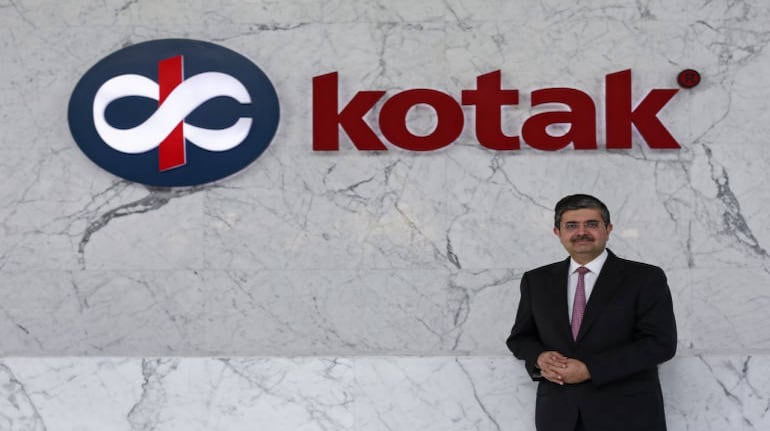
The wheels of justice grind exceedingly fine, but turn slowly. By taking the Reserve Bank of India to court, Kotak Mahindra Bank has bought more time for itself in the promoter stake dilution issue. If the matter is sub-judice, the central bank can't take Kotak to task or penalise it when the deadline for promoter stake dilution whizzes by on December 31, which is hardly another three weeks away.
To recap the issue, the Reserve Bank's guidelines mandate that no single entity – unless it is a regulated, well-diversified, listed financial institution or a government undertaking – can hold more than 15 percent in a private sector bank. Kotak Mahindra Bank's promoters, who hold (or held, depending on which side you are on) 30 percent, have to dilute their holding to 20 percent by December 31 and 15 percent by the end of 2020.
The bank took advantage of loosely-worded RBI regulations to issue Rs 500 crore of perpetual non-convertible preference shares (PNCPS), which increased its paid-up capital to Rs 1,453 crore and reduced promoter Uday Kotak's stake to 19.7 percent. An unimpressed RBI refused to buy this argument. There this matter rested till Kotak filed a petition in the high court.
It's a bit fresh for a bank to attempt this audacious move,, especially since its promoter -- Executive Vice-Chairman and Managing Director Uday Kotak -- headed a committee on corporate governance whose report talked about Indian firms following only the letter of the law and not the spirit. By reducing his stake in the paid-up capital, when the accepted norm and the regulatory intent is clearing a dilution in equity capital, Kotak is perhaps following only the letter of the law.
While Kotak deserves a rap on the knuckles for this, it is also time to review the Reserve Bank’s ownership guidelines for private banks. The arguments are well-known.
The case for well-diversified ownership is made by the fact that banks are highly leveraged institutions and depositors are their largest stakeholders. Thus, concentrated shareholding in the hands of a single entity is risky and leads to moral hazard problems. However, recent instances of conflicts of interest and dodgy accounts in the private banking space show that a well-diversified holding is not always the solution.
On the other hand, if promoters have more skin in the game - by way of higher economic interest – they will tend to favour good governance more. This is especially so, since voting caps are already fixed at 26 percent. Having an ownership higher than one's voting rights will make them tread more carefully.
It is also clear that the board is supreme and responsible for governance in any corporate entity, including a bank. In the case of banks, RBI has the last say in deciding who is fit and proper to be on a bank’s board. Here too, like in the case of well-diversified holding, the strategy hasn’t always worked since we have seen boards beholden to superstar CEOs.
The answer then perhaps lies in better banking supervision and better drafting of rules. For instance, RBI should have clearly spelt out what it means by capital. Neither are the rules governing shareholding and voting rights cast in stone; the RBI itself has changed it on several occasions. The PJ Nayak committee had recommended that promoter shareholding be capped at 25 percent rather than the RBI's 15 percent.
In the meantime, RBI faces a Hobson’s choice: diluting the rules or granting more exemptions could be a loss of face; allowing Kotak to get away will leave it facing charges of favouritism.

Discover the latest Business News, Sensex, and Nifty updates. Obtain Personal Finance insights, tax queries, and expert opinions on Moneycontrol or download the Moneycontrol App to stay updated!
Find the best of Al News in one place, specially curated for you every weekend.
Stay on top of the latest tech trends and biggest startup news.