
co-presented by
ASSOCIATE SPONSORS
co-presented by

ASSOCIATE SPONSORS




Subir Roy
Right now six registrations are needed under 13 labour laws to get started as a business establishment in India to execute a project. The government proposes to replace these laws with three codes which will offer a single registration, license and return as an establishment for executing projects for up to five years. This will be a great gain in the ease of doing business.
Toward this end the government has introduced two codes — one on occupational safety, health, welfare and working conditions, and another on wages. Of these the wages code Bill has been passed by the Lok Sabha.
There has been a certain amount of controversy over the Bill to define a minimum wage across India but of course the industrial relations code Bill, once it is introduced, is likely to create the mother of controversies.
While business and many ruling party politicians are looking forward to greater flexibility in hiring and firing so as to create jobs and take forward competitive manufacturing, trade unions and political parties aligned with them will oppose tooth and nail any perceived attempt to take away job security, such as it exists.
Provisions of the bills and resultant enactments (the government has a massive majority), by their complex nature, will be the subject of detailed and extended scrutiny. This will identify the need for amendments to remove lacunae which could not be detected during the virtually zero parliamentary scrutiny. While that is some way off, this is what we have now.
The Bill to enact a code on wages, which has just been passed, will vastly reduce the number or statutory wages prevailing in the country from the current over 2,500 (no less!) to around 300.
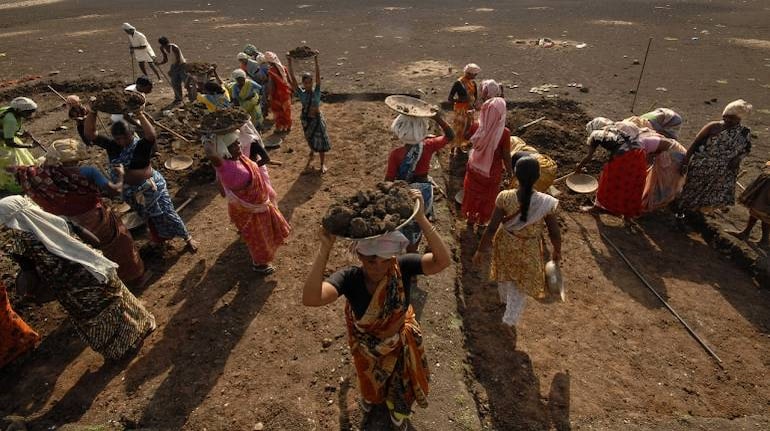
One key feature is the Centre will notify a basic minimum wage across India applicable to all workers, including those in the unorganised sector, which will be determined on the basis of its calculation of what it takes to sustain a minimum quality of life. The states will not be able to fix a minimum wage below this minimum. All this will seek to ensure that around 500 million workers across the country will be covered by a minimum wage which will ensure a modicum of dignity of life to all.
Critics say a pan Indian minimum wage is meaningless as the cost of living in say Mumbai is far different from that in Jharkhand. A rational minimum wage in the former will be princely and unaffordable to businesses in the latter and a sensible minimum wage in the latter will not sustain existence in the former.
The current minimum wages are based on occupation, area, skills and work as notified by the Centre. In its place the Centre and the state governments, according to their respective jurisdictions, will now fix the minimum wage based on factors like skill sets, geography (urban or rural, hills or plains) and the hazardous nature of the work and working environment such as temperature and humidity.
The code also seeks to define what a ‘wage’ is for all the codes so that the scope that currently exists for litigation arising out of the 12 different definitions of ‘wage’ stretching across the existing laws is reduced.
The new avatar of ‘wage’ will also seek to eliminate the many means whereby employers seek to reduce statutory dues payable, such as provident fund, gratuity and insurance by minimising the ‘wage’. It will hereafter include basic pay, dearness allowance and retraining allowance. Other allowances such as house rent, leave travel and overtime are proposed to be capped at a maximum of 50 per cent of the wage.
The bill to create a code on occupational safety, health, welfare and working conditions, also introduced in Parliament, will reduce provisions from 622 to 134, making for simplicity and ease in changing when the need arises. It will consolidate, among other things, the factories Act and the contract labour Act.
The Bill proposes online and deemed registration. Registering under it will serve the purpose of coming within the ambit of the other codes too. Earlier establishments in nine major sectors had to register themselves. Now, all establishments employing 10 or more workers will have to register themselves. This will widen the scope of registration. A single registration will cover all projects undertaken by a business across the country for five years, instead of separate licenses being needed now for each project.
However, a security deposit will be needed while registering and the number of contract workers to be employed will have to be mentioned. If more workers need to be employed then a fresh license will be needed after making a further security deposit. This provision is being pilloried.
Importantly there are provisions to unwind the current inspector raj. First, the inspector will now be called ‘inspector-cum-facilitator’ and he will have to operate not in his regular area of assignment but one through a randomised computer system. This will hopefully end the nexus which is often there between inspector and employer in a particular region.
In keeping with some of the worker-friendly aspects of the proposed new laws, the limitation period for filing of claims for wages will be increased from six months to two years to three years. The government will also seek to reduce the scope for litigation by imposing fines instead of allowing matters to go to tribunals. In the same vein, there will be provisions for compounding of offences to reduce the load of litigation. This should help business which, in the case of an offence, will be happy to pay a fine and move ahead.
Subir Roy is a senior journalist and author. Views are personal.

Discover the latest Business News, Sensex, and Nifty updates. Obtain Personal Finance insights, tax queries, and expert opinions on Moneycontrol or download the Moneycontrol App to stay updated!
Find the best of Al News in one place, specially curated for you every weekend.
Stay on top of the latest tech trends and biggest startup news.