
Namrata Mittal and Varnika Khemani The long-awaited India–US trade deal marks a strong macro-positive development for India.
Foreign capital flows had been held back by prolonged uncertainty, as the absence of a conclusive agreement raised questions about India’s attractiveness as a China+1 destination. The deal may act as a force multiplier to the government’s strategic initiatives outlined in the budget.
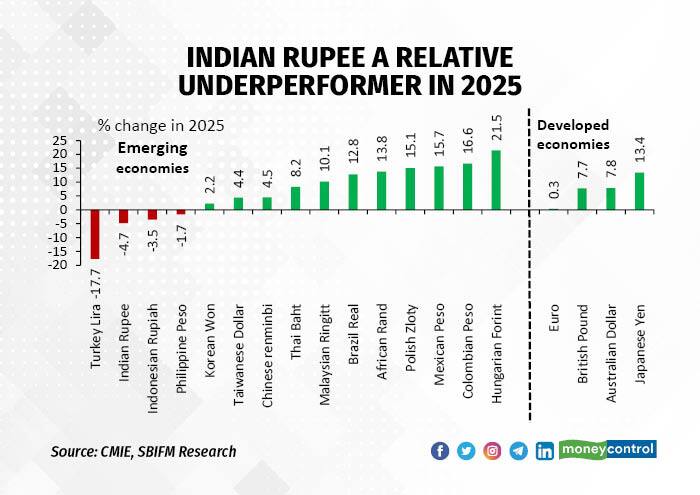
It could also help ease external account pressures by reviving FII inflows and reducing depreciation pressure on the Indian rupee, which has sharply underperformed relative to other emerging market currencies. An improvement in balance of payments position would in turn support better domestic liquidity conditions.
India’s US exports held up, but at a cost
India’s exports to the US held up in 2025, but only because exporters absorbed tariff-related costs. The tariff reduction should now help alleviate these margin pressures.
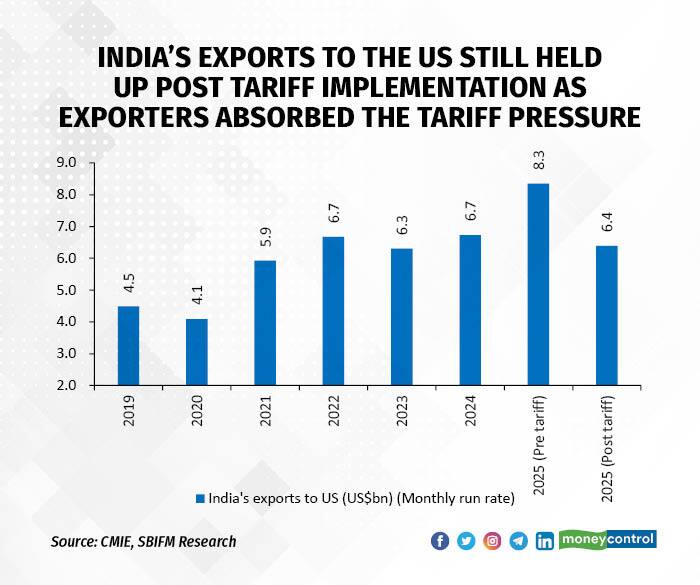
As such, the trade deal is likely to benefit the bottom line of Indian companies more than their top line, while removing a key element of uncertainty and bringing growth and expansion plans back into focus.
Financial assets underperformed
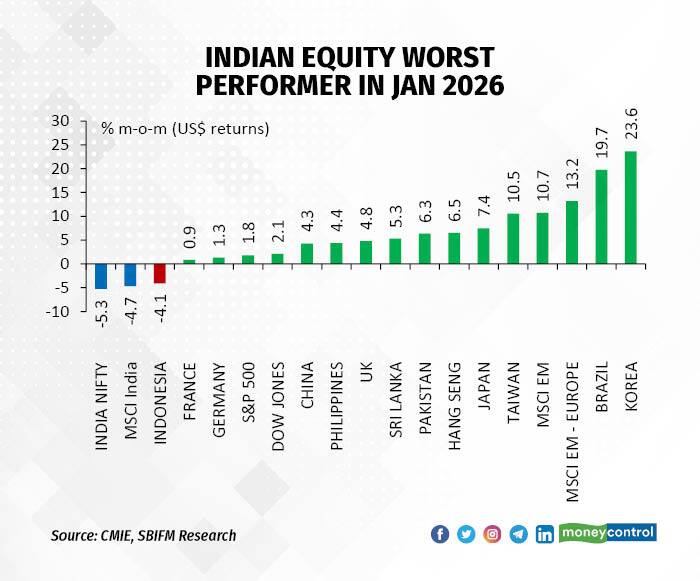
Both Indian equity and fixed income markets significantly underperformed emerging market peers in 2025. The trade deal could offer a meaningful sentiment boost to equities. However, a sustainable, broad-based market recovery will also require earnings rebound.
Similarly, any rupee recovery stemming from improved external conditions is likely to spill over into fixed income, partly offsetting the negative impact of the budget-related G-Sec supply shock.
Over the medium-term, though, interest rate trajectories will continue to be shaped by demand–supply tightness, commodity price trends, and their pass-through to inflation.
 Be prepared for shocks
It is important to note that unlike other bilateral FTAs, India-US trade deal is not a fully binding agreement. Recent episodes—such as tariff threats directed at European nations over the Greenland issue and pressure on South Korea to accelerate a trade deal implementation—highlight that exporters and policymakers must remain vigilant when engaging with the US.
Three parts to the trade deal
US President Donald Trump and Indian Prime Minister Narendra Modi announced on social media a tariff arrangement under which US tariffs on India would be reduced from 50% to 18%. There are two parts to this. First, reciprocal tariff by the US on India is expected to decline from 25% to 18%. In addition, the 25% penalty imposed on India for purchases of Russian oil appears to have been withdrawn, following India’s reported agreement to stop importing Russian crude.
As part of the understanding, India has reportedly agreed to reduce tariffs and non-tariff barriers on select US imports to zero. It is also being claimed that India has committed to purchase up to $500 billion of American goods across energy, technology, and agriculture. This figure appears a bit challenging, given that India’s imports from the US in 2025 were approximately $45 billion.
While the revised tariffs are said to be effective immediately, we await formal clarification on product-wise tariff rates and the precise scope of coverage. Even in the recent India–EU FTA, agricultural and dairy products were excluded from tariff reductions. It will therefore be important to assess India’s stance on these sensitive categories in the US tariff arrangement as well. Since this is a deal and not an agreement, we think that it might not require parliamentary approval.
The trade deal complements sound macroeconomic indicators
Overall, this is a strong macro-positive development. Despite robust fundamentals—fiscal prudence, a contained current account deficit, low external debt, growth outperformance versus the rest of the world, and muted inflation—India saw weak net FII flows across both debt and equities in 2025, while the rupee was amongst the worst-performing currencies that year. Beyond elevated equity market valuations (which have corrected meaningfully now), the absence of a trade deal had been a key overhang contributing to these outcomes.
Several macro frictions such as currency weakness, subdued FII flows, balance of payment deficits, tight banking system liquidity, and upward pressure on yields could somewhat lessen following the deal announcement which, in turn, could provide a positive boost to equities as well.
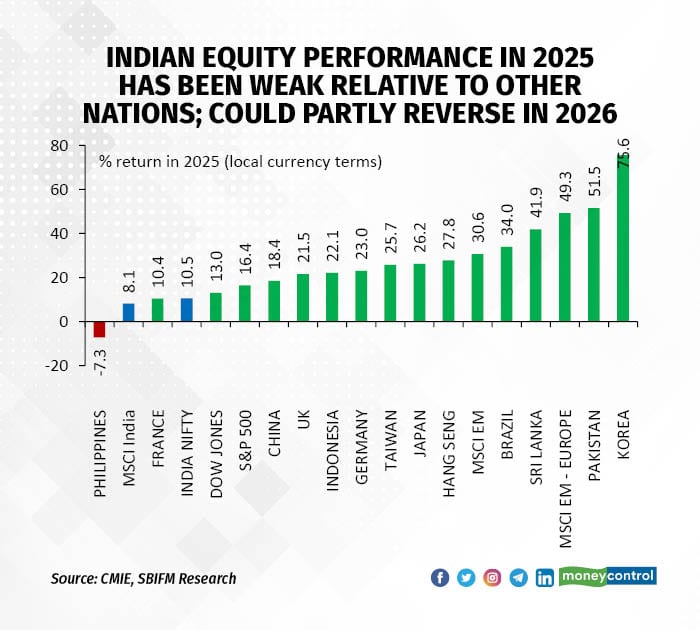
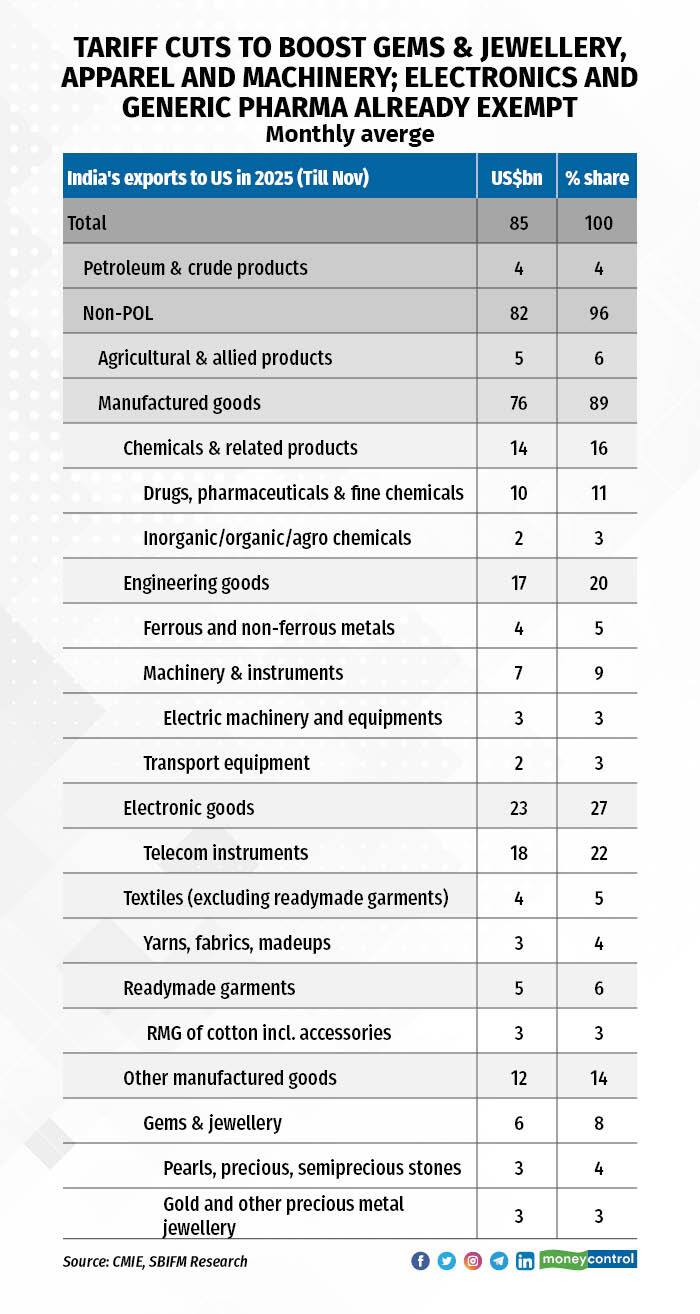
Although exports to the US held up after the tariff announcement, exporters were absorbing tariff pressures, which weighed on margins. The market had been expecting the trade deal to materialise, and in that context, losing export market share would have been more costly. A reduction in tariff rates should help ease margin pressure and could revive expansion plans in the affected sectors—making this growth positive.
Now, India has trade deals with three key economic zones
The deal may also reinforce the government’s strategic initiatives outlined in the budget to catalyse foreign investment in data centres, telecom equipment, semiconductors, nuclear reactors, and GCCs. More broadly, it restores some confidence in the trajectory of India–US relations.
India has finally secured a trade deal or an agreement with three key blocs- US, EU and UK- accounting for nearly half of global GDP. This is an important development from manufacturing industry and exporters’ point of view. With a conducive business, regulatory and infrastructure backdrop, it should help India’s manufacturing and export sector.
However, a word of caution is essential. This deal is not an agreement. The threat of tariff imposition on European nations to coerce them to comply on the Greenland issue and then on Korea for a speedy implementation of a trade deal is a reminder that exporters and policy makers need to be on their toes when dealing with the US. We think that the risks on other related issues like immigration or service exports are lower but not over.
India had warmed up to China in recent months. This development could continue separately irrespective of the deal.
The absence of a trade deal had also helped accelerate the government’s reform agenda. While this agreement may provide some near-term policy breathing space and allow benefits to accrue from measures already taken, it is important that policymakers remain focused on the longer-term objective of strategic indispensability.
Namrata Mittal, CFA, Chief Economist, and Varnika Khemani, Economist – SBI Mutual Fund
Views are personal and do not represent the stand of this publicationDiscover the latest Business News, Sensex, and Nifty updates. Obtain Personal Finance insights, tax queries, and expert opinions on Moneycontrol or download the Moneycontrol App to stay updated!
Find the best of Al News in one place, specially curated for you every weekend.
Stay on top of the latest tech trends and biggest startup news.