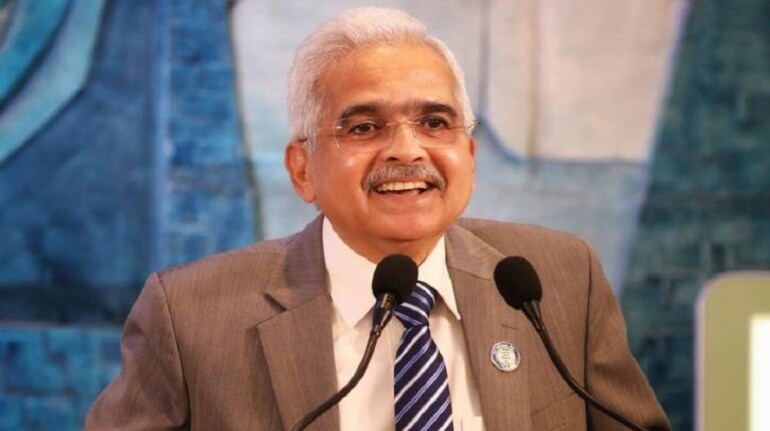
A strong rebound in India’s economic growth during H1, FY24 driven by robust government spending and strengthening of manufacturing and construction sectors, has led the Monetary Policy Committee (MPC) to significantly revise upwards its GDP growth projection to 7 percent for the year FY24 from 6.5 percent earlier.
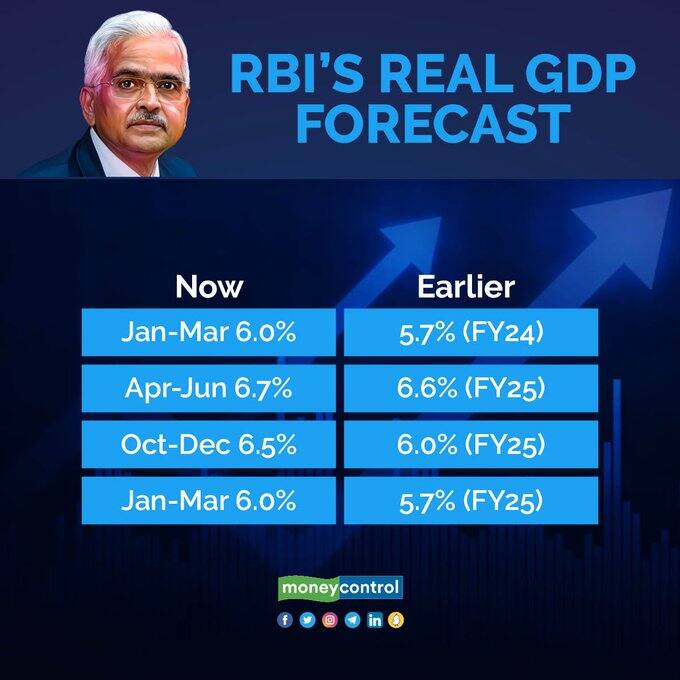
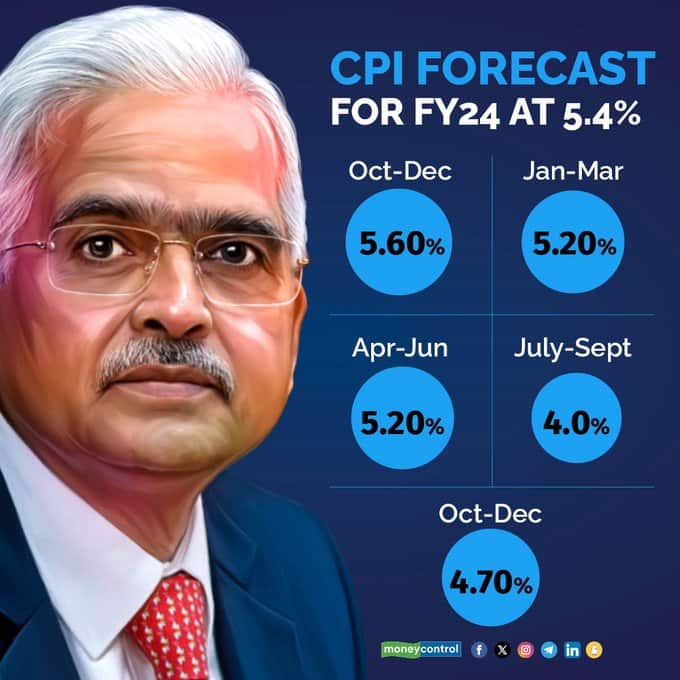
In its forward-looking growth expectations, the MPC has recognised the likelihood of “downside risks” coming from the global environment but does not see much negative impact of the ongoing El Nino weather conditions on the growth of domestic “agriculture & allied activities” and rural demand. But it has highlighted the need to monitor the impact of El Nino conditions on food inflation and the overall CPI inflation trajectory.
As the monetary policy is based on the forward-looking “growth-inflation expectations” and as the past “cumulative policy rate hike” is still working its way through the economy, the MPC has found it prudent to keep the policy repo rate unchanged at the current high level of 6.5 percent and keep the stance unchanged at “withdrawal of accommodation”.
Confident About Growth RevivalThe MPC’s expectations of the broad-based domestic growth revival has prompted it to project the economic growth at an average of 6.5 percent during April-December, FY25. The MPC’s growth confidence coupled with the rupee’s relative stability amid heightened global financial market volatility and a rich buffer of foreign exchange reserves at $604 billion as on December 1, will position India as the most attractive investment destination in the coming period.
The Reserve Bank of India’s firm commitment to the inflation targeting framework, which is in its eighth year of existence is clearly reflected in its liquidity management and future liquidity guidance. The banking liquidity that had stayed in surplus mode until September 2023, turned into deficit after a gap of nearly four-and-a-half years. Liquidity deficit widened considerably in October-November 2023.
In the October policy review, RBI had even warned of a need to undertake auction of OMO (open market operation) sales. Luckily, that need did not arise thanks to higher currency leakage associated with the festival season, increased government cash balances and RBI’s market operations.
On the contrary, the banks’ dependence on MSF (marginal standing facility) borrowings and SDF (standing deposit facility) utilisation increased significantly during the first two months of Q3, FY24. To facilitate better fund management by banks, RBI has now decided to allow banks to use MSF/SDF facilities even during weekends and holidays with effect from December 30.
But this should not be interpreted as “loosening the grip over liquidity tightness.” RBI has reiterated that it will continue to remain nimble in liquidity management. In a press conference post the policy, the RBI Governor clarified that OMOs are not off the table and it is incorrect if market participants read any signal as the MPC’s likely movement to a “neutral” stance.
In the post-policy conference, while discussing the recent macroprudential measure of raising risk weights on unsecured personal loans and lending to NBFCs, RBI officials clarified that the aim of the measure was not in any way to ration credit or curtail growth. The footnotes to the RBI Governor’s statement showed that the key financial indicators of both banks and NBFCs have further improved in November, based on the latest available data. It needs to be noted that such preemptive measures are taken to address potential risks and preserve financial resilience.
Improving Financial IntermediationIn today’s policy, RBI announced several developmental and regulatory policy measures to improve the efficiency of financial intermediation.
First, based on market developments and feedback received from market participants, the RBI has revised and made more comprehensive the existing regulatory framework for forex derivative transactions. This is expected to enhance operational efficiency as well as improve the small users’ access to foreign exchange derivatives.
Read: RBI holds rate steady: Here's what bankers, economists, analysts have to sayTo strengthen pricing and management of credit by all types of regulated entities, RBI has decided to revise and expand the scope of its existing guidelines on connected lending.
To strengthen digital banking further, the RBI has announced a regulatory framework for web-aggregation of loan products and proposed the establishment of a fintech repository by April 2024. To support data security and combat the surge in cybercrime, it said it would introduce a dedicated cloud facility for the financial sector. The cloud facility is expected to improve privacy, scalability, and business continuity.
Strongly Positive Signal On GrowthTo conclude, in today’s policy the RBI has given a strongly positive signal on growth, which augurs well for attracting foreign investments. However, strong growth coupled with growing upside bias in food inflation, will keep the MPC on its toes until it achieves the inflation target of 4 percent on a durable basis.
Also Read: Governor Das's optimism is a double-edged sword for marketsGoing ahead, we expect policymakers to combine the pro-active supply side measures (banning/curbing exports of essential food grains, imposition of stock limits, revisions in quotas for ration cardholders, etc.) and monetary measures (OMO sales if required) to lower inflation to its targeted level.
Rupa Rege Nitsure is Chief Economist, L&T Finance. Views are personal, and do not represent the stand of this publication.
Discover the latest Business News, Sensex, and Nifty updates. Obtain Personal Finance insights, tax queries, and expert opinions on Moneycontrol or download the Moneycontrol App to stay updated!
Find the best of Al News in one place, specially curated for you every weekend.
Stay on top of the latest tech trends and biggest startup news.