Indian banks did not have any experience in extending loans to airlines prior to the 1990s as the two airlines operating then, Air India and Indian Airlines, were both government-owned. In the period since the skies were opened up to private airlines, banks have gained enough experience in financial dealings with airlines, albeit at a considerable expense. Several thousand crore rupees loaned to airlines have become non-performing assets. While Kingfisher and Jet Airways were two high-profile examples of where banks suffered financially, there are numerous other promoters of smaller airlines from whom also banks have failed to recover money.
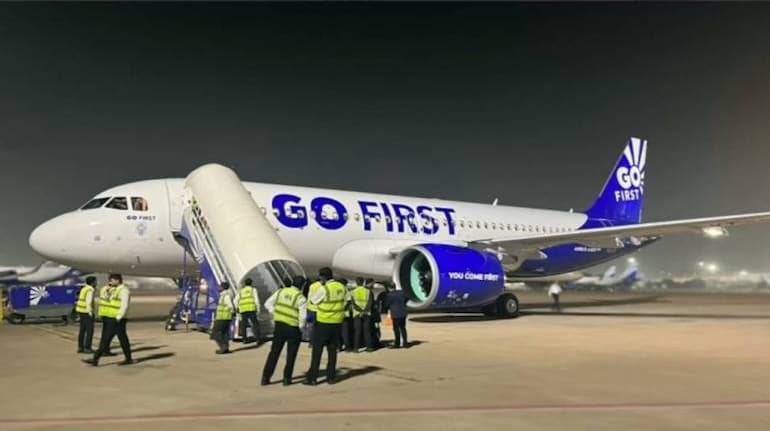
This background becomes pertinent in the context of the Committee of Creditors (CoC) having approved in-principle interim funding of Rs 425 crore to enable the grounded Go First airline to fly again. This can be described as a good and welcome development from the airline’s perspective.
One is confident that when the proposal goes to the respective boards of banks involved, several logical questions will be deliberated before the decision of interim funding is ratified. One will be curious to see if the honourable members on the boards will take data projected on revenue, load factor, sustainability of operations, etc by the Go First team at face value or bank on past experience of dealing with the airlines and go for deeper analysis to bridge the credibility gap? Under-promising and over-delivering may just be the right recipe for success.
Guided By Past ExperienceThe Jet Airways 2.0 case is a very recent one. Even though the CoC agreed to take a huge haircut; new promoters were also selected through the NCLT process but the airline, after numerous false starts, has failed to take off. The Jet Airways case study should give the banks enough fodder to think as to how trustworthy is the data presented to them at the time of seeking funding. Let there be no grey area left for subsequent objections that can derail the revival process midway.
While 26 aircraft (22 for actual use and four as reserves) are proposed to be used as per the revival plan presented to CoC, the question to be asked is whether the aircraft lessors will permit the use of them without the clearance of pending dues or before the verdict is pronounced on their petitions in the NCLT? Will these pending payments be made out of the Rs 425 crore is another question? Clarity on these issues is imperative.
Likewise, numerous other stakeholders to whom Go First owes about Rs 5,000 crore will put in claims because they will see in the likely resumption of operations by an airline with an uncertain future, their best prospect for money recovery. Meeting such demands will not only leave Go First with a meagre sum but can stifle the likelihood of recommencing operations, as was witnessed in the case of Jet Airways 2.0. Clarity is also called for on the quantum of funding arranged from other sources because Rs 425 crore interim funding will eventually prove to be grossly inadequate.
It may be worth recapitulating that at the time of filing the plea for voluntary insolvency, the management had indicated that the promoters had injected Rs 300-odd crore only a few months earlier. The amount had proved to be inadequate for ensuring flight operations for very long thereafter. How long will Rs 425 crore sustain operations?
The Directorate General of Civil Aviation (DGCA), which will evaluate the revival plan, will also need to go deep into every aspect before giving its nod. As a regulatory agency, it is empowered to seek answers to all questions regarding the availability of aircraft, manpower and finances for satisfying itself.
It is imperative for banks to move with utmost caution. Revenue figures based on existing fare levels and expected load factors will have to be analysed because fare levels may not be the same once capacity augmentation in the market takes place. The recent months, which have seen airlines record unprecedented high load factors and higher fares, cannot be taken as the benchmark. One shouldn’t also lose sight of the fact that just as the exit of Go First from the market resulted in fares going up, its re-entry, even in a limited way, will dampen fares too. A realistic view will have to be taken by the banks.
There are many who will aver that the interim infusion of Rs 425 crore by banks will be a case of good money being poured in to likely recover a seemingly lost earlier investment of Rs 6,521 crore. These sceptics will need to be reminded that the valuation of a grounded airline will always be less than an airline in operation.
If the banks have to salvage their earlier investment the best course therefore is to first make the airline fly again but with a caveat. As the existing business model with the same management personnel will also lead to the same result, i.e., uneconomical operation with losses mounting, a change in the management team is needed for sustained viability.
New Management TeamThe infusion of Rs 425 crore as interim funding will not lead the airline to soar high in the skies. It needs to be accompanied by a comprehensive revival plan that includes sorting out legacy issues, ending the control of erstwhile promoters, etc. Once operations become sustainable, one way forward to ensure Go First’s future in our competitive market dominated by two airlines — Indigo and Tata-owned airlines — will be in scouting for a new promoter or possible merger with an existing airline.
The best role model for emulation before us is the Satyam example. Put in place a new team of professionals, make the airline operations sustainable and then look for a new promoter who can infuse more cash and ensure a better and sustained future for the airline. Who can say that Satyam, which is now part of today’s Tech Mahindra, a blue-chip IT company, was once scandal-ridden?
Let’s hope wisemen on the bank boards will take a holistic view relying on past experiences of dealing with airlines. The funding decision ought to be not just in the interest of Go First but also in the national interest, including banks' own interest of safe investing of their financial resource because they now have adequate experience in financing/refinancing airlines.
Jitender Bhargava is a former executive director of Air India and author of the book, The Descent of Air India. Views are personal, and do not represent the stand of this publication.

Discover the latest Business News, Sensex, and Nifty updates. Obtain Personal Finance insights, tax queries, and expert opinions on Moneycontrol or download the Moneycontrol App to stay updated!
Find the best of Al News in one place, specially curated for you every weekend.
Stay on top of the latest tech trends and biggest startup news.