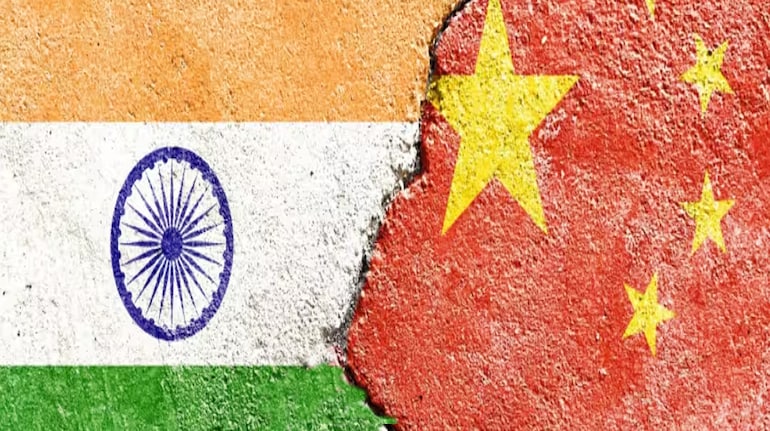
Since 2024, India–China bilateral relations have undergone a constructive transformation following prolonged diplomatic strain. On 21 October 2024, both nations reached a pivotal agreement on patrolling protocols and disengagement along the Line of Actual Control. This was followed by a meeting between Prime Minister Modi and President Xi at the BRICS Summit in Kazan on 23 October 2024, where they endorsed the activation of dialogue mechanisms at the Foreign Minister and senior official levels.
This momentum continued in 2025, with Prime Minister Modi meeting President Xi at the Shanghai Cooperation Organisation Summit during his first visit to China in seven years. Both leaders committed to a fair, reasonable and mutually acceptable resolution of the boundary question. Throughout 2025, both governments undertook concrete normalisation measures, including resuming direct passenger flights suspended since 2020, reinstating tourist visa issuance, resuming the Kailash Mansarovar Yatra, and securing Chinese cooperation on critical supplies such as rare earth minerals, fertilisers and tunnel-boring machinery.
Reconsidering Press Note 3
Given the improvement in bilateral ties, there has been renewed optimism regarding the potential relaxation of Press Note No. 3 (2020 Series) (“PN3”), notified by the Government of India on 17 April 2020. PN3 requires prior government approval for foreign direct investment by an entity from a country sharing a land border with India, or where the beneficial owner of an investment into India is situated in or is a citizen of any such country. It also applies to subsequent transfers of ownership resulting in beneficial ownership falling within its scope.
Since 2024, various government sources have informally indicated to news outlets that the Indian Government is considering relaxing restrictions on investments by Chinese entities. The Union Minister for Finance and Corporate Affairs, Smt Nirmala Sitharaman, in her Union Budget 2026–2027 speech, announced a proposed comprehensive review of the Foreign Exchange Management (Non-debt Instruments) Rules, 2019 to create a more contemporary and user-friendly framework for foreign investments, consistent with India’s evolving economic priorities.
Proposed De-minimis Threshold
According to media reports, the Government is reviewing PN3 and planning to introduce a ‘de-minimis’ threshold for foreign investments from countries sharing a land border with India. Under the proposed framework, investments below this threshold in non-sensitive sectors would fall under the automatic route rather than the current approval route. The threshold would likely be defined either as a percentage stake or as a monetary value.
Since its introduction in 2020, the Indian Government has neither amended PN3 nor clarified ambiguities surrounding it. The term ‘beneficial owner’ remains undefined, leading to multiple interpretations and divergent market practices regarding the applicable thresholds for obtaining relevant declarations from investors. The introduction of a ‘de-minimis’ threshold would therefore be a welcome development.
Balancing Security and Economic Strategy
Amid the evolving geopolitical landscape, United States tariffs and the adoption of a ‘China Plus One’ strategy by global corporations, this may be an opportune moment for India to recalibrate its position on Chinese investment and strengthen its role as a global manufacturing hub. A collaborative approach with Chinese companies, encompassing local manufacturing, technology transfer and joint ventures, could significantly accelerate India’s integration into global supply chains.
This is particularly relevant in sectors such as critical electronic component manufacturing, electric vehicles and automobile components, where Chinese firms possess considerable technological expertise and established production capabilities. Facilitating such collaboration, subject to appropriate safeguards, would bolster India’s domestic manufacturing ecosystem and reduce dependence on finished imports from China.
While a complete lifting of restrictions may not be immediately feasible given national security considerations and sensitivities surrounding strategic sectors, the Government may consider a dual strategy: first, expediting and streamlining the approval process under PN3 by establishing clear timelines and a dedicated fast-track mechanism for proposals in non-sensitive sectors; and second, introducing a ‘de-minimis’ threshold below which investments or subsequent transfers of ownership would be permitted under the automatic route. This would reduce regulatory burdens on smaller investments and portfolio transactions that do not confer meaningful control or influence over the investee entity.
(Ravi Shah, Partner and Neeti Amin, Senior Associate - Cyril Amarchand Mangaldas.)
Views are personal, and do not represent the stance of this publication.
Discover the latest Business News, Sensex, and Nifty updates. Obtain Personal Finance insights, tax queries, and expert opinions on Moneycontrol or download the Moneycontrol App to stay updated!
Find the best of Al News in one place, specially curated for you every weekend.
Stay on top of the latest tech trends and biggest startup news.