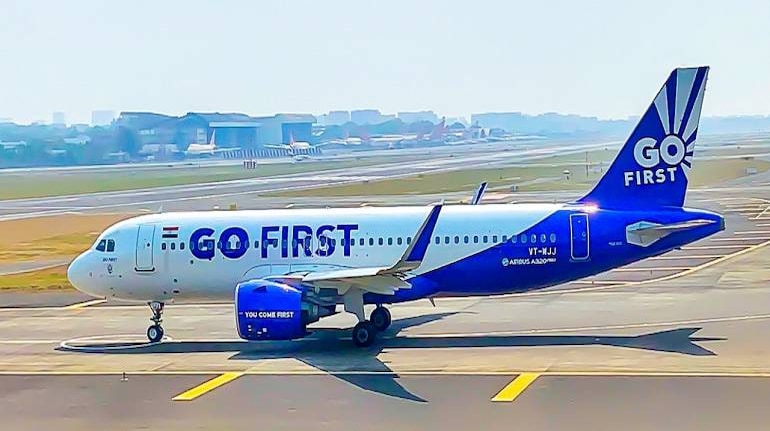
India’s regulatory authority for civil aviation, the Directorate General of Civil Aviation (DGCA), last Friday accorded its nod to Go First’s revival plan, albeit with multiple riders — some easy to comply with, some not so. Quite expectedly, this has raised optimism about Go First flying again in the not-so-distant future.
A bit of scepticism on whether the airline will really take to the skies, however, is not out of place for two reasons. First, no Indian carrier has hitherto flown again after being out of operation. (ModiLuft did fly again but under a new promoter and under a new brand name, SpiceJet, as we know it now). Second, Jet Airways 2.0 — which not only had new promoters selected through the National Company Law Tribunal’s (NCLT) bidding process and the DGCA’s approval for resuming operations — has failed to fly, and will perhaps never. The creditors of Jet Airways urged the Supreme Court last week to wind up the grounded airline, claiming that the approved resolution plan was not workable.
The reference to Jet Airways becomes imperative as there are not only several stakeholders such as the committee of creditors (CoC), aircraft lessors, Go First employees, oil companies, airports, other vendors to whom the airline owes money, and, of course, the Resolution Professional acting on behalf of the management, but they have also to be necessarily and unconditionally taken on board for a common pursuit. As seen in the case of Jet Airways, multiple unforeseen financial claims cropped up to hinder the transformation from a grounded to an operational airline. Based on the learnings from the Jet Airways experience, it is of paramount importance that all major and minor stakeholders of Go First are taken on board at this stage itself.
Banks & Lessors InterestThe banks, which had collectively extended loans amounting to Rs 6,521 crore, constituted the CoC after the voluntary insolvency plea was filed with NCLT by Go First. The CoC, post the DGCA’s nod on the revival plan, has sought to be impleaded in the case filed by various aircraft leasing companies in the Delhi High Court. The CoC feels that any verdict in favour of aircraft lessors will derail the revival process and thereby extinguish all prospects of banks being able to recover the earlier loans, to whatever extent.
Driven by the single objective of ensuring that Go First somehow becomes a going concern, a few of the involved banks agreed to extend interim financing of Rs 425 crore for revival. It wouldn’t be incorrect to assume that at this stage banks have a greater stake in the airline’s revival than perhaps the promoters. While approaching the Delhi High Court for being impleaded, the CoC is reported to have averred that it should be treated as the “ultimate decision-making authority”. It further argued that lessors’ pleas seeking deregistration of their planes leased to the grounded airline can pose a risk of lessors’ interests getting priority over those of lenders. Why? Is banks’ money more precious than aircraft as assets for the lessors and the accrued unpaid rental payments?
The concern of banks can be wholly understandable if viewed solely from their perspective, because if an adequate number of aircraft aren’t available for flying, how can Go First fly; if it somehow manages to fly, how would it comply with the DGCA’s stipulated condition of ensuring at all times “continuing airworthiness of the aircraft engaged in operation”. The unconditional support of lessors of at least 15 aircraft, therefore, becomes critical and imperative. This is besides the fact that Rs 425 interim funding was sanctioned based on the original revival plan involving the utilisation of 26 aircraft. Since then, the DGCA has, after an audit of the airline’s preparedness, approved the revival plan by pruning the number of aircraft to 15. What prompted DGCA to scale down the number of aircraft hasn’t been made public. Was it the non-availability of adequate aircraft, pilots and finances?
Further, revenue earnings and expenditure to be incurred when fewer aircraft, 15 instead of 26, are deployed will also undergo a change. It remains to be seen if the boards of the concerned banks will seek a downward revision of the interim funding amount in the altered situation.
Pragmatic Thinking NeededThe million-dollar question is why aren’t the officials working to get Go First in the skies not thinking of the headwinds that they may encounter in advance. Why are they wanting to rely solely on the redressal of aircraft issues through the court of law, which can be time-consuming? It was in this context that in an earlier article titled “Aircraft lessors cooperation imperative for Go First’s revival”, this writer had laid emphasis on the role of aircraft lessors in the revival of the airline.
One is surprised that the banks did not feel the need to initiate back-channel talks with the aircraft lessors, who may have found it more prudent to talk to the banks rather than the Resolution Professional because of the past events and how they have been forced to take the legal route for safeguarding their financial interests (pending and future payments) and aircraft, as assets. The approximate pending dues of aircraft lessors are certainly going to be significantly in excess of the interim funding amount committed by the CoC.
The futility of holding on to 56 aircraft even as the airline faced an acute shortage of engines during the past three years while it was operational, and its continuing to exercise control on so many aircraft when the revival plan involves only 15 aircraft may just add to the liabilities. NCLT’s moratorium on payments to all creditors can’t be made a factor in encouraging inefficiency and unproductive deployment of assets. Should the banks not be seeking a response on it?
It needs to be appreciated that just as CoC is keen to recover their past loans by making the airline operational, aircraft lessors too want to play safe and thus may not agree to any financial loss, particularly in the hostile environment that they have been placed in. If the CoC does indeed feel it is the ultimate decision-making authority, as stated in the Delhi High Court, how would it explain the lack of advance and pragmatic thinking on its part to deal with aircraft lessors and other stakeholders?
While I would hate to sound like a pessimist, I am of the firm opinion that someone should begin to do logical thinking and take advance action to ensure that Go First is airborne as soon as possible. Time is of the utmost essence since the last date for submission of expressions of interest is August 9, 2023. Go First still has to get its flight schedule approved by the DGCA after complying with all the riders that have been rightly imposed by the regulatory agency to ensure a smooth take-off for the beleaguered airline, if it eventually manages to fly. Good luck!
Jitender Bhargava is former executive director, Air India & author of The Descent of Air India. Views are personal, and do not represent the stand of this publication.Discover the latest Business News, Sensex, and Nifty updates. Obtain Personal Finance insights, tax queries, and expert opinions on Moneycontrol or download the Moneycontrol App to stay updated!
Find the best of Al News in one place, specially curated for you every weekend.
Stay on top of the latest tech trends and biggest startup news.