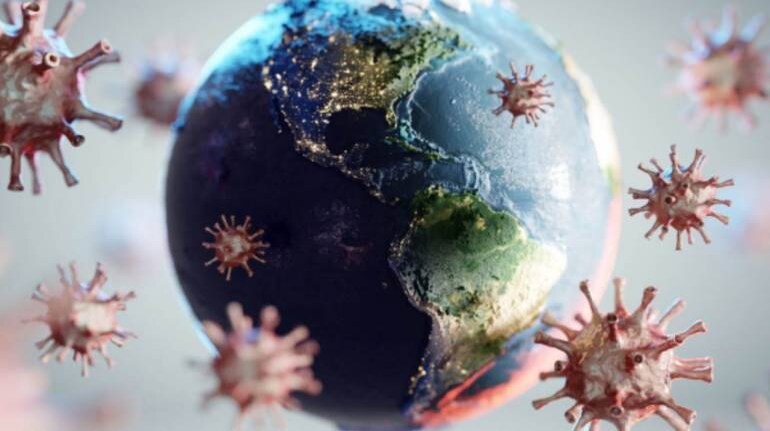
Unverified images of overflowing morgues in China evoke an eerie feeling for all Indians, since we went through an equally bruising wave of COVID-19 infections in April-May 2021. Most of us saw the horrors of death and suffering; and experienced the excruciating agony of running pillar to post for a hospital bed or oxygen cylinder. As a country, we can empathise with the situation that China is in at the moment despite all the political differences we have with our eastern neighbour.
On December 21, the World Health Organisation’s Director of Emergencies said that the Intensive Care Units in China are filling up fast, and that the country is ‘behind the curve’ in accurately reporting infections. After the so-called ‘Zero Covid’ policy was relaxed, China has been lax in testing, and many parts of the country have run out of rapid tests. Therefore, the COVID-19 numbers reported by China, and the anecdotal reports of saturation of healthcare capacities does not match. According to the Corona Virus Resource Centre managed by Johns Hopkins University, the country only had 22,897 new cases, and 83 deaths in the last one day.
COVID-19 is surging in several other countries, including Japan, South Korea, the United States, France, and Germany. Japan reported more than 200,000 cases and 296 deaths in the last one day, painting the picture of a helpless situation. Europe is going through a surge in other respiratory infections too, along with COVID-19. The continent has seen a rapid increase in seasonal influenza and Respiratory Syncytial Virus (RSV) infections, which has wreaked havoc among children and older adults. The flu season has started earlier than expected in Europe, puzzling many epidemiologists and infectious disease experts.
India’s Union health ministry has been prompt in taking action, with a high-level meeting being held on December 22. The meeting reiterated the need for preventive measures, and the importance of genomic sequencing. Several state governments have also been proactive in dealing with the situation, even though the COVID-19 numbers are very low across India.
There are two questions that we need to answer. Is this situation entirely unexpected? Is there a need to press the panic button?
China followed a dangerous game in managing COVID-19, primarily due to political compulsions deciding outbreak response. Most global experts had warned that ‘Zero Covid’ policy was bound to fail, and the government will be forced to loosen up at some point of time. The public anger because of repeated lockdowns and movement restrictions, have finally forced the government to abandon their much maligned ‘Zero Covid’ policy, and the country is now reeling under outbreaks.
China has also used locally-produced vaccines, with lower effectiveness when compared to m-RNA and viral vector vaccines used elsewhere, for their vaccination campaigns. Both these factors have contributed to a lower collective protection among the population. In Europe, the annual flu season is devastating for the healthcare systems. It is estimated that seasonal influenza affects between 4 and 50 million people annually, and kills between 15,000 and 70,000 people in the European Economic Area alone. In the last three years, the seasonal influenza incidence has been complicated by COVID-19 in several ways. But none of it is unexpected, though it's a different question whether we have been prepared for the fall out.
Any sustained viral transmission in a population is bound to give rise to new variants of the virus. Though the general direction is towards more transmissibility and less lethality, it is not the norm and variants like Delta can emerge once in a while. In India, the sub-variants of Omicron has been responsible for all the outbreaks since late last year. The BA.1 and BA.2 sub-variants were responsible for the peak last winter.
A recombinant sub-variant XBB is now the most common omicron variant in India, though it hasn’t led to any dramatic increase in cases or deaths. The sub-variant that is fuelling the outbreak in China is BF.7 (a lineage that came from BA.5). This sub-variant has also been detected from Europe and North America, leading to a suspicion that it will become the dominant sub-variant globally. Even though there is no evidence to show that BF.7 causes more severe disease, it is considered as more transmissible. There is also an increased likelihood of this sub-variant escaping the immune mechanisms in our body.
Now India has picked up a few cases of BF.7 through its genomic surveillance system and the media reaction had been extreme. Even though there is a certain degree of public panic, knee-jerk reactions from the government may only complicate things. At the moment, there is no evidence to show higher mortality among people infected by BF.7 or any other Omicron sub-variant. We may see a repeat of January-February situation, where we could have a rapid rise in infections with a sharp peak and low mortality rates.
But at the same time, it cannot be business as usual. Booster doses (what we call as precautionary doses in India) has been administered to only 28 percent of the population so far. These numbers have to go up rapidly, with a special focus on the old, frail, and immunocompromised. Besides, the use of masks can be encouraged inside public transport and indoor environments where people may gather in close proximity. This is to make sure that the rate of incidence of infections does not become unmanageable for the health system.
As a country, we also need to make sure that the supply chains for essential medicines, diagnostics and oxygen are robust, and can withstand pressures of another outbreak. But movement restrictions across state borders, enforcing masking in outdoor spaces, and introducing quarantine measures for international travellers can be very immature, when the economy is limping back to normalcy. In such highly-contagious infections, it's only logical to focus on mitigation efforts to ensure that our health system is not overwhelmed, and the most vulnerable sections of the population are taken care of.
What we need is a tailored and reasonable response, after thorough evaluation of the situation, and the potential risk that the sub-variant poses to the health and economic security of the nation. A disproportionate response involving severe restrictions will only serve to antagonise the public, and reduce the trust in authority.
Philip Mathew is a physician and an advisor with the International Centre for Antimicrobial Resistance Solutions, Copenhagen. Twitter: @pilimat. Views are personal, and do not represent the stand of this publication.Discover the latest Business News, Sensex, and Nifty updates. Obtain Personal Finance insights, tax queries, and expert opinions on Moneycontrol or download the Moneycontrol App to stay updated!
Find the best of Al News in one place, specially curated for you every weekend.
Stay on top of the latest tech trends and biggest startup news.