
Days after India asserted that Shaksgam Valley is part of its territory while objecting to the China-Pakistan Economic Corridor (CPEC), Beijing on Tuesday hit back at New Delhi and reiterated its "claims" over the strategic valley.
In a statement on Monday, Beijing defended its ongoing infrastructure projects in the area, describing them as “beyond reproach" amid strong objections from India over the territorial dispute. Beijing said that the valley "belongs to China" and "there is nothing wrong with China carrying out infrastructure construction on its own territory." It cited a "boundary agreement" in the 1960s that demarcated borders between China and Pakistan.
India's strong objection followed an announcement by Pakistan and China to launch the second version of CPEC.
What is the Shaksgam Valley dispute about?
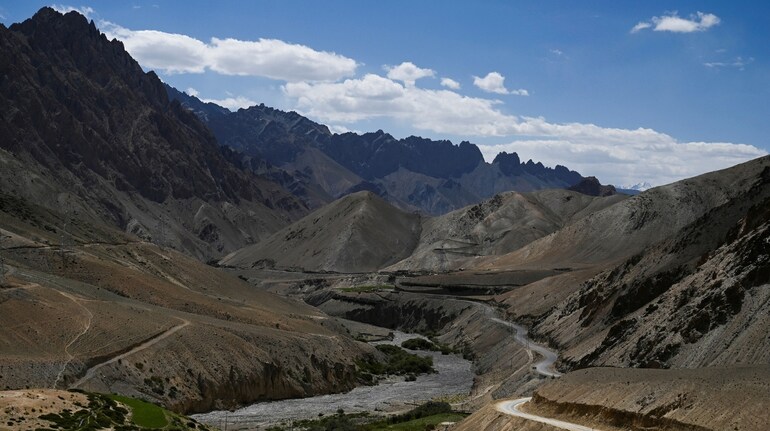
Shaksgam Valley is a remote, high-altitude valley that lies north of the Karakoram range. It lies next to Pakistan-occupied Gilgit-Baltistan region and close to Siachen/Aksai Chin.
It is currently administered by China as part of Xinjiang. However, India has said it is part of the former princely state of Jammu & Kashmir (now Ladakh) since the lawful accession of the region to India in 1947. Pakistan occupied the region during the war in 1947–1948 and subsequently ceded it to China in 1963 through the Sino-Pakistan Agreement.
Why is it disputed?
The dispute is essentially about who had the legal right to decide the border there:
Pakistan–China boundary deal (1963): Pakistan and China signed a boundary agreement that effectively transferred control of the Shaksgam/Trans-Karakoram area to China. India has never accepted this agreement and says Pakistan could not cede territory that India considers part of Jammu & Kashmir.
"Shaksgam Valley is Indian territory. We have never recognised the so-called China-Pakistan 'Boundary Agreement' signed in 1963. We have consistently maintained that the agreement is illegal and invalid," MEA spokesperson Randhir Jaiswal said last week.
“Subject to Kashmir settlement” clause: The 1963 agreement itself includes language that the boundary may be revisited after the Kashmir dispute is settled, which India points to as evidence that the arrangement was not a final settlement from India’s perspective.
Strategic importance of the valley: The area’s location near the Karakoram passes and the Siachen region makes it strategically sensitive. If China builds roads and infrastructure there, India views it as activity in territory that it claims.
India's concerns
India's concerns stem from China's plan to build a long all-weather road in the Shaksgam Valley, which lies barely kilometers away from its territory.
According to reports, China has already built nearly 75 kilometres of the road, estimated to be around 10 metres wide.
Citing satellite images from the European Space Agency, India Today had reported in 2024 that China is rapidly building the road in the valley, which apparently branches out from an extension of Highway G219 in China’s Xinjiang and disappears into mountains at a place that is nearly 50 km north of India’s northernmost point: Indira Col in Siachen Glacier.
Defence experts told India Today that the new Chinese infrastructure could alter the status quo and complicate the security environment around Siachen. There are also concerns about the potential use of these roads for “military maneuvers by Pakistani and Chinese armies".
Discover the latest Business News, Sensex, and Nifty updates. Obtain Personal Finance insights, tax queries, and expert opinions on Moneycontrol or download the Moneycontrol App to stay updated!
Find the best of Al News in one place, specially curated for you every weekend.
Stay on top of the latest tech trends and biggest startup news.