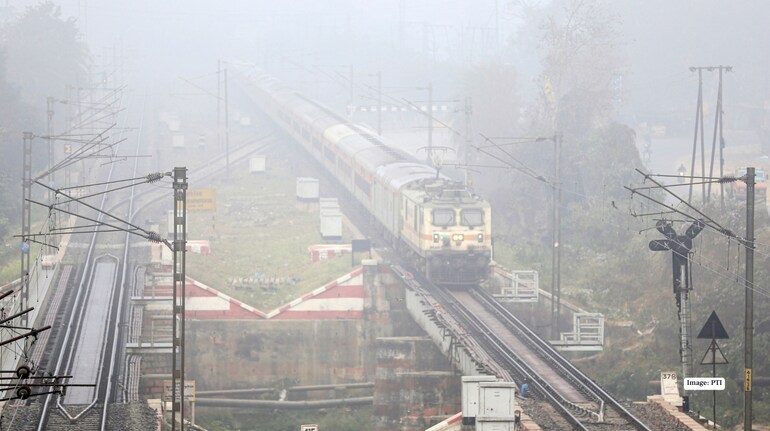
While dense winter fog routinely disrupts train services across north India, railway experts say a less visible, weather-linked problem affects rail operations throughout the year—corrosion of railway tracks, particularly in humid and coastal regions.
The top surface of rails typically remains free of rust due to constant wheel contact, but moisture, salts and pollutants accumulate along the sides and base of the rail, weakening the structure over time.
Dr Rahul Sharma, Director–India at the International Zinc Association, said corrosion-related inefficiencies are often underestimated because damage occurs below the rail head. “The rail head is designed to wear and is continuously polished by train movement. The greater corrosion risk lies in the web and foot of the rail,” Sharma said.
He added that protecting non-wearing surfaces can significantly extend rail life in corrosive conditions. “If these surfaces are protected properly, the life of steel rails can increase by three to five times, especially in corrosive environments,” Sharma said.
Railway experts estimate that Indian Railways spends around Rs 20,000 crore annually on track renewals, with corrosion accounting for a significant share of replacements in high-humidity and coastal zones. In such environments, rails designed to last more than a decade can deteriorate within two to three years, leading to repeated maintenance blocks and service disruptions.
Railway officials and experts say reducing corrosion-related deterioration can lower the frequency of track replacements, limit maintenance interventions and reduce the need for speed restrictions, improving operating efficiency across the network.
Discover the latest Business News, Sensex, and Nifty updates. Obtain Personal Finance insights, tax queries, and expert opinions on Moneycontrol or download the Moneycontrol App to stay updated!
Find the best of Al News in one place, specially curated for you every weekend.
Stay on top of the latest tech trends and biggest startup news.