Moneycontrol PRO
Black Friday Sale
Black Friday Sale
HomeNewsIndiaCOVID-19 infection rate increased among people aged 31-40 years after unlocking, says Maharashtra govt

COVID-19 infection rate increased among people aged 31-40 years after unlocking, says Maharashtra govt

The maximum number of novel coronavirus infected persons belongs to the age group of 31-40 years, followed by those aged between 41 and 50 years.

October 05, 2020 / 22:29 IST
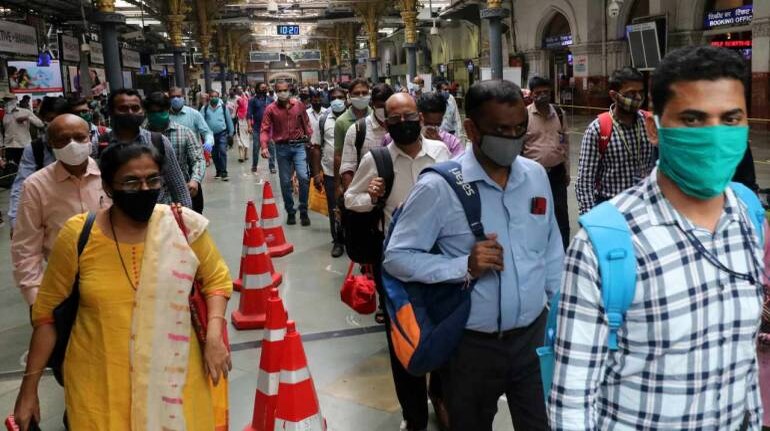
File image

Data released by Maharashtra government’s Medical Education and Drugs Department has revealed that people aged between 31 and 40 years are more prone to contracting COVID-19. A Hindustan Times report citing Maharashtra government data stated that people belonging to this age group also reported the highest percentage of cases at 21.34 percent. What is more alarming is that the percentage of infection in people aged between 31 and 40 years increased further after lockdown restrictions started getting lifted in a phased manner.

For live updates on coronavirus, click here

Maharashtra has reported 14,53,653 coronavirus cases and 38,347 COVID-19 fatalities so far. There are 2,52,277 active coronavirus cases in Maharashtra at present. The maximum number of novel coronavirus infected persons belong to the age group of 31-40 years, followed by those aged between 41 and 50 years at 17.90 percent, 21-30 years at 16.98 percent, and 51-60 years at 15.95 percent, government data revealed.

The data further revealed that the rate of infection among people aged between 31 and 40 years increased over the past months after lockdown restrictions were relaxed to revive the economy. The percentage of infection in this age group kept rising steadily from 20.54 percent on June 4 to 20.74 percent on July 4 and 21.14 percent on August 4.

A Maharashtra Health Department official said: “Major activities, including inter-district movement, a rise in office workforce, and the reopening of commercial activities from the first week of September, have led to a sudden spurt in the number of COVID-19 patients from the age group of 31 and 40 years over the past one month. The common perception about the viral disease among the public is that youngsters can be allowed to step out, while senior citizens must stay at home.”

In the period starting June 4 to October 4, the coronavirus infection rate has also increased among people aged between 61 and 70 years and 71 and 80 years, from 9.72 percent to 10.63 percent and from 4.19 percent to 5.02 percent, respectively.

COVID-19 Vaccine

Frequently Asked Questions

View more
How does a vaccine work?

A vaccine works by mimicking a natural infection. A vaccine not only induces immune response to protect people from any future COVID-19 infection, but also helps quickly build herd immunity to put an end to the pandemic. Herd immunity occurs when a sufficient percentage of a population becomes immune to a disease, making the spread of disease from person to person unlikely. The good news is that SARS-CoV-2 virus has been fairly stable, which increases the viability of a vaccine.

How many types of vaccines are there?

There are broadly four types of vaccine — one, a vaccine based on the whole virus (this could be either inactivated, or an attenuated [weakened] virus vaccine); two, a non-replicating viral vector vaccine that uses a benign virus as vector that carries the antigen of SARS-CoV; three, nucleic-acid vaccines that have genetic material like DNA and RNA of antigens like spike protein given to a person, helping human cells decode genetic material and produce the vaccine; and four, protein subunit vaccine wherein the recombinant proteins of SARS-COV-2 along with an adjuvant (booster) is given as a vaccine.

What does it take to develop a vaccine of this kind?

Vaccine development is a long, complex process. Unlike drugs that are given to people with a diseased, vaccines are given to healthy people and also vulnerable sections such as children, pregnant women and the elderly. So rigorous tests are compulsory. History says that the fastest time it took to develop a vaccine is five years, but it usually takes double or sometimes triple that time.

View more
Show

Follow our coverage of the coronavirus crisis here

Moneycontrol News
first published: Oct 5, 2020 10:29 pm

Discover the latest Business News, Sensex, and Nifty updates. Obtain Personal Finance insights, tax queries, and expert opinions on Moneycontrol or download the Moneycontrol App to stay updated!

Subscribe to Tech Newsletters

  • On Saturdays

    Find the best of Al News in one place, specially curated for you every weekend.

  • Daily-Weekdays

    Stay on top of the latest tech trends and biggest startup news.

Advisory Alert: It has come to our attention that certain individuals are representing themselves as affiliates of Moneycontrol and soliciting funds on the false promise of assured returns on their investments. We wish to reiterate that Moneycontrol does not solicit funds from investors and neither does it promise any assured returns. In case you are approached by anyone making such claims, please write to us at grievanceofficer@nw18.com or call on 02268882347